
Last updated: October 8, 2026

 September 18, 2025
In This Article
- Walking: The Massive Foundation (10+ hours/week)
- Strength Training: The Metabolic Middle (30-60 minutes/week)
- Aerobic Exercise: The Mitochondrial Builder (20-150 minutes/week)
- HIIT: The Peak Adaptation (6-30 minutes high-intensity/week)
- The Durability Hierarchy
- Why This Pyramid Beats Traditional Advice
- The Three-System Framework
- Practical Implementation
- Common Mistakes
- The Bottom Line
The USDA Food Pyramid was retired in 2011, replaced by MyPlate—but the pyramid structure deserves a second life. Instead of organizing what we eat, it’s the perfect framework for understanding how to structure physical activity for maximum longevity. This exercise pyramid shows exactly how much time each week you should spend on the four activities that most powerfully extend lifespan: walking, strength training, aerobic exercise, and HIIT (High-Intensity Interval Training).
Unlike nutrition, where portion sizes vary by individual needs, the exercise pyramid reflects a universal truth about human physiology: we’re built to move frequently at low intensity, with occasional bursts of harder effort. The pyramid’s proportions match both the time requirements and the three key longevity systems each activity impacts: vascular health, immune regulation, and energy metabolism.
Walking: The Massive Foundation (10+ hours/week)
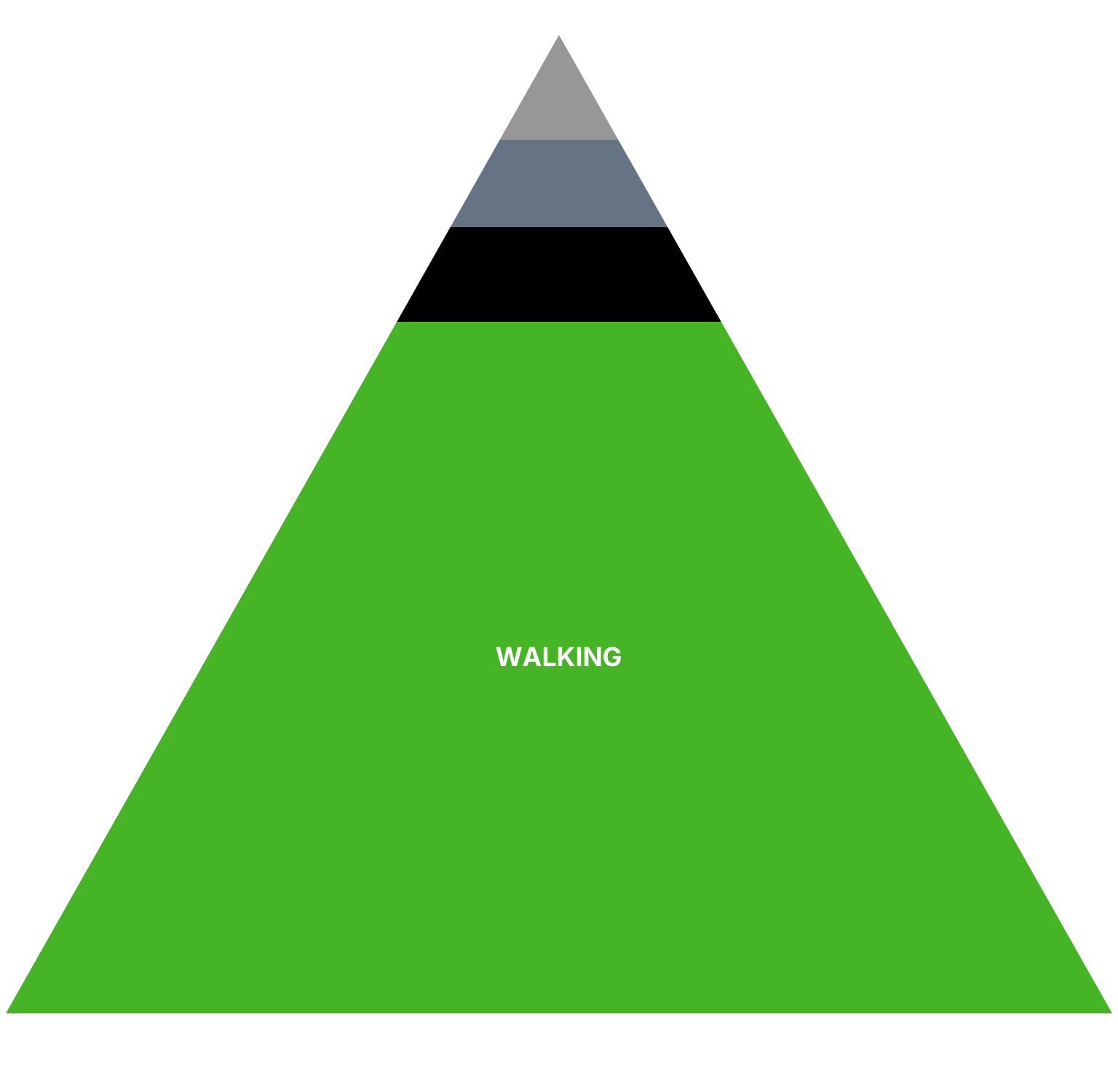
Working from the bottom up, walking dominates the pyramid for good reason. It’s the only S-tier longevity intervention, reducing all-cause mortality by 40% when comparing 9,000 daily steps to 4,000.1 To walk 10,000 steps daily requires about 1.5 hours—seemingly a lot, but that’s precisely the point. Walking works because you can do so much of it.
Optimal range: 10,000-12,000 steps daily (90-100 minutes)
Upper limit: None—benefits continue beyond 20,000 steps without harm
System impacts:
- Vascular: Improves endothelial function and lowers blood pressure through consistent, low-level cardiovascular activity
- Immune: Provides the greatest anti-inflammatory effect of any exercise type. The myokines released from muscle contraction appear proportional to total movement time rather than intensity
- Metabolism: Enhances insulin sensitivity through sustained glucose uptake, though doesn’t trigger mitochondrial biogenesis
Walking doesn’t stress the cardiovascular system enough to increase mitochondrial density or quality. You need to reach aerobic intensity for those cellular adaptations. But walking’s power comes from volume—since you can walk for hours daily without recovery issues, the cumulative benefits exceed what’s possible from shorter, intense sessions.
Participants in the Unaging Step Masters Challenge who exceeded 15,000 daily steps reported unexpected benefits: improved sleep quality (falling asleep 15 minutes faster), lower resting heart rate (dropping 3-5 bpm over 8 weeks), and better mood stability. The sunlight exposure from outdoor walking adds another layer—vitamin D synthesis, circadian rhythm regulation, and nitric oxide release that lowers blood pressure.2

Strength Training: The Metabolic Middle (30-60 minutes/week)
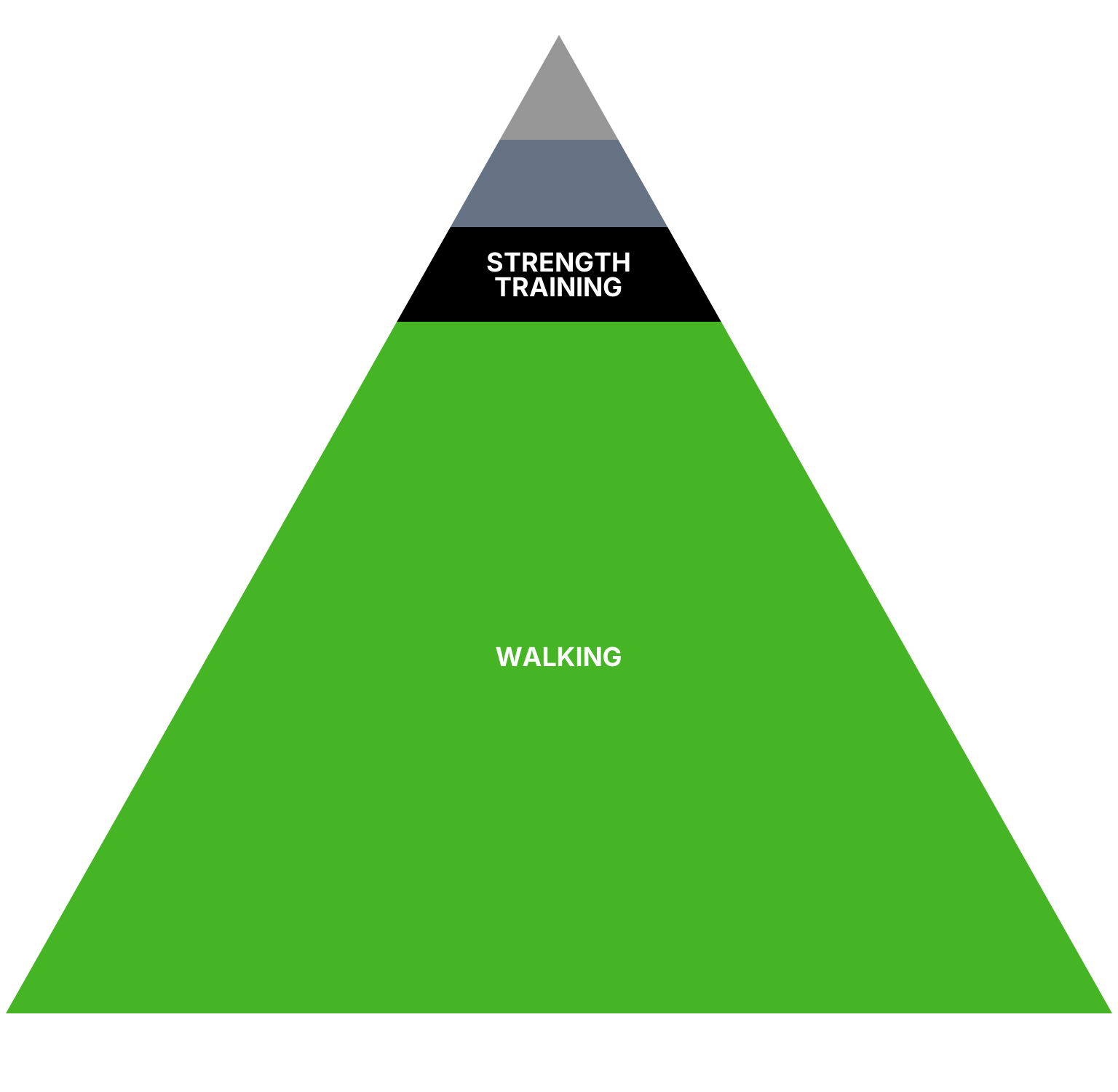
Strength training occupies the pyramid’s middle tier—far less time than walking but essential for maintaining muscle mass, bone density, and metabolic health. The dose-response curve is remarkably precise.
Optimal range: 30-60 minutes weekly (35% mortality reduction)
Danger zone: Beyond 140 minutes weekly, all benefits disappear3
System impacts:
- Vascular: Reduces blood pressure by 6 mmHg systolic and 4.7 mmHg diastolic4
- Immune: Reduces inflammation through myokine release, particularly IL-6 which acts anti-inflammatory when released from muscle
- Metabolism: Primary driver of glucose disposal—increases insulin sensitivity by 24% and provides the muscle mass necessary for glucose storage
Critical benefits:
- Bone density: Increases bone mineral density by 1-3% annually, the most effective natural intervention for osteoporosis prevention5
- Sarcopenia prevention: Sarcopenia—the age-related loss of muscle mass and strength that accelerates after age 50—leads to frailty, falls, and loss of independence. Strength training can nearly triple strength even in nonagenarians6
Training durability: Strength gains persist relatively well during detraining. After 3 months of no training, strength typically drops by 7-12%, but can be regained in 4-6 weeks.7 This makes strength training more forgiving of schedule interruptions than HIIT. The 8-12 rep range optimizes the balance between mechanical tension and metabolic stress needed for both strength and muscle preservation.

Aerobic Exercise: The Mitochondrial Builder (20-150 minutes/week)
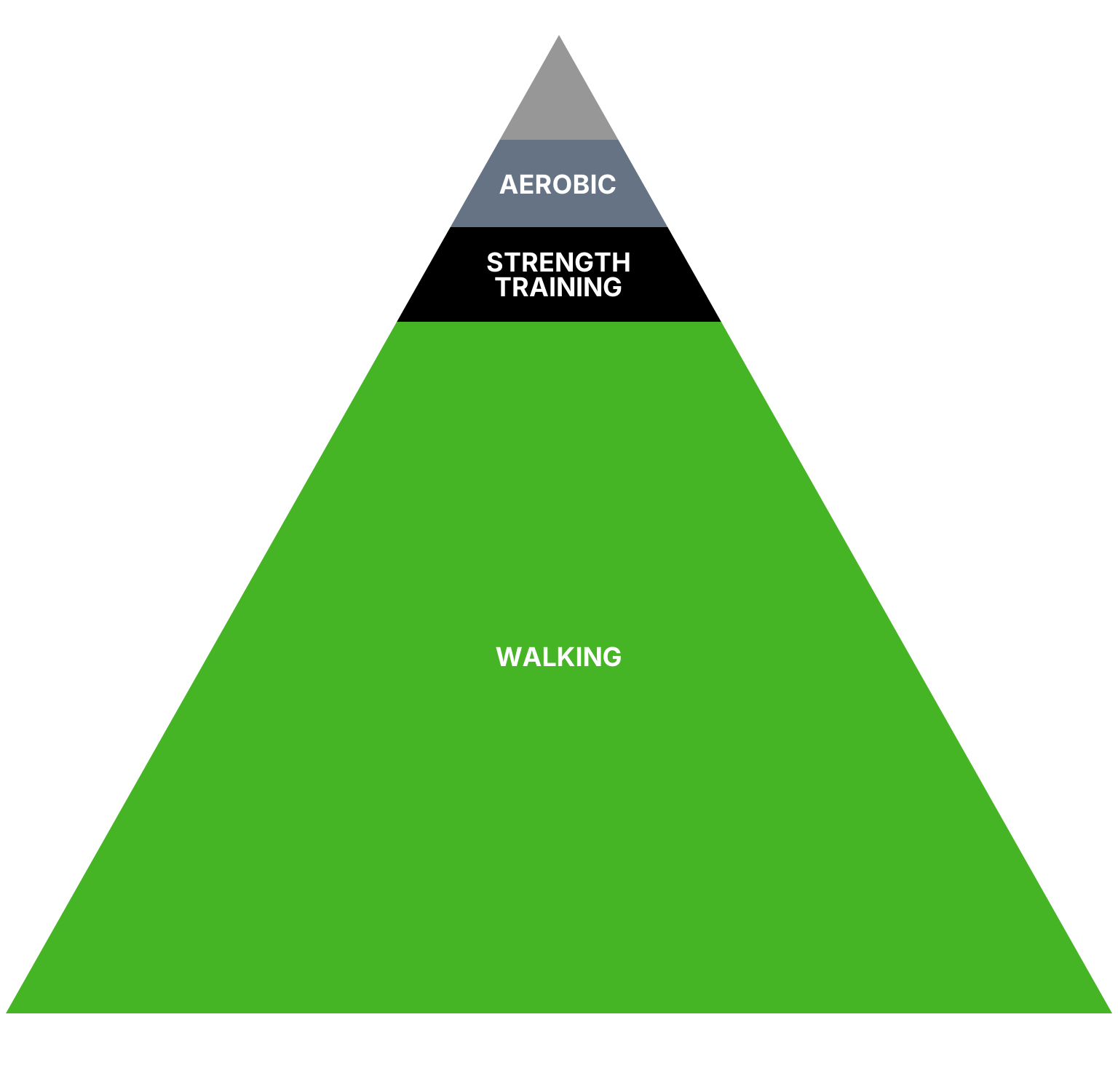
Aerobic exercise requires minimal time but provides concentrated cardiovascular benefits. This is sustained effort that leaves you breathing hard but able to speak in short phrases—the sweet spot for mitochondrial adaptation.
Optimal range: 20-150 minutes weekly at moderate or slow pace
Danger zone: Strenuous joggers (>4 hours weekly at fast pace) had TWICE the mortality rate of sedentary individuals8
The Copenhagen City Heart Study provides stark evidence: light joggers (1-2.4 hours weekly at slow/average pace) had 78% lower mortality than sedentary individuals. But strenuous joggers had double the mortality rate of couch potatoes—a dramatic U-shaped curve proving more isn’t better.
System impacts:
- Vascular: Primary driver of endothelial health and arterial compliance through increased capillary density (15-20% more capillaries per muscle fiber)
- Immune: Reduces chronic inflammation markers including CRP
- Metabolism: Triggers mitochondrial biogenesis through PGC-1α activation—30-50% increase in mitochondrial count after 6 weeks
Training durability: Aerobic adaptations are remarkably durable. The increased capillary density and mitochondrial count from aerobic training persist for months after cessation. VO2max drops only 4% after a two-week break and about 15% after three months off.9 The structural changes (new capillaries, more mitochondria) take time to build but also resist detraining—unlike HIIT’s efficiency gains that vanish within weeks.
Aerobic exercise uniquely increases stroke volume (heart pumps 10-20% more blood per beat). These adaptations improve oxygen delivery systemwide, which is why VO2max—primarily improved through aerobic training—remains the single strongest predictor of longevity.

Learn what these numbers really mean for long-term health.
HIIT: The Peak Adaptation (6-30 minutes high-intensity/week)
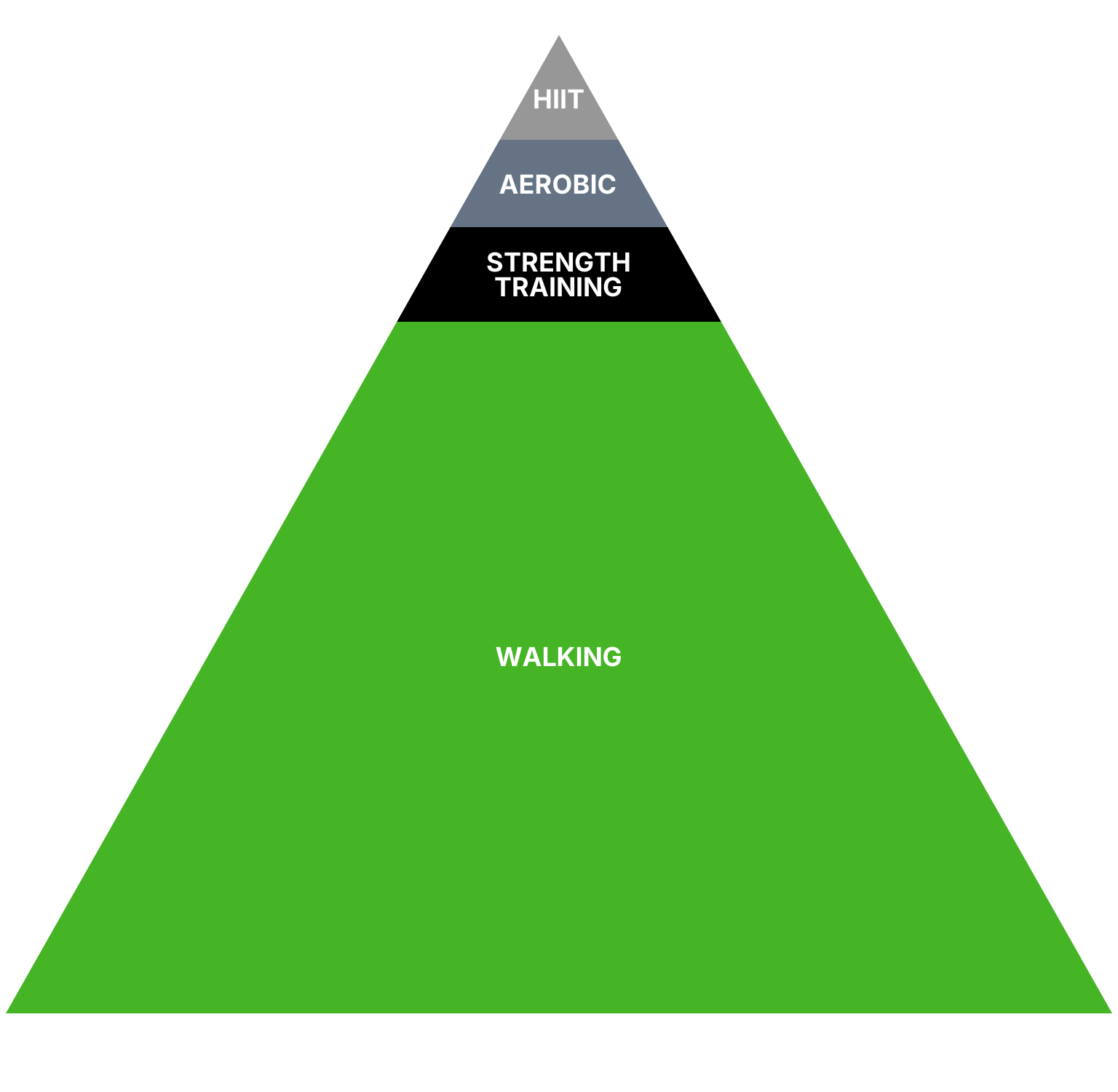
At the pyramid’s apex sits High-Intensity Interval Training—the smallest time commitment with the most concentrated adaptations. HIIT means 85-95% maximum heart rate in intervals, but only the high-intensity portions count toward the weekly target.
Optimal range: 6-30 minutes high-intensity work weekly
Danger zone: Beyond 160 minutes weekly, performance degrades rapidly with 40% decrease in mitochondrial function10
While HIIT hasn’t been studied long enough to establish all-cause mortality curves, the performance degradation parallels the mortality reversal seen with excessive aerobic exercise.
Key distinction from aerobic: HIIT doesn’t increase mitochondrial count like aerobic exercise. Instead, it improves mitochondrial efficiency through mitophagy—destroying damaged mitochondria and optimizing the remaining ones. Each mitochondrion produces more ATP, but you don’t get more of them. This creates HIIT’s characteristic rapid training response.
Time efficiency champion: HIIT provides the most fitness gain per minute invested. Just 6 minutes of high-intensity work weekly can improve VO2max by 10% in 8 weeks—gains that would take hours of moderate exercise.11 While these efficiency gains need refreshing every 2-3 weeks, the minimal time requirement makes maintenance easy. When time-pressured, HIIT delivers maximum return on investment—more bang for your buck than any other exercise type.
Optimal protocol: The Norwegian 4×4 method twice weekly (4 rounds of 4 minutes hard, 3 minutes easy) provides 32 minutes of high-intensity work monthly. This improved VO2max by 10% in 8 weeks—equivalent to reversing 10 years of age-related decline.12
System impacts:
- Vascular: Creates beneficial shear stress that improves arterial function more than steady-state exercise
- Immune: Paradoxically lowers systemic inflammation despite acute inflammatory response during exercise
- Metabolism: Maximizes mitochondrial efficiency (not quantity) and increases insulin sensitivity 3x more than moderate exercise

The Durability Hierarchy
The pyramid structure also reflects training durability—how long benefits persist without training:
Walking: Most durable. The anti-inflammatory effects and movement patterns persist. Daily walking creates habits and joint mobility that resist detraining.
Strength training: Moderately durable. Strength drops 7-12% after 3 months off but rebounds quickly (4-6 weeks). Bone density gains persist for years.
Aerobic exercise: Highly durable for structural changes. New capillaries and mitochondria persist for months. VO2max drops slowly (15% over 3 months).
HIIT: Most time-efficient. While gains need refreshing every 2-3 weeks, just 6 minutes weekly maintains peak efficiency—unbeatable return on time invested.
This durability gradient explains optimal training priorities. HIIT offers the most time-efficient gains—just 6 minutes of high-intensity work weekly can maintain peak mitochondrial efficiency. When time-challenged, prioritize HIIT for maximum return on minimal investment. Pick up aerobic and strength training when schedule allows, knowing those adaptations persist longer once built.
Why This Pyramid Beats Traditional Advice
Government guidelines recommend 150 minutes of moderate exercise or 75 minutes of vigorous exercise weekly. But this one-size-fits-all approach misses critical nuances:
- Walking has no toxic dose while intense exercise can double mortality risk
- Training durability varies dramatically between exercise types
- Aerobic builds structure (capillaries, mitochondria) while HIIT tunes efficiency
- All longevity benefits vanish beyond 140 minutes weekly of strength training
The pyramid structure reflects both optimal dosing and training characteristics. Walking forms the massive base because it’s infinitely scalable and habit-forming. Aerobic and strength training create durable adaptations worth building. HIIT sits at the top—the most time-efficient exercise requiring just minutes weekly for substantial gains.
The Three-System Framework
Each pyramid level impacts the three longevity systems differently:
Walking hits all three systems through sheer volume—10+ hours weekly of vascular stimulation, anti-inflammatory myokine release, and glucose uptake. No maximum dose means more is always beneficial.
Strength training primarily targets metabolism (glucose disposal) and bone density in just 30-60 minutes weekly—but strictly avoid exceeding 140 minutes.
Aerobic exercise builds lasting mitochondrial and vascular infrastructure in 20-150 minutes weekly.
HIIT creates peak efficiency across all systems with unbeatable time efficiency—just 6 minutes of max intensity weekly for substantial gains.
Practical Implementation
Weekly Structure:
- Walking: 10,000-12,000 steps daily (90-100 minutes) – no upper limit
- Monday: Full-body strength training (30-45 minutes, 8-12 rep range)
- Wednesday: Aerobic run or bike (30-40 minutes at conversational pace)
- Friday: HIIT session (2-3 minutes high intensity within 10-15 minute total workout)
Building for Durability:
- Months 1-2: Establish walking habit (8,000+ steps daily)
- Months 3-4: Add aerobic base (build those capillaries and mitochondria)
- Month 5: Add strength training (build muscle and bone density)
- Month 6+: Add HIIT only if you can maintain consistency
Maintenance Mode: When life gets busy, preserve gains with this priority:
- Keep walking (most important, foundation of health)
- Maintain HIIT (just 6 minutes weekly for maximum time efficiency)
- One strength session monthly (muscle and bone density persist)
- Aerobic when possible (structural gains are durable)
Common Mistakes
Replacing walking with intense exercise: “I don’t need to walk because I run 3x weekly.” Wrong. Running provides different adaptations than daily walking. You need both.
Overdoing intense exercise: Remember—strenuous joggers had TWICE the mortality of sedentary people. The sweet spot for aerobic is 20-150 minutes at moderate or slow pace, not hours of hard running.
Starting with time-efficient training: The Unaging Challenge starts HIIT and aerobic simultaneously—both can be built together. HIIT’s unmatched time efficiency makes it perfect for busy schedules.
Training through exhaustion: The adaptations happen during recovery. If you’re constantly tired, you’re likely in the danger zones where exercise becomes harmful rather than helpful.
The Bottom Line
The exercise pyramid provides a clear framework for how to exercise for longevity through both optimal dosing and training durability. Walking forms the massive base because it has no toxic dose and builds lasting habits. Aerobic and strength training create durable structural changes worth investing in. HIIT provides powerful but fragile gains that require consistent maintenance.
This isn’t about athletic performance or aesthetics. It’s about hitting the three longevity systems—vascular, immune, and metabolic—with the correct dose of each exercise type. Walk as much as possible. Run 20-150 minutes weekly at a moderate or slow pace where you can chat. Lift for 30-60 minutes weekly total. Sprint sparingly and only when you can maintain consistency.
Start at the bottom. Maintain fragile adaptations while building durable ones. And remember that in the longevity game, the light jogger who walks daily is likely to outlive the strenuous runner—because they’re operating within the optimal zones while the overtrained athlete has pushed into territory where mortality doubles.










2 comments
Is there a reference for this excellent information?
Scott Hoffer
[email protected]
Of course! Most of the studies are covered in the articles on each type of exercise, including walking, strength training, aerobic exercise, and high-intensity interval training (HIIT). The numbered references in each article link to the original research.