Last updated: September 23, 2026
 July 22, 2025
In This Article
Beyond High-intensity Interval Training (HIIT) comes Sprint Interval Training (SIT). While HIIT reaches up to about 90% – 100% of the maximum sustainable effort, SIT takes over after 100% of sustainable effort — more effort than could be continued over 30 seconds. Between the sprint intervals, resting time can either be active (light jogging or similar) or passive (just resting).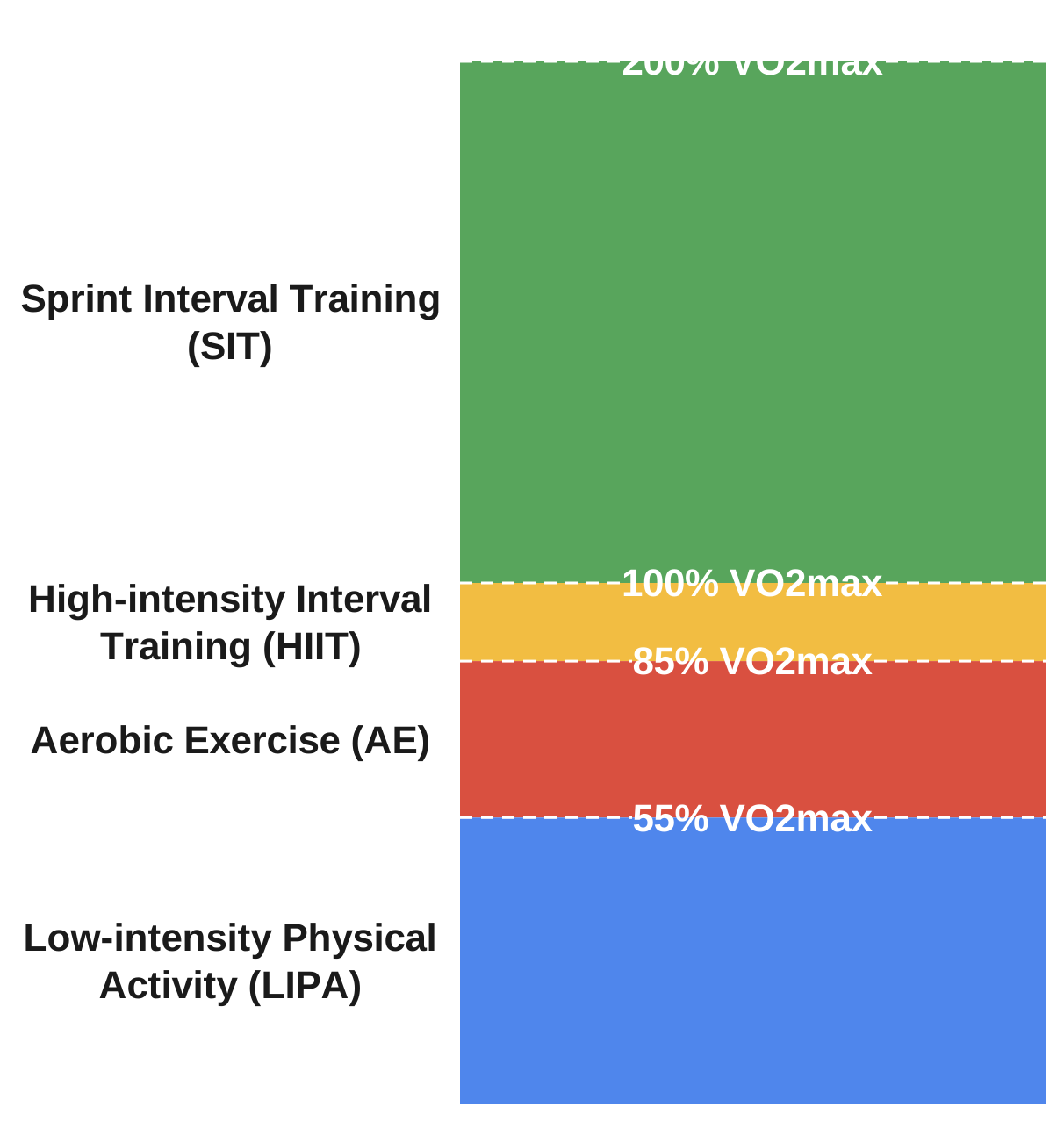
SIT effort goes beyond what can be achieved from the respiratory system aerobically and moves into the anaerobic levels of exertion. The word aerobic comes from the Greek roots for air and life, and anaerobic means “without air.” In the first 30 seconds of effort, energy comes from stored energy in the muscles before oxygen respiration increases.
SIT examples:
- Two 20s: Ten minutes of exercise time, consisting of two 30-second sprints spaced out over 10 minutes of light effort.
- The Tabata Protocol: Published by Izumi Tabata in 1996, this protocol uses eight repetitions of 20 seconds maximal effort interspersed with 10 seconds of rest.
HIIT exercises include the Tabata Protocol as well. When Tabata designed the protocol that carries his name, his goal was to find one protocol that increased “both anaerobic capacity and maximal aerobic power.” As a result, the Tabata Protocol features both short sprint intervals (20 seconds) with enough overall effort to exercise aerobic capacity.
Four Benefits from Sprint Interval Training
1. Improved Cardio-respiratory Fitness
SIT improves the body’s ability to convert oxygen into energy at a sustained pace. Despite being classified as an anaerobic (without oxygen) training, SIT enhances the efficiency of energy production, which helps for aerobic (with oxygen) exercises as well. After eight weeks of SIT (four 30-second sprints, 4 min rests) or HIIT (four 4-minute high intensity, 3 min active rest) three times a week, the HIIT group improved V̇O2 max (a measure of oxygen use) by about 15%, while the SIT group improved by 16%.1
2. Fat loss
While the calories expended during the SIT session may be less than other exercises due to the short duration, SIT increases total daily energy expenditure (TDEE), which burns more calories over the day. A test of 12 men (unclear if they were angry or not) showed that TDEE was increased by 10% after a single SIT session.2 This increased energy expenditure burns body fat, as shown in a seven-week SIT study, which reduced body fat by 7%.3
3. Time Efficient
A HIIT session takes less time than continuous aerobic exercise, and a SIT session is shorter still. A 2017 meta-analysis comparing the number of sprints done per session against V̇O2 max improvement showed that more than 2-3 sprints per session reduced the V̇O2 max gain.4 A two 30-second sprint workout takes about 10 minutes with 1 minute of all-out effort, compared with a 4×4 HIIT session, which takes 25 minutes and 4-8 minutes of high-intensity effort.
4. Increased Insulin Sensitivity
When the body is sensitive to the insulin hormone, it can readily absorb sugar from the blood into muscles and fat. If the body is insulin resistant, the body produces more insulin to try and lower blood sugar, which is a risk factor for diabetes. SIT helps control blood sugar by making the body more responsive to insulin.2
Sprint Interval Training vs. HIIT

HIIT shares these benefits, and many articles imply that they are two ways of improving the same thing. However, analysis of mitochondria (small energy-producing structures inside cells) shows SIT and HIIT have a completely different effects on energy production. This difference is caused by the sprinting requirement for fast energy before the body can increase oxygen flow.
In HIIT, the body adapts to the increased oxygen flow by increasing the mitochondria available to make energy. In SIT, when oxygenated blood flow can’t provide enough power, the body improves performance by tuning and enhancing the ability of the existing mitochondria. This tuning eliminates malfunctioning mitochondria (“mitophagy”) and improves other aspects of mitochondrial energy production, like remodeling the shape of the mitochondria for efficiency.5
How to do Sprint Interval Training
What are the good exercises for Sprint Interval Training?
The best exercise is the one you can do at an all-out intensity and that you like. Gym machines like treadmills or elliptic trainers may not increase speed fast enough for the 20-30 seconds times SIT requires. If running or bicycling, a mostly straight track with few obstacles or traffic is important. Fitness exercises like jumping rope, body squats, or burpees are also good choices, although making a full-out effort at these exercises can be challenging.
Should I Warm Up for Sprint Interval Training?
Going from the couch to a sprint can be taxing on the body. Most SIT protocols start with 5-10 minutes of low-intensity effort, like jogging or slow pedaling, to warm up the body first.
How much Sprint Interval Training should I do?
Three sessions per week of the two to three 30-second sprints, with 3 minutes rest between, are recommended for building sprint ability. Unlike HIIT benefits, which improve essentially linearly based on the total minutes of high-intensity exercise, SIT appears to provide maximum benefit with fewer minutes of all-out effort.
More than three sprints per session appears to reduce the benefits of SIT on cardio-respiratory fitness. A meta-study of SIT protocols found that three sprints per session increased V̇O2 max over 10%, but each sprint after three per session reduced the gains by nearly 1%.>4
Should breaks between sprints be active or passive?
An active recovery period is when jogging or slow pedaling is done between the sprints, whereas passive recovery means complete rest. In contrast with HIIT, it seems that passive recovery periods may lead to better performance. Active recovery reduces the peak power possible on the second sprint, and sprints are all about the power.6
Frequently Asked Questions
How high should my heart rate go when sprinting?
Heart rate isn’t a good measure for Sprint Interval Training. Sprint intervals are usually 20-30 seconds, and that’s faster than the heart rate can respond. Instead of heart rate, pay attention to the perceived level of exertion. It should be pretty near maximum.
Does Sprint Interval Training increase longevity?
Unclear. While many studies show that having a higher V̇O2 max is beneficial for longevity, I could not find studies evaluating SIT effect on all-cause mortality. SIT is usually used to improve fitness as opposed to lengthening life. Hopefully, there will be more studies in the future.
Does Sprint Interval Training build muscle?*

Yes, but perhaps not enough to make a difference. A study of men and women found that over a 6-week study of three SIT sessions per week, they gained about 1% of lean mass. This result was statistically significant, although a group that did typical aerobic exercise over the period gained the same amount.7Exe
Is it healthy to do Sprint Interval Training every day?
No. Sprinting is an all-out effort, from which it takes time to recover and benefit. Typical SIT protocols use three sessions per week, a good guideline.
Worth measuring. Take the biological age calculator and see what your sprint work is adding.