Last updated: July 26, 2026
 September 13, 2024
In This Article
Timestamps:
00:00:00 Introduction to Crissman Loomis, his background in mathematics, and his hobbies including body hacking.
00:00:44 Unaging Challenges Discussion
00:04:54 Insights on Fasting
00:34:41 Skin Care Revelations
00:40:30 Advanced Techniques in Personal Health Tracking
00:45:59 Mental Health Strategies for Longevity
00:52:18 Conclusion and Final Thoughts
Mike: Hey, everyone, today we’ve got Crissman Loomis back on the channel for episode number three. You know Crissman, in case you missed episodes one and two. I’ll link to those in the right corner. So, what do we have today, Criss? What’s on the agenda?
Crissman: So thanks again for the opportunity to be back. It’s always great to talk to you, Mike. We’ve got three things I think we can talk about today. We can talk about the Unaging Challenge that I’m developing, some recent hard news for me, at least about fasting, and my latest research into that.
Then last, I thought we would talk about my disastrous summer and how you should take care of your skin, not doing what I did. So I think those are the things we’ve got to talk about today.
UNAGING CHALLENGE
Mike: Alright, the unaging challenge. So, this is more of a cardiovascular marathon HIT training. Why don’t you detail what—first of all, what’s the backstory on that and then what’s the goal, and then if you could tell us about the people that were involved. Basically, you ran your own little study and then go through the results. So, basically, from start to finish.
Crissman: So, after I did the marathon, which I talked about in our last podcast. I was talking to one of my friends who’s not as fit, hasn’t done as much, a younger guy, and he said that was really impressive.
“I’m inspired, I’d like to do something, but I don’t know what. I still get out of breath, walking up a single flight of stairs.” It was funny for me because I’ve been talking about how to live your healthy life, what the exercises you should do, what makes the most difference for longevity, for a few years with this friend and others, and yet they hadn’t quite understood where they could step into it to start the thing or what they should do.
After talking to him, I thought, okay, well I’m going to put together a program and a system and actually help people to be their best selves.
The thing that I’ve always focused on very closely is how to get the most benefit for the least time. If you’re a multimillionaire living in your house and trying to optimize your longevity, it’s easy to spend an hour every day doing exercise in your own personal gym, right? But for most of us, it’s hard to find the time to do these things.
But I’ve been working to find what are the key components of exercise that would enable you then to be able to spend less, like an hour and a half total time in a week, and still be able to add 20 years to your life.
I realized that just writing a blog about it saying you should do high-intensity interval training, you should strength train, you should walk more, you should eat the right foods and stuff wasn’t really getting across to people because it’s kind of like everyone honestly knows that anyway. It’s not a mystery that you should be exercising, but lots of the advice out there is much more general.
Instead, I decided to actually put it into a system and say, okay, we’re going to build lifelong habits that will make you healthy today and live longer tomorrow, and we’re going to build them in such a way that it actually helps you to build those habits as part of your life.
So it’s not just sort of like a thing that you’re thinking about or you do it for like a week and then you have the next thing so you stop doing the previous thing. I’m designing a one-year-long plan.
Right now, I’m in the testing phase, as you mentioned, so I have 15 friends here who are doing it with me, friends and acquaintances, and we’ve already finished the first three months of it. The first three months of it, I called the cardio kickoff, and actually, all 15 of them were able to finish it. It’s really inspiring because they’re at all levels of fitness.
One of the things I had at the beginning was, okay, have you cardio-trained before? Have you done high-intensity interval training? HIT. We had a good mix of all kinds of people, some people like my friend who had difficulty climbing a set of stairs, had done kind of nothing, had done no consistent work.
So it was set up a community for it, so we had a chat channel that we were talking about, I set up spreadsheets to track it, so other people could see sort of how the thing was going, and people could encourage the other people.
We found it to be very important to first of all have tracking, so everyone who was in the program got themselves some kind of a quantitative watch or something that would then tell them how are you doing, what’s your resting heart rate, what’s your VO2 Max, an estimate.
All the wearables have an estimate, right? What’s your heart rate variability, and so then we use that to go throughout the entire three-month period of the first cardio kickoff to track and see, okay, how is it going?
Even before that, people were starting to realize, first of all, in the first month it was quite hard. As I said, only an hour and a half a week, but an hour and a half a week of some hard exercise is still quite hard, and some of them were surprised that it was hard.
I’m like, it’s hard for me too. Like if you’re doing high-intensity interval training, it’s maximum effort and my maximum effort is no easier than your maximum effort. It’s always hard, so it was a challenge for the first week of it, but let me share sort of the ways that how it went for people.
For instance, here we’ve got, this is in the very first, a comparison between the heart rate, this is taken I think by a Garmin, and he’s doing high-intensive interval training.

So this is one of the people who are untrained at the start of it, and he’s trying to run full out and then do a light jog and then full out and a light jog, and you can see at the start of the program it’s really hard to see that there’s even any difference there between the full effort and sort of the light jogs.
But by the end of it, three months later, you can say, oh wow, like first of all, when he does the jog to start it, it doesn’t even move, basically, his metrics, and then you can see that he’s got these very clearly defined peaks and goes through that and then is able to rest after that.
His heart rate recovers very quickly which, as you know, is a sign of being well-trained and adapted to the exercise. I was really happy going through it. The people there gave about 93% of them gave it a four or a five out of a five-scale rating.

They had improved metrics throughout, and their VO2 Max, their resting heart rate, their heart rate variability, and I got a lot of comments that the feedback from the group of sort of like talking and hearing how it’s going for other people, hearing about other people’s suffering and triumphs, and also the flexibility of finding places, different ways to exercises, and supporting each other to say, okay, well not everything has to be a run.
Some of the people didn’t like running, so they would find a different way of getting in their high-intensive exercise but always making sure to be consistent about that. So that was just the first segment of it.
Now we’re already in the second quarter of it which is the strength challenge, so they’ve already dialed some of that high-intensity interval back to be in a maintenance phase where they can continue to grow up at a slower pace, but that habit now is well established.
Now for them, that’s just kind of a weekly thing that they do every week, and now we’re getting in very deep and focusing on the strength training, what it is to have a maximally efficient time-efficient strength training that you can do kind of just in a few visits a week and yet still get significant gains during that period.
So I’m really excited about it as I felt like this is the first time that the advice that I’ve had is really making an impact. I’m testing with my friends, with about 15 people, and I’m hoping to have a large number of people who will test this in the year 2025.
So I’m currently accepting pre-registrations for people who are interested. You can go to unaging.com and go to the unaging challenge sign up there and participate. The program is all free. My personal benchmark I like to keep track of is how many years of life has the research that I’ve done saved, right? So this is 15 people, okay, 20 years per person, that’s about 300 years of life from these initial 15 people.
Mike: Couple quick questions, Criss. So, the plot you showed with the average heart rate, you know, and then the person right, so that’s beautiful data. I wonder, were there physical and cognitive benefits or any benefits? Did the person notice that they felt better? Because, you know, you’d assume left to right, you’re obviously more cardiovascularly fit on the right versus the left, right?
So, were there subjective feelings of improvement, where they could feel that difference? Or this is just something that they’ve got going on on the inside, they don’t even know it subjectively, and they’re the same?
Crissman: No, the people definitely noticed it. One of the guys who had not done training before basically, was doing runs because that was the best way to measure the heart rate things, and basically every week, he would have a new record, a personal best record for the fastest he’d ever run. And I noticed it with other fellows as well.
The fellow who had had trouble climbing up the stairs, by the end of it, we went on a bit of travel through the city of Tokyo together, and he was right on my heels as we were going up and down stairs throughout the stations, and it was immediately apparent that these are different people sort of than as far as their ability to just move through the world had been significantly changed.
Yeah, so the numbers were kind of a nice way to keep track of it, but the feedback that I got is that very much it was they just felt more comfortable and effortless moving through their daily lives.
Mike: Cool. And then also, how did you, how did each person, or maybe you did prescribe their fitness days, right? So, were you using like HRV, resting heart rate to guide it, or it was just felt, you know, you had a set, was it you had a set time, it was the hour and a half a week that was the goal, or it was as many days as you could get in, get in like, so what was the prescription, how were people prescribed?
Because I’m sure that there was a range of some people maybe did more than 150 minutes per week, maybe some people did less, so how is that, how did they come to that prescription?
Crissman: So, there was a protocol that was shared for everyone as far as the amount of minutes of high intensity and low intensity. But the protocol started out a little bit less actually than an hour and a half as they worked into it.
One of the things that I’ll be adapting is that I really want this to be available to everyone. We did have some people who were very much out of shape, who it was a real challenge for, and from the feedback I got from them, and they still were able to complete the challenge, is that they said, okay, look, when I started, there was no high intensity.
I was just doing the running or whatever it was, and that was enough, but by the end of three months, they were able to do that. So each person was able to, I mean, select what they could do, and work through, but there was no timing of it because of the outset of it, honestly, an hour and a half a week is not much.
You would be doing two to three hours of yourself right now, right, depending on the sort of your biometrics. So because it was low enough, I felt comfortable saying, when you have the time, and one of the things about aerobic exercises as well, is that aerobic is pretty much straight linear.
As long as you’re doing the time in the week, and you’re not doing too much, and you can do up to about, I think I figured out before, is about two and a half hours of high intensity, total time, before you start to crater.
At that point, then you’re no longer getting the benefit of the high intensity, and your performance starts to degrade, but we were far below that for the entire time. So as a result, they’re able to time it when it works for them in their schedule.
They also eventually figured out that you didn’t actually have to put a day between rest between aerobic exercise. You can do that two days in a row, and in fact, if you want to, you can do two exercises, two workouts in a row.
So they’re like, wait, you mean I could just do an hour and a half and just be done in one, like on Monday of the week, and I’m like you can, it’s not fun, but I’m not going to tell you it won’t work. Not, I don’t think anyone ever took up that challenge.
But I did have guys who, like the week got busy or something, and so instead on the Sunday, they would do an hour of workout instead of doing two days or a half hour, so it was very much up to them on how they felt, but also what they were able to schedule in the work within the week because it very much, it’s supposed to be something that you do, to help you live the rest of your life better, as opposed to the new focus of your life.
Mike: Yeah, that’s great.
So since you have the data, I mean, technically you could compare, for the people who did, you know, the hour and a half in one session, an hour a couple times a week, and then the 20-minute, right? Even though it’s, you have, I think you said 15 people, which approach may be best for, you know, improvements in cardiovascular fitness, whether it’s, you know, HRV, resting heart rate, the average heart rate, you know, technically you could compare.
So for the person who says, I want to do an hour and a half session per week, if you’ve got a group of people what you do that are doing 20 minutes a day, you can say, look, the 20, now granted, you have factors like, is it weight loss, is it adjusted for age and sex and all this other stuff, right?
But right, you know, you could say, look, the 20-minute group had, maybe it’s true, whatever the data we may be, I’m presuming it, right, but if the 20-minute group had better gains relative to the once per week or twice per week versus five or six days of shorter, you could say, well, why not give this a try too and see how your body adapts.
Maybe your body is more physiologically adapted to shorter, more often, and then you could even go conversely, right? So for the people who are doing 20 minutes a week, would they benefit, from what is the best approach at the end?
I get, where you’re, you know, this is great, you know, as a start, right, but my analytical brain wants to try all the, yeah, you know, so, and maybe that’s something down the road. The beginning, it’s a behavioral modification and being able to consistently do these things over time, forever, right, because, which goes into my, you know, the idea of lives years of lives saved, right?
So, do three months of improving fitness translate for you know another 50 plus years, you know, so midlife rap, ayon extends lifespan, right, just for a short period of time.
So does improving your fitness for three months that carry, or you’ve got to, you’ve got to maintain it, you’ve got to do it consistently over the next you know, 50 years to gain those benefits. So, no, it’s a great start, don’t get me wrong, but you know, I wouldn’t jump the gun on saying, you know, how many lives, yeah, you know.
Crissman: Oh, you’re, you’re absolutely right. So, I don’t, if they start and stop, there’s no, I don’t, I don’t think you get any credit for that. I mean, high school athletes don’t live that much appreciably longer, I think, than people who never were athletes.
So, the design behind it as a result of that is that for instance, the high-intensity interval training then continues throughout the entire year. The first year, the first three months is spent establishing the habit, learning how to do it, getting comfortable with it, and then it’s maintained throughout that entire year.
So then it’s a lifelong habit because, as you point out, if they, it’s not, you don’t get that much life-saving if you stop it, but if you continue that for a half hour or so a week for the rest of your life, consistency is the winner in the marathon of life.
So, I don’t know about the, trial that we did, I don’t have enough data yet to make a distinction between the one hour a day versus the 20 minutes a day. Hopefully, maybe when we have a hundred people or a thousand people participating, then I’ll be able to do more analysis on those kinds of things.
Mike: Yeah, believe it or not, even though I’m technically in the hour and a half, twice a week, the 20 minutes or 30 minutes per day, that’s probably going to be the better group, where they end up with faster gains with less overtraining or you know, just, you know, higher heart rate variability, lower resting heart rate, that would be my bet, even though technically I’m not in that category yet. So we’ll see how it plays out.
Mike: All right, so, strength, so what’s the, what’s the, are you focusing on compound movements, is it the same 20-minute session, so what’s the strategy in terms of designing the approach there?
Crissman: So once again, we’re looking at maximizing the immediate health, and all time, and long-term longevity. So for the strength, then we’re dealing, basically take from, they’ve been doing three high-intensity workouts, so we take two of those out and replace them with a strength training, and it’s a half hour each time.
So this is the optimal amount, when you look at the longevity studies, for what gets you the most longevity out of strength training, it’s very clear that the correct answer is an hour, total time, per week.
So okay, now we have half an hour of high-intensity interval training, and then we add into that an hour of strength training in two sessions, and so very much so, as you, as you appropriately guessed, for the strength training, it’s mostly focused on the compound movements.
If you’re only doing a half-hour, and you want to do a full body workout, then very much, you want to be getting into the big exercises.
So we’ve been focusing on that quite a bit, and I’ve actually been meeting with every single person, in a one-to-one weightlifting session just to say, okay, let’s talk about this, this is how you do this, this is how you do, the big exercises, the bench, lat pull downs or rows for back.
So a push, a pull, and also a leg exercise, and the leg exercise, as much as possible, focusing on just straight deadlifts and squats, ’cause those are great exercises, as you know, that is going to give you a lot of stimulation for the strength training for them, and they’re for, they’re exercises that require a precise form in order to do them safely and well.
So I’ve got some documents that I’ve been sharing with everyone, I’ve been going, okay, this is Ripto’s YouTube guide on how to do a squat, this is Ripto’s YouTube guide, is one of the experts on weightlifting, of how to do deadlifts.
Then I go and meet with them, and then we’ve also been talking through that to make sure that they have their form running, and it’s just three exercises, a push, a pull, and a leg exercise, and they get to pick, sort of what they do with what they have around them.
One fellow for a while was working with kettlebells, basically, as his primary exercise, another one has a home gym, and he’s using dumbbells for all of them. Many of them then go to the gym and have been going to the gym and learning how to use the squat bar, and squat rack, and then also be doing the deadlifts, and things.
So, people have been able to do it, but the fun, the foundation is what I found that helps people to say, okay, look, these are the three exercises we’re doing, it’s twice a week, it’s half an hour, and we do that for the next three months.
Mike: And then the goal is as many sets and reps within those 30 minutes, or is it, you know, x amount of each, so five sets of bench, five, you know, five, five, five, it’s, it’s just as much as you can do in that 30 minute span.
Crissman: Oh, we’ve got it all, I made a spreadsheet to track it for everyone, and then we’ve got a progress board, so you can see basically how everyone is doing. I wasn’t sure about the progress board, right, like, that’s kind of part of the social aspect of it, but, many people found it very motivating, actually, to see, okay, everybody else is doing this, right?
I should be updating my progress board, and I use one of the common weightlifting formulas then to calculate what the one rep max is.
So if you say, bench press 50 kilograms, or I can’t do that off, I, pounds, okay, 50 kgs, for 10 reps, then there are formulas on the internet that will calculate for you, then what your probable one rep max is, what the maximum you could lift at one time is, and so then that gives you a comparison.
If one day you do, say, 50 kilograms for 12 reps, and then the next day you do 55 kgs for 10 reps, you can know whether you are effectively doing more weightlifting, whether you worked harder, and so then the spreadsheet then gives tracking for that for every exercise and shows how you did, and then also shows how everyone else did, so that you can see and kind of feel how you’re doing, and everyone’s been able to put that in and sort of entered it with her own thing.
But it gives a structure to just say, okay, look, we’re doing three sets of these three exercises, and you find something so that you should be struggling to finish on the last reps of the last set, and after that, then you sort of select what works for you with the environment that you have.
Mike: So generally, there’s about a three-rep loss for each 10-pound increase. So if you’re doing 10 reps at 50 kilograms, well, let’s say, 50 pounds, because it’s easier for me, my dumb American brain to think in pounds, I, I have to, so it’s, 50 kilograms is 110 pounds, 2.2, anyway, so that, so, 50 pounds, if you’re doing 10 reps at 100 pounds, right? So, it’s generally your 1 RM would probably be around 130, so you just, 110, you could probably do 110 for seven, 120 for four, and then, 1, 130 for three, but that’s just the general, you know, ballpark estimate, so it’s, it’s, I think you said, three sets of each exercise, so nine sets, sets in that 30 minute span.
Crissman: Yeah
Mike: So you know, even, even though it’s only 30 minutes, technically, you know, it’s, you can do it where it’s super-setted, and there may be people who are doing more than or can do more than nine set, so for example, my workouts, is, are essentially circuit training-based, so I’m not training for my 1 RM.
I’m trying to keep it in that 10 to, well, I do lower rep ranges sometimes, but still, it’s circuit training-based, where it’s, it’s constant movement the whole time, it’s not one set, wait three minutes, do another set, you know, so you could, and probably get a pretty strong cardiovascular stimulus, granted not as much as doing an all-out sprint for 20, 30, 40 seconds
Whatever it is, but so is it geared, are you trying to do a circuit training-based workout, or it’s only nine sets, as long as you get those nine sets, just chill, you’re good.
Crissman: So at, at this point, and, I mean, there’s a, there’s a flow of information as we’re going through it, so that’s one of the other things that I’ve worked to help support people, and kind of keep them aware of the challenge, and keep it interesting, right, so, we don’t say, this is what you’re doing, and then have them do it for 12 weeks, and then say good job, and here there’s the next challenge.
So as we’re going through it for instance, I hope, well, I mean, if they’re watching it, it’s fine, I haven’t actually talked about super setting yet, because it’s a great idea, as you point out, and it’s a good way to compress the total amount of time, I was planning to tell them about that in after the first two months are done, so at the beginning of the third month.
I would say, by the way, you can further compress the amount of time that you take to do this, by doing super setting, which is then going to give you more benefit, reach for each of them, and you don’t need to put, spend as much time waiting between, but, for this point at least, especially, I mean, in the first month was honestly, most people were kind of figuring out, getting a gym membership.
Like, where do I do this, what are these exercises, like, how do I enter into the spreadsheet, the second month, now I feel like they’re starting to really hit the road, many of them are taking creatine, which is one of the things I offered, is like extra credit, this is going to help you to lift, it’s pretty harmless, and we’ll definitely give you more reps, but that sort of gives them something to work with, so that it, it continues, interest them.
But the offer, though, of like doing more things, they totally could, but the drive is to do is to say, this is what you, pardon me, this is what you need to do, and once you do this, you’re done, you get out of the gym, this is not, of course, you could do more, but honestly, it’s going to start to get more, less healthy if you’re doing more than a total time of an hour.
And like that’s an hour I think of normal people exercise, and as we talked about compound exercises are much more stressful le a normal exercise, so I’ve actually, and many of them do, do much more exercise.
Some of them have said, you want me to exercise three times a week for 30, or two times a week for 30 minutes, I already do it every day, and I’ve been like, hey, great. But my advice is to say, you don’t need to do that much.
This is a long-term thing, you’re already going, to gain, even just doing it twice a week, and so the program is just to do the three sets, and super set them if you will, to save more time, and then to get on with your day.
Mike: All right, so then the third aspect, which I know is generally underrated in your approach, is, you know, the flexibility training, and so the paper was recently published, and I’m probably going to make a video on this at some point, but they looked at, there’s a, a standard way to assess flexibility, of I think you know, all the major joints, ankle, knee, hip, shoulder, trunk, and so they looked at that, in association with your favorite measure, all-cause mortality risk.
And as expected, lower, a lower range of motion, so they’re, they’re going on the full range of motion, like that, in a scoring system, based on that, so even like wrist range of motion was a part of the equation.
So they sum the range of motion scores across all of the major joints, and I think they, it was something like 20 joints, which is crazy, and then look that all-cause mortality risk, and as expected, you know, the, the worse your flexibility score for the total, the higher risk for all-cause mortality, so, any, any plans to include some kind of flexibility training, you know, into the approach?
Crissman: Right, so the irony of it is, is they’ve had head-to-head, randomized control test, where they had one group of people who are doing classic stretching, we’re going to be doing leg stretching, and kind of bend over and reaching toes, and that kind of thing, and another group doing strength training, so they’re doing deadlifts and squats, and they found actually, the people doing the strength training gained more flexibility than the people who were doing the stretching.
So when I hear that, I’m like, okay, I’m good, and actually when you mentioned that study, I’m like, that sounds fascinating, if they’re going into all-cause mortality, that is my metric of choice, but I don’t know, then, if it’s, if they are, the flexible people, did they get that from doing stretching, or did they get that from doing strength training, which could be just as good, and also giving you the benefit I desire to find things as optimally as they can.

So if you can get the stretching from doing the strength training, I think that’s just the win. I haven’t seen otherwise, so I’m interested in the study, of course, to see how it kind of lines up with other things.
I have one friend who thinks that to be truly athletic, you must be able to do the splits, Johan Claude van style, and so he’s, he works on that, and puts effort into that, and I’m like, I don’t think there’s all-course mortality tied to John Claude.
You know, like being able to do the splits between two trucks driving backward if it’s something that’s key to you, then that’s something that I also want, to bring into the program as we come into the later stages of it.
I’m looking forward to working with people in finding, okay, what do you like, we’re going to give people the background, so that they’ve got the exercise, and know how to do the routine. And then
I’ll want to say, okay, what is it, what would it be for you to be truly fit, and to feel like you’re meeting your maximum potential, and towards the end of it, I hope to help people focus on that. So, maybe I will be adding the stretching program at the end, I don’t know.
Mike: So, I, I don’t disagree with the, the data on static stretching versus the active movements, and even if you take, like a static stretch, like for a squat, without being weighted, right, so if you’re just going to try to stretch in a squat position, now you add a little bit of weight to a squat, you know, with, whether it’s a bar, holding kettlebells, or holding some weights, so you’re going to get an increased stimulus.
You’re building strength throughout that full range of motion, which should further improve your range of motion in that given movement, so I see how it makes sense, where the weightlifting can be a better approach than the static movements.
But for example, if I think most people are focused only on the compound movements, so there are going to be ranges of motion where they may be limited in, for example, you know, trunk, trunk mobility, stiffens during aging, so your ability to basically form an L, right, so you’re standing up, like a good morning, and then you’re able to just basically, legs are straight, you’re able to go there.
So lower back gets weaker, and your flexibility in that, so unless people are training that, it’s probably going to get stiffer, and that stiffness in that region increases stress on the discs. So then even simple lifting movements may become, you know, more risky because now you’re stiffer in that range of motion and in their region.
So anyway, I, I think it’s a huge part of the, I’ve trained clients in the past, when I was a fitness trainer, 20 years ago, people in their 70s and 80s, who never trained, you know, outside even of squats, just like I said, just trunk mobility, and just being able for them to go from a standing up position to even like 15 degrees of trunk flexion was a challenge.
And that’s going to affect the quality of life, like if you can barely move, how would a squat, a squat wouldn’t take care of that range of motion, you know, nor would a bench press, or a row. So, I find huge value, granted, this doesn’t mean you’ve got to be a yoga instructor, or John CLA, John Claude vanam doing the splits, even though that is the ideal, you know.
So when you think about too, just taking it to a separate place, like athletes, elite athletes, who have strength through a full range of motion, not just static stretching, but strength in each movement, so
If you’re a basketball player, and you actually train ankle mobility, expecting that you’re going to roll your ankle at some point, but strengthening through those potential ranges of motion, your injury risk is going to be limited, and a big part of consistency is minimizing injury.
So if your joints are all flexible, through a strong and flexible through a full range of motion, you’d probably minimize injury risk, which should be good for, you know, consistency in training, and quote, you know, dot dot dot, potentially longevity.
Crissman: So, yeah, like the specific training for things is a, is a great idea, in general, I, I like to try and I don’t know, I’m, I’m interested to hear, like, what you talked about, about working with people who are 70 or 80 years old.
I do have some people who I’ve worked with on that, but they’re exceptionally athletic ones, so I’m not seeing that kind of thing that you’re talking about, where they can’t even do a little bit of a bow, but we’ll see.
I have some of the people that I’m working with are, are older than I, and are having more kind of a challenge of the posture for say, the deadlift, and so I’m hopeful that the, the deadlift and sort of like learning how to get the posture right, where your shoulders are down and back, and that you’re basically pulling up through will help them with some of their posture challenges, as they’re getting older.
The strength training, is, doesn’t actually add as much longevity as the high intensity, or some of the other things that we’ll be doing, but as far as quality of life stuff that you talk about, right, like, being able to have good posture, and stay looking vital, and be able to put your suitcase on the overhead rack, these kind of things are, or carry grandkids, or whatever it is.
As Peter Attia talks about, are very important. And the strength to deal with them, I think, is going to be a big deal, yeah, it’s something, it’s something worth watching.
Mike: Not just that picking stuff up off the floor is basically, it’s a flexibility movement, but there is some strength there because if you don’t actively train that movement, which is trunk flexion, and, okay, let’s assume that you bend your knees, you know when you do that, maybe I don’t, because I’m still trying to, I’m doing a hamstring stretch if I’m picking something up off the floor
Crissman: That’s supposed to be good, right? Like, I like when I’m doing my laundry, sometimes, like, I try and do the, the back bend, right, so that I get the full hamstring stretch out of it.
Mike: Yeah, but if for most people they’re not training that and aren’t practicing it, or have limited or poor flexibility, hamstring, lower back. So I know maybe I’m repeating, but there could be a point, later in life, where the back is so weak and untrained and lacks flexibility, where, oh, now you’ve got a hernia disc because even just a small amount of movement isn’t, is a strain on the discs, whereas, you know, if you properly trained it for decades, maybe not so much, anyway, I include it, I include it, essential.
Crissman: So for me, I mean, confessions, I, I never stretch, ever. And I was paying the price for that 10 years ago before I started doing weightlifting. I couldn’t touch my toes, and since then, I’ve gotten back into the squats and the deadlifts. And now I have no problem picking things off the floor, touching my toes, so, and that’s without ever, with, with never doing any stretching whatsoever.
So, I think that it’s a different road. But I think it can get some of that flexibility back, where you most need it, in the functional ability.
Mike: Yeah, definitely, definitely, definitely.
All right, so next up, fasting, okay, you’ve got some nightmare, or nightmare story or stories on fasting.
FASTING
Crissman: Yeah, well, it’s only, I mean, it’s only for me. Maybe, because I have a long history of it, so let’s see, here, hold on, I’m going to come and start bringing up some of the research that I did.
This has actually all come up because of a blog post, yep, so I was looking at some of the blog posts, and seeing that some of the longevity and health experts: Peter Attia, Dr. Rhonda Patrick, were looking negatively at fasting, and they thought it was a good thing before, and it was going to help them to live for such a long time, and they decided, well, maybe not, so then they started to talk about. Look if you do fasting, you start to lose muscle, and it can be very difficult.

So this is a study, specifically from Peter Attia’s website, it’s hosted there, and it talks about doing fasting. And this is intermittent fasting – which is to say that you, within a week, pick several days where you fast, and don’t eat anything for the entire day.
And specifically, these people ate zero calories on the fasting day, so was a strict fast. So the result that he talks about when he says you lose muscle, are basically these results here, 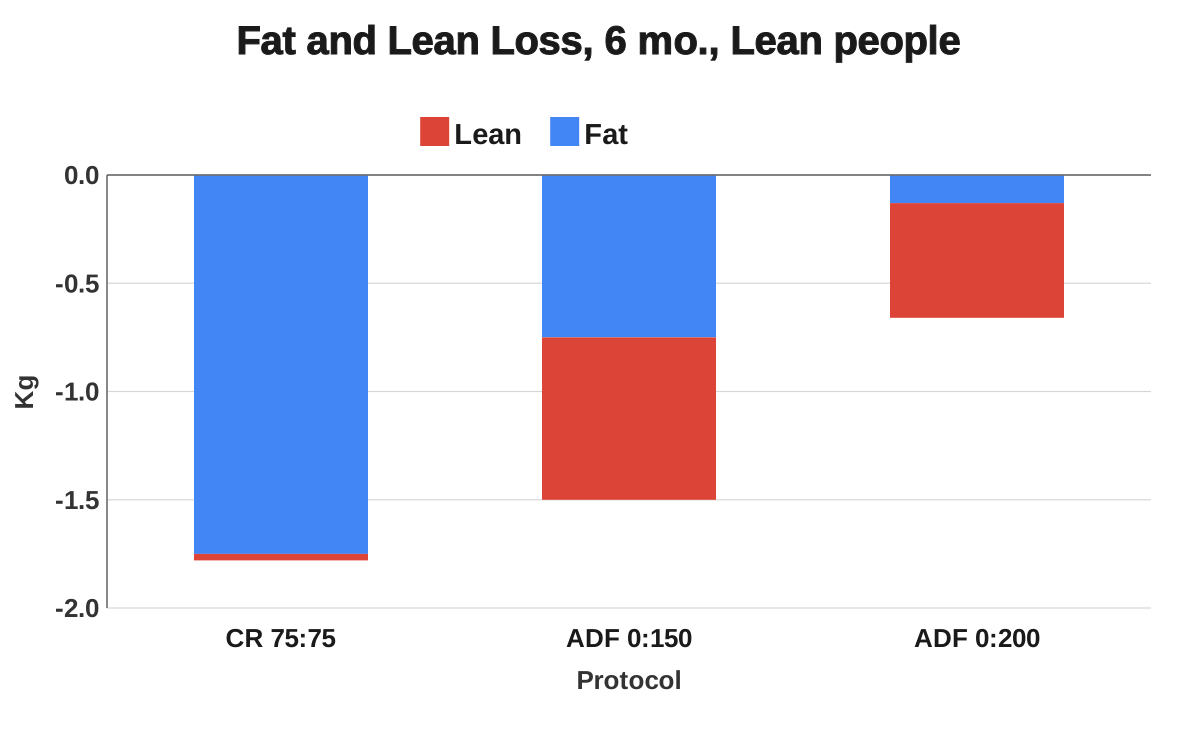 where you can see, we have three groups here, where one group has got, is doing calorie restrictions, this is just basically dieting, and they’re doing 75% every day, so they’re at 25% less than they would normally eat if they could eat what they wanted.
And then we have an alternate day fasting, so these are people who are fasting every other day, and then eating, and they’re fast, they’re eating zero on the fasting days, and 150% of calories, so 50% more than normal, on the days they eat.
And then we have a third group, where these people are doing ultra-day fasting, but they’re eating 200% of calories on the days that they’re eating. So for them, you can see here, that we have, this is the, the lean mass loss, and the fat loss. So the people who are doing calorie restriction, and these are healthy people, by the way, these are already people who have a BMI under 25, they’re lean people, they’re basically losing all fat, so they’re doing a great job, they’re happy, they’re losing just a little bit of lean muscle.
But then the group that’s doing the all-day fasting is losing half of that, is lean mass, and half of it’s fat. And then for the people who are getting all the calories they need, then they’re not losing the fat; they’re just losing muscle. And so you can understand why someone would look at this, and say, okay, this is a terrible deal.
But, I had been fasting; actually doing five-two fasting, which is where you fast two days every week for about 10 years, and this was about the first five years, was what I was doing, was a protocol, kind of like these, where I would go to zero, strict calorie, nothing. And I found, just what they talked about, I found that I was losing a lot of muscle, yes, I could rebuild it back, but I wasn’t really maintaining as much as I wanted to. And that continued for a while, until I went, and read a nutrition book.
There it is, right there, my nutrition book behind me, and realize that one of the limitations of getting zero calories is that there are almost all the cells in your body have mitochondria and can use fat for energy.
But the key word is almost all the cells in your body, the red blood cells in your body, do not have mitochondria, and they can only survive with sugar for energy. So when you’re in ketosis, and you have ketones circling through your body, they can’t use any of that. They have to rely on your liver to basically catabolize to eat your muscles and make them into sugar so that the red blood cells don’t die.
So this is why, with this kind of a protocol, where you’re going to zero, for your fasting days, you’re going to be losing a lot of lean mass in your muscles, so another study then, that is more like the protocol that I use, where instead, they’re going with a 25% of calories, maybe 300 or 400 or so.
 So here’s another study and this one was done with young, overweight women, but it’s another study, pretty similar, it’s about 6 months long, and they were also going on fasting. And compared against people who are doing calorie restriction of just 25% less than what they would normally eat.
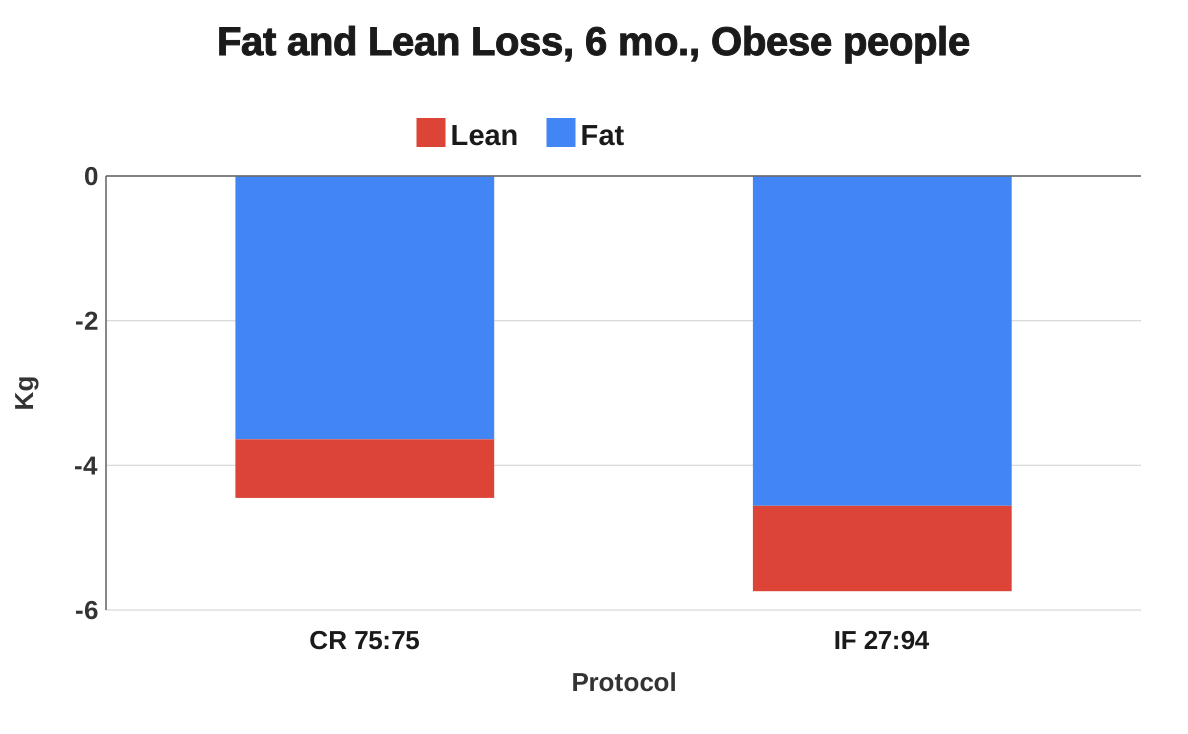 And you can see here, the results are quite different, so they’re doing again – 25% reduction, so 75% of their calorie intake.
And then they’re doing intermittent fasting, so 5/2 fasting – so two days, they would have 27%, so 300 or 400, 500 calories a day, and the other days, they would eat just slightly less than usual so that both programs are getting the same calorie intake.
But you can see as far as the lean mass versus the fat mass here, that it’s much better if you get just a little bit of calories on your fasting days, that you’re doing a much better job of cutting the fat, and saving the muscle that you want to keep. So I’ve been doing this for about 5 years and was feeling like I was winning the game, and I’m keeping my weight where I want it to be by doing the fasting.
But when I’m writing the article about fasting, I also wanted to cover time-restricted fasting. So time-restricted fasting, instead of fasting a whole day, you say, within a day, I want to compress the time that I’m eating, so I’m only eating, let’s say, from 8:00 a.m. until 2 in the afternoon, or something. Or like an 8-hour kind of fast, sort of thing, or maybe until 4:00 p.m. or something. So when I started to look at that, I found a study that said basically, breakfast is really important.
 So here’s another study, where they looked at the randomized control for time-restricted eating. They had here some people who were doing early time-restricted feeding.
So they were eating breakfast, lunch, and an early dinner at like 4 p.m. And midday time-restricted feeding, where they were eating at noon, starting with lunch, then having a dinner at say 4, and then a supper at 8:00 or something. And the results were quite stark, despite both of them eating in the same time-restricted window.

We find that basically if you look at the body weight, or the percentage of body fat, or the body fat mass, only the early people had a significant difference from the control. So despite both of them eating and about the same kind of a time window, the only people who had the benefit for their effort in losing fat, and weight, were the people who were eating breakfast, eating an early dinner, or skipping dinner.
So as I read this, I’m like, okay, this is interesting! So if you’re doing time-restricted fasting, to lose weight, you need to be doing it in the morning, and skipping dinner. But then I said, okay, well, let me look, how much, like, I know that you should eat breakfast; if you don’t eat breakfast, you’ll probably die faster, with an increased, premature death. But if you don’t eat dinner, how much life do you gain? Like, I assume it’s better to always skip dinner.
 So then I found this study, which told me I was wrong about all of that this is the meal skipping and shorter meal intervals. And this study went with N Haynes – a study of diet, which is about 150,000 person-years of data, and it’s quite thorough.
It’s an American data set and going through exactly what it is that people ate; whether they ate breakfast, whether they ate lunch, whether they ate dinner, how much time was between them. Then, it tracks over 15 to 20 years or so, whether they died early or not.
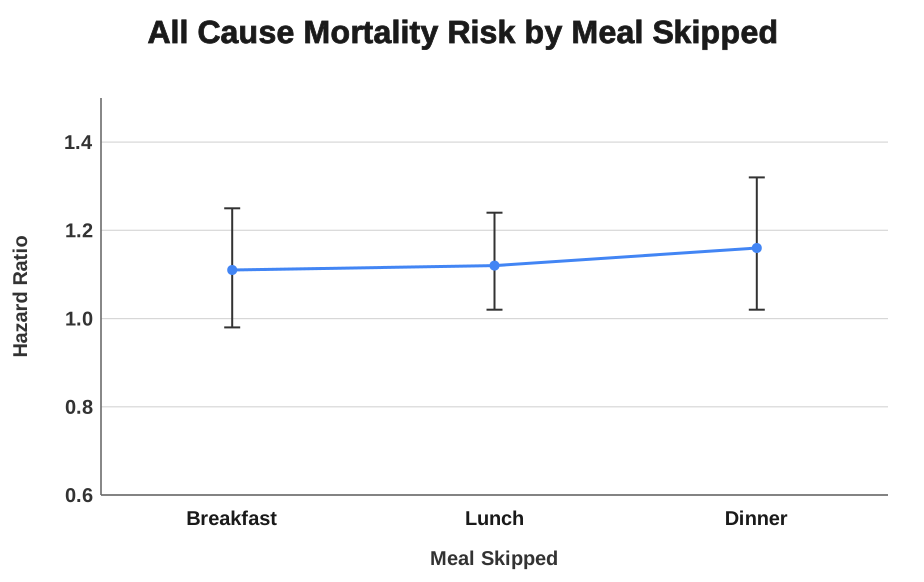 And this one surprised me quite a bit. Cause I said, okay, well, look, here we go – yes if you don’t eat breakfast, you’ll have about a 10% increase in all-cause mortality, or premature death.
But that’s just the start of it. If you skip lunch, you’re going to have about a 12% increase in premature death. And if you skip dinner, you’re going to have about a 16% increase in premature death. So this surprised me greatly because this is the opposite of what I had expected.
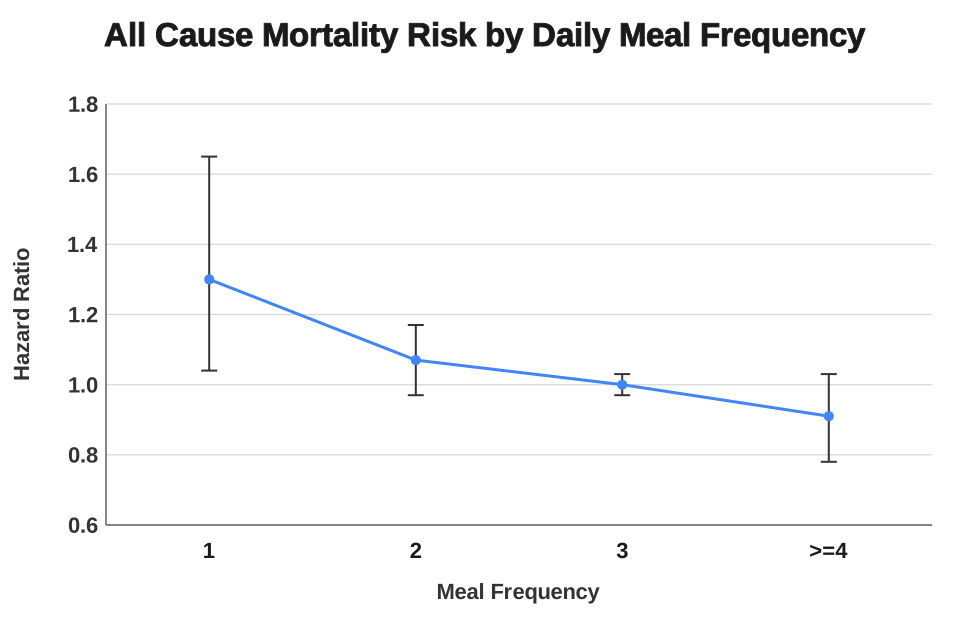
I had thought that this would be, okay, skipping breakfast is bad, lunch is so-so, and skipping dinner is a good thing, right? Sort of the old idea of eating a very, very small lunch, or skipping, or skipping dinner entirely is a healthy thing.
But in fact, all of them have about a 10% increase in all-cause mortality in the hazard ratio. And the study then goes on to say, in fact, you just should eat more meals a day! Like using three meals a day as the standard.
If you only eat two meals a day, we have about a 7% increase. So just skipping one meal will cost you about a 7% increase in premature death, and shortened life. And if you eat only one meal a day, or OMAD, you now have a 30% increase in all-cause mortality. So, and even on the other side of it, if you’re eating four meals a day, you eat an extra meal on top of that, now you actually have better than the people who have three meals a day. And now you have, it’s a trend, it’s not significant, but now you have about a 9% reduction in all-cause mortality.
So when I looked at this, it was hard for me to justify. Going from this, if you’re eating three meals is good, two meals are not as good, and one meal is bad, eating zero meals a day was going to be better. So, this basically now has changed my entire approach to fasting. And now I realize that the healthiest diet if you will, is to get constant food in small doses throughout the day.
Another stat from the same study is that if you eat your meals too closely together, less than 4 and a half hours apart, then you have a 17% increase in all-cause mortality. So again, this is very bad. So I realized that basically by skipping two meals every week, I was increasing the amount of food that I would eat at the other meals, by about 40%, which then, if you remember from the all-cause or the fasting before.
I’ll skip back to it, that if you look at this, you can see that even though this person was eating 200% of the calories, they were still losing weight. So your body is just not as metabolically efficient when you have too much food coming into it at the same time.
So, I’ve now, as of next week, I’m going to be stopping my 10-year habit of five-two fasting and learning how to eat three square meals a day. I don’t think I’m going to go to four, but at least three squares of meals a day, and eat with more reserve because one of the parts of fasting two days a week is you feel like you can eat as much as you want the other days because you’ve already had a significant reduction in your overall calorie count.
But, um it was quite a shock for me, but I live by the all-cause mortality, die by the all-cause mortality, so, I mean, it’s, it’s about a 10% difference, to put it in perspective, this is about the number of benefits you get from eating three vegetables a day or eating two pieces of fruit a day, it’s not as much benefit as you would get from strength training or doing high-intensity interval, but at the same time fasting would put me out of sync with the rest of the world. And so I always felt like I was kind of doing something a little different.
They’re going off to lunch. I’m like, I’m going to have coffee with milk, and I’ll see you later. So I’m looking forward to actually having more of a normal lifestyle, to say that I’m eating in sort of the meals that are common with everyone, and hopefully we’ll get some better health and longevity and blood work out of it, as well.
Mike: All right, so there may be some good news. Maybe you don’t have to change the whole story yet. So yeah, okay, let’s start all the way at the back. Let’s start off. I took notes. First, how did they assess lean mass? Is this a dexa or CT MRI?
Crissman: It’s a good question, it’s and to be precise, they had fat, and then they had fat-free mass, right? So if they were losing bone mass or other things, that would also be counted as this. But I don’t think they had Dexa. It was probably done with an electro-impedance, instead.
Mike: Yeah, so not as good. But not that it is what it is. So that’s one.
Number two is whole-body lean mass. If this also included bone, that’s not necessarily ideal. If you’re going to look at lean mass. And also, the whole body’s lean mass doesn’t just include muscle, right? You’ve got organ weights there. You’ve got connective tissue. So we don’t know that the quote-unquote loss in lean mass is specific to muscle.
Now if they, one way that studies can get around this is by looking at appendicular lean mass. So lean mass of the arms and legs, because no organs, you do have some connective tissue, and that highly strongly correlates with actual muscle mass measurements. So I haven’t looked into this study, but it’s possible to have changes in lean mass and not have changes in muscle mass. So that’s one thing.
And now note that granted, I’m in that continuous CR group. You know, I’m just playing devil’s advocate here. You know, I don’t have any skin in the game. I’m just trying to be objective. And you know, not jumping to the Peter and Rhonda conclusions that fasting is bad, quote-unquote.
So another factor to consider, too, in these studies is, and I didn’t look at them, but you know, if you’re fasting, so I think the assumption when people are fasting, is it’s going to lead you to lose weight because you eat less, right? So you’re fasting, you’re eating less, but what about the overcompensation on the days when you actually have food, right? And there are animal studies, where if you know, it’s not CR, but if you take food away for one day, and then you leave the food there, the next day, they actually double, on the next day, and end up pretty close to eucaloric.
So the assumption with the fasting studies, and I think fasting in the pop culture all over the interwebs, is, hey, if you’re fasting, you’re going to lose weight because you’re going to eat less. That’s not, that doesn’t necessarily have to be the case.
Anecdotally, I can say that I’ve had days in the distant past where I’d eat six, seven, 8,000 calories in a day and eat it pretty early in the day and then fast for the rest of the day. Technically I’m fasting, right? Or eat, you know, six, seven, 8,000 calories that day, fast for the rest of the day, try to fast for the next day.
So technically, I’m in that fasting window too, but I’m in a caloric excess. So, I don’t know how carefully these studies are controlled for calorie intake, which is a huge part of that equation. Which goes back to this is why I favor, for me, and it may be different for others, if it works for others, and your biomarkers are good.
I’d say go for it. I wouldn’t, these are small randomized control studies in other people, which can be a good guide, which could be representative of the population-based average, but of being on a given fasting approach.
In your case, 52 helps you maintain a lean body weight which is a big part of this story that helps you stick to a calorie goal over a long period and stay lean, which is a big part of fitness and health and longevity, I’d say keep it there. And if you change your approach, or anybody changes their approach, and that messes up the system, where now, it’s harder to maintain that caloric, you know, whether it’s close to maintenance, or below, and stay lean.
I’d say don’t do it even if the studies show otherwise, in RCTs of other people, you know. It’s all about, does that translate to you? So in my case, time-restricted feeding, I’m not doing it for any purported metabolic benefits, or, you know. In my case, because the diet is so rich in fruits and vegetables.
If I eat later than, you know, oneish or the majority of it by oneish, I’m waking up more in the middle of the night. It’s bad for my sleep quality, if it’s bad for my sleep quality, I feel terrible in the morning. So for me, a shorter eating window is more beneficial.
I don’t see a difference in biomarkers. I’ve had the OMAD, where it was 6 to 6:00 to 9:00 p.m. at night. Not, not eating the whole day, was terrible for my sleep. But I changed it, not because of what the published study showed, but because it improved my sleep quality and performance.

So, I think sounding the alarm is too early on that, you know. I think individuality and looking at biomarkers, you know, is key.
Crissman: Yeah, absolutely agree. So, thank you. I brought that up in my blog post, but I didn’t bring it up in my talking here because, especially initially, right? When you go to time-restricted feeding or intermittent fasting, either one of them is going to alter your sort of habits. And it’s going to help you to lose weight and can be a useful thing.
That’s one of the things I have been using for many years. So absolutely agree. That is one of the benefits of it, and that could be more than enough to make it worth it to someone. If that kind of having that routine of it, to say, okay, look, I’m going to eat by this time, and then after that, I’m done eating for the day, and I’ve eaten the portion that I decide that I should be eating.
Then, that’s absolutely worth doing, and then it can give you enough benefit to, more than the fact that you might be eating a little more and you’re calorie restricted, anyway. So for you, I see good things all over. So yes, I agree very much that it depends on sort of how you do it.
For myself, I’m fairly disciplined. And I’m pretty sure that I’ll be able to eat, although other people who know me are less confident I’m going to be able to eat free meals a day and not gain weight.
But I’m always up for a challenge, so I’m going to do my best and try and do that. And honestly, if it doesn’t work, you’re right, I’ll be going back to fasting because it’s more important that I maintain sort of the body weight that I want to have than worry about sort of, maybe a 10% loss here. I’ve got some buffer.
Mike: Yeah, so assuming that the 10% would translate to you, right? I mean, we’d have to see, right some changes, you know, whether, is it metabolic health that improves, is it kidney function, liver function, inflammation. If none of that improves with the change in, you know, 52 to eating more meals per day. Is there really any benefit, right?
like to see objective biomarkers, rather than this blanket of, if you eat 52, or OMAD, or X diet, you know this is the all-cause mortality. But I prefer, you know, I prefer greater specificity. What’s specifically improving and if nothing changes biochemically, have you really improved anything, right?
Crissman: So, well, that’s exactly right. And in the studies, one of the things that’s interesting is that they, as they work through them, they say, okay, we’ve had this person doing fast, and we’ve had this person doing calorie restriction.
And it’s known that there are benefits to doing calorie restriction, losing weight, even losing a few pounds or so. Even if you’re very overweight, losing a few pounds is a huge change in the metabolic system. And they basically found that both fasting and calorie restriction, the benefits that they have is basically the calories you cut out.
So the tricky part about that is that, if you’re no longer still losing calories, and I had been fasting for 10 years, and so I had my own habits of eating more on the other days, to compensate, once I had reached the weight that I want to be at.
So especially if you are using it to lose weight, or even just to keep weight off, and that can be something that’s very important. And it seems to me that is almost entirely beneficial.
They talked about autophagy for a while, right, the cleaning out of the cellular mechanisms within the cell, and some other things. But at this point, there’s been nothing that’s really come up as convincing as a unique and independent benefit out of it aside from the weight loss or control.
Mike: Yeah, I agree, weight loss is the biggest thing.
But I think individuality is the big key here, that you mentioned, right? And I think people trying the different approaches, and seeing, you know, whether it’s OMAD, even if OMAD, what you showed, OMAD may be bad for all-cause mortality risk. But if OMAD leads you to eating fewer calories than you would usually would, I think that’s a benefit, regardless of what the studies and other people show, right?
But I think the key is finding which of the approaches works for you to be able to stay as lean as possible, to carry as little visceral fat as possible, abdominal you know, obesity. And for it, maybe it’s not OMAD, or maybe it’s not 52, maybe it is a CR. Maybe, you know, mild CR, but I think trying all the different things is a big part of figuring out what works at the individual level.
So, another thing to note is, you know, aside from the, it’s hard to control these studies, in people, and granted, they’re short-term studies, right? So, five weeks or so. And granted, looking at animal models, isn’t ideal, because it’s not people. But at least in mice, you’re all the variables are controlled by how much they’re moving, right?
They’re in a cage, and they don’t generally don’t have an exercise wheel, you can control their calories, you can control when they eat, and how much they eat. So, one of the longest you know, calories, if you calorie restrict mice but then shorten their eating window and allow them to eat during their normal circadian rhythm, which is during the night, not during the day—mice are nocturnal, their circadian rhythm naturally is nocturnal, whereas ours is awake during the day and asleep during the nighttime. That’s the longest lifespan extension relative to fasting alone.
So, that’s big. But all of the variables are controlled; they’re not overeating, they’re getting a set amount of calories, and they don’t have a choice but to eat those set amount of calories.
So, I think that’s what the animal model suggests could be possible in people. That’s actually the approach that I favor. But the other part too is satiety, right? So, there are two other variables here, satiety, right? So, which of these dietary approaches, in terms of how often to eat, how much to eat, one meal a day or two, whatever it is, are you satiated, right?
For me, I can end the eating window relatively early and be satiated without wanting to eat almost never the rest of the day. But if I had to force myself where it’s like, alright I ended the eating window at one, and now five o’clock has come around and I don’t have any more calories, that may trigger a binge, and that’s detrimental to the whole approach. I generally don’t have that because the diet is satiating.
So, making sure your diet is satiating on any approach to be able to maintain those calorie goals is a big part of it. Now the other thing too about fasting and lean mass or fasting and muscle mass, in my case—and I can’t say if this is true for others
One reason I don’t prefer the very long fast, aside from the ending the eating window early, you know, one-ish and then going for the next day, that’s basically a daily fast of, you know, 15, 16 hours. In the past, when I’ve gotten beyond that when it comes to doing a workout, I have malaise, I don’t want to do the workout, it’s hard to be motivated, and that’s going to affect workout performance, and for me, my vitality comes from the workouts.
If my workout performance is suffering, I’m technically on the road to declining function over time, and that’s, you know, the antithesis of what I want. So that’s just for me.
Maybe for some people, doing a long fast or fasted cardio, I can’t even do that. I don’t want to do that either, it affects my motivation negatively. So, hate to say it, but it comes down to figuring out what works for you, but you know, but that is, you know, figuring out what works for you with the fasting approach, with the calorie intake approach, with satiety, that all factors in for it, you know, for me.
Crissman: Yeah, that’s a good point. Like for me, I eventually, like, you get used to it, right? I think there’s a certain period where you kind of settle into a new habit, and like, hunger is one of those things like if you eat a cookie every day at three and then one day you don’t, boy, you really want a cookie at 3:00.
So I didn’t find that I, for me, I find I’m able to work out on my fasting days as well as other days, and was able to go through that, although my strength is usually down. I’m especially noticing that now, but now that I’m not fasting, maybe we’ll have a bit of a change for it. yeah, it’s it’s interesting, kind of, we all have our own ways of adapting to these things, and I think there’s a give, giving a try a few things, and then seeing what it is that works best for you personally, is very valuable.
Mike: Yeah, definitely. All right, next up, skin. What do you have on your skin?

SKIN CARE
Crissman: Well, I mean, I’m going to start this one out with another confession. This summer I went to the beach, and I scorched myself terribly.
Don’t, I don’t even, I mean, I was, I read a blog post on it, everything, here’s how you should do sunscreen, this is how it worked, you know, it’s so important that you put this on right, and I went out to the beach, then I’m just there with my friends a typhoon has just come through.
So we have some beautiful 1 meter high waves, great body surfing, and, I do like I do every year, where I put on, okay, one coat of sunscreen before I get out of the hotel, and then another screen on another coat when I get to the beach, and then another coat at noon, but for this, I had a different brand of sunscreen than I usually have this was recommended by Consumer Reports and shipped from overseas.
I don’t know if it was older than I thought, it didn’t actually have an expiration date on it, but, usually when I come back from the beach people ask me, like, “Wait, didn’t you go to the sun or something? You’re still so white,” but this time I was red as a lobster, and quite painful. So that’s my confession to start with. So I think I kind of wanted to transition from here, and then I wanted to hear you, listen to you, and hear some advice for what it is that you do for your skin. What would you say is the best way to take care of yourself?
Mike: Well, so this is where I’ve got criticized in the past, but you know, people are like, you know, so I do have some skin sag over here on my eyelids. So, I was heavier at one point, I was as heavy as like 175 pounds, 35 pounds, yeah, I was big gym-or, you know, okay, yeah. So carrying less weight now, my body has adapted where whatever fat I was carrying there, now I’ve got a skin sag, right?
So, that’s in other regions of my body too. So I’d say, you know, get lean, stay lean, so you don’t stretch your skin out, so that at some point now you’re carrying around this excess saggy skin, right?
And I’m not, I’m not the type to be like, “Hey, I’ll go for cosmetic surgery and just get it trimmed down,” because that’s how you end up looking like, you know, the, the, the scary mask guy from, from Saw, right? So, right, where you got everything’s messed up.
The other thing to is, you know, this idea of doing it from the inside out, like there are things like carotenoids, and, you know some of the high fruit and vegetable intake nuts, you know, nutraceuticals, and polyphenols that can impact skin from the inside out, but even that too, I’m not so sure on how much that can really make a dent, right?
So what I did, what I did put together was some of the basic biochemistry of skin aging, the thing maybe some people don’t know, and especially when it comes to sunscreen or moisturizers or even soaps, you know, these are things that can negatively affect our skin pH, which can affect skin aging which can affect the skin microbiome, putting us at risk for, you know, having a dysbiotic skin microbiome, which can’t be good long term.
So, yeah, so skin pH increases during aging, so this is a skin surface pH in women, and, and in men, two different locations, skin pH varies based on location, which is kind of tricky because the pH of the armpit, pH of the groin, pH of the Palms, the hands, forehead, they may all, all be different. Technically, we would need different soaps or moisturizers to impact the pH of these regions you know, but who does that, right?
So anyway, you can see the trend is the same, so skin pH plotted against age, birth through 100 years, women and men, two different regions, you can see the slopes are pretty much increasing. So it goes from more acidic, and this is a log scale, so even though a pH of 5.5 versus a pH of 6.5 is one unit and doesn’t seem like much, it’s a log scale, which means that’s a pH of 6.5 is 10 times less acidic versus a pH of 5.5.
So you can see that skin pH in both women and men becomes less acidic during aging, and that’s important because, you know even though I didn’t include stuff about the microbiome too much here, skin pH is a major determinant of which microbes are on your skin or not.
So the changing pH can make it easier for some potential pathogens to settle on your skin and to be able to colonize your skin, increasing the risk of infection and all kinds of bad stuff for skin health. So when considering that skin pH increases during aging, and that’s going in the wrong direction, youth is characterized by a more acidic skin pH, most soaps have a pH greater than nine.
Now, we’ll see why a high pH makes a difference, or does it make a difference on skin pH in a minute, but in this study, and I can, well, of course, will provide all of the study references in the, in the show notes and video’s description, but they looked at 64 different soaps, and you can see, 59 of them had a pH of nine.
So if you’re rubbing something on your skin that has a pH of nine, and your youthful skin pH should be somewhere around five-ish, that isn’t going to be good for your skin pH, which can again make it easier for the skin microbiome to become dysbiotic.
Now this study doesn’t indicate which soaps are on that list, so I included a list from a different study that looked at common soaps, and you hear too, you can see the majority of them, I mean, 10, you know, 10, 12 on this list, there were only two that were even in the ballpark of having a pH of five or less, which would be, and I’m not promoting either of these, this is just what the data shows, but it was where is it, Dove liquid, so hand soap, 5.16, not bad, and then I don’t know how to say it, Abiside, I guess 3.61. So those would be the best of the bunch to have it somewhere in the five regions for a soap.
So, what’s, what does using soap do to skin pH, right? So that’s what we’ll see in this study, and they didn’t indicate which soap they used, which is terrible in any study, you know, this is a randomized control trial, granted is small, for 14 people, and they also use a shower gel, which they indicated the pH was six, but they didn’t indicate which one that they used, but nonetheless, skin pH, and then you’ve got three-time points, before washing, immediately after washing, and then two, four, and six hours after washing, with either the shower gel, water, or soap, right?
So you can see that after using that soap immediately after, you can see that it’s significantly different from the groups that use the shower gel, pH 6, and tap water, which should have a pH of around seven.
So this was probably a soap that had a pH of greater than seven, in, in order for skin pH to go, you know, from or, or to be, from 5.8 to jump to 6.4, and then at every time point afterward, you can see that using soap pushed skin pH, and remember, skin pH increases during aging, so it’s going in the wrong direction, using these soaps.
So, I wouldn’t say I’m anti-soap, it’s just, that you want to use a skin cleanser that has a pH around five and I can tell everybody what, what I use, which is kind of problematic, because every time I go to buy it now, it’s out of stock, and they’re increasing the price, so I guess, supply and demand. But the one that I use, I looked up the MSDS on it, and the pH is five. So now, is that going to be best for my skin health?
I don’t know, but I don’t want to do, I don’t want to chronically, you know, push my skin pH higher, and then, you know, with exogenous agents, right? And you know, Paul Saladino is not to name drop, but, you know, he’s, he’s, he’s always talking about you know, these chemicals, you know, you want to stay away from chemicals, and toothpaste, and soap, and on this one, he may be right, you know, where you got to pay attention to what you’re rubbing on your skin, because it may be doing.
My daughter, my 15-year-old, she’s constantly putting these creams and sunscreens, and, you know, you’ve got to know what you’re, you’re putting on your skin, you know, with specificity, you know, granted the, and I’m not anti-sunscreen, but there may be things there to block UV ra, which are going to limit your ability to get burned, but if it’s got other chemicals in there which are going to be bad for skin pH and the skin microbiome, is it more harm than good, rather than just being in the sun for 10 or 20 minutes without sunscreen, and then getting out of the sun, right?
Crissman: But for the, I mean, the sun stuff, at least, so I’ve got, I mean, I can put it right here, I’ve got my SV, right, this is a very common thing, I think Brian Johnson also used the same thing, which gives me confidence because I’m sure he could buy something more expensive if he wanted to, but I’ve been using, like, ever since I did the research on UVA, on its presence throughout the day.
UVB is what gives you the, the bright red sunburn, a lot of it, and a lot of the suntan lotions in the states are targeted, the, the UVB, because it’s sort of the one that is the has more of a peak in the summer, in the middle of the day, but the UVA is sort of with you all the time, and it goes through windows, and other things.
So in my habit now, I wake up in the morning, and immediately, put on, put in my cont, so I can see, and also put on the suntan lotion, but I’m, I’m really interested in what you’re talking about the soap, up until now, I’ve been thinking that the liquid soaps would be worse, cuz sort of more artificial or something, but it’s fascinating to think that, okay, well actually, if you got like a more gentle one that is more in line with the body pH, it might, over time, be better for you.
Mike: Yeah, it’s not just the soaps too, it’s moisturizers. So you’d expect that the moisturizers should acidify the skin, and even I have this in my book, you know I guess we’ll put that in the show notes too, my book from 2016, which had a section on optimizing skin pH, with the goal of minimizing, you know skin infections, which can then translocate into the blood, but moisturizers, which you’d expect to be good for skin pH, many of them are also in the same ballpark as pHs soap, where it’s eight, nine, 10.
Yeah, so, what, what you put on your skin is huge, you know, granted how much, going back to the sun exposure, how much UVA or UVB we get is debatable, right, because we evolve to be in the sun, right?
So we need it for vitamin D synthesis, so if you’re going to, I’m in the boat where, getting some sun exposure without any creams or anything on my face or body is essential, right, now, what that U-shaped curve looks like, with too little being bad and too much being bad, I’m not sure, but I, I tread my best to get as much of that, you know, small window to get some, rather than too much or too little, it’s a good approach.
Crissman: Yeah, the avoidance is, is great, and then that gives you sort of more confidence that you can get a little bit and get the right dosage.
Mike: Yeah, I, I can say that I, up to, up until a couple of summers ago, I was going for up to an hour a day in the sun in the summer, and I started to notice some like white bleach spots on, on my arm, which is characteristic of sun damage, so I was like, this is too much, I got to cut back, so now it’s at most 30 minutes in the sun, no, obviously no burning, that’s been, you know, minimized risk.
Crissman: So then the other stuff, I mean, this is probably things that you’re not going to do, just because it’s a cream, right, so I use a tretinoin, which is Retin A, is the brand name for that. Also, that’s the prescription, which I go through some hurdles to get a hold of retinols are very good.
Those are sort of like the time-proven gold standard, if you will, a cream that then can reduce aging and photodamage and other things. I found it to be very frustrating, trying to go through the studies to find out what is a good anti-aging face cream, just because the great majority of them are funded directly by the seller of the pharmaceutical company, and in general, I just can’t trust them.
So I just go with a straight, the SV, which has an evening thing, and it’s got, some very long technical chemical words that are supposed to be good for skin, and I trust them, and let them do the work for it, and then the retina the other thing I’ve done, sorted doing for skin, is collagen.
I recently for a while, I wasn’t taking it because I thought it was fully digested before it could be absorbed, so you’re just getting the protein anyway, but they have found that there are collagen transporters that then can basically transport those amino acids directly as collagen, so it’s supposed to actually have some benefit for the skin that seems not to have been sponsored by a collagen seller, but it’s something.
I mean, lots of people are then doing things like you said, like they’re getting sort of the Botox stuff and many other things to sort of smooth out the face. I haven’t done that thing, but I’m not sure.
I still want to see if there’s some other way, in an earlier, trial period I was doing actually, acid washes, which I kind of liked cuz I felt a little, not that manly worrying about my face so much, so I got rid of some of that by saying, well, I’m rubbing acid on my face, which will then give you a red face and kind of peel some of it off.
But I wasn’t really convinced that it did it, that much benefit. So at this point, I’m just putting on the suntan lotion usually, and then getting the Retin A, and then trying to take the collagen, and I’m, I’m open. I’ll probably be doing more advanced things as I get older and have more things that I would like to improve.
Mike: And the skin is tough because it’s, you know, how do you, without doing skin biopsies from all the different regions, not just your face, you know, like, because, as I mentioned, skin physiology may be different, at least in terms of pH, all over the body. Yeah, you know it’s tough to quantitatively measure. I mean, technically, you’d have to do one side of your face with your interventions.
Crissman: Be your own control. This, is the experimental side, the control side.
Mike: Yeah, I mean, I’m sure you’ve seen the truck driver who’s in the sun, and you can see that there’s sun damage on one side of their face, but who, who’s going to do that, so that, that’s kind of the back there for me, you know, it’s, how would I sub, you know, objectively assess if this is working or not, you know the other side of it too, is, I’m skeptical because you know, if the stuff that’s been published to quote or unquote work, regardless of being funded by companies or not which is always a potential confounder, but where are the 90-year-olds
If we look at them, or older, and we see they look like they’ve got the skin of a 20-year-old, is with all the creams and everything else that we’ve got going on for decades, right, so that’s a rare thing, I don’t think I’ve ever seen a 90 or 100-year-old where I’m like, your skin is a 20-year-oldish, right, you know, so yeah, well, the movie, go ahead.
I was just gonna say, I’m optimistic, you know, that skin rejuvenation will be a real thing at some point and maybe Brian, you know, with his laser treatments, maybe I’m behind the game, maybe he’s ahead of the game there, and, you know, that can keep the skin young. I don’t know, though, I don’t know, hard to assess.

Crissman: They should eventually be able to do that with like the, you know, stem cells or something, and just kind of grow it back. I’m looking for when I can get my hairline back from the stem cells, right?
Or get your hair back, you know, either way. So I think there’s going to be still better things are going to come there, but I would agree, like, I don’t, I don’t get the feeling that they have like kind of a one magic solution yet, it’s sort of reactive things at this point that sort of able to slow the tides, take care of yourself, and then hopefully in the future, they will come up with some more of a Hail Mary, that just takes care of the thing and fixes any problems you have.
Mike: Yeah, so I’m most interested in the skin as its barrier function and as a protective mechanism as a part of the immune system, right, so skin infections increase during aging, and, you know, the treatments to address those, for me, that, that’s where I find the most interest, rather than the cosmetic of, you know, is my skin more elastic, granted I want to have elastic skin, I want to look as youthful as possible, if, if that’s even possible, right?
But, you know, like my grandmother, just anecdotally, she was like 85, and she had like a chronic skin infection somewhere all of the time, and, you know, it’s just her skin barrier function or skin immune defense just, I guess, weakened over time where stuff could colonize, and then she’s got this perpetual, you know scab, so that to me, you know, the science of that, I find that you know, most interesting for now, in being able, you know, because is it topical antibiotics, is it topical antifungals, for me, that’s where I see the most interest, right now.
Crissman: Yeah, we’ll have to see, it’s going to, access is easier, but it could be more complex, if you just look at the surface, right? Isn’t the skin supposed to be one of the largest organs of the body?
Mike: That too, that too, granted, you could say the intestine, you know, when you uncoil it, it’s like, you know, meters upon meters long, longer than we are in height, right? So it could be, you know, but yeah, that’s relatively easy, I mean, I can go through mechanism, but that’s another, that’s a story for another day, I guess.
Crissman: I think so. Okay.
Mike: Thanks, Criss.