
Last updated: August 31, 2026

 August 29, 2024
In This Article
- Introduction to Fasting Methods
- Time-Restricted Feeding and Meal Skipping: A Closer Look
- The Risks of Skipping Meals
- More Meals, More Better
- Compressed Eating Windows: Not as Beneficial as Thought
- Mechanisms Behind the Risks
- Reality Check: Fasting vs. Calorie Restriction
- How Intermittent Fasting Differs
- Does Intermittent Fasting Cause Muscle Loss?
- Balancing Weight Loss Benefits and Fasting Risks
- My Fasting Journey: A Personal Perspective
- Key Takeaways
- Conclusion
Fasting has gained popularity over the past few decades in health and wellness circles. But does the scientific evidence support the enthusiasm? Let’s examine the research and separate fact from fiction.
Introduction to Fasting Methods
Before delving into the research, it’s essential to understand the different types of fasting:
- Intermittent Fasting (IF): Alternating periods of eating and fasting, often on a daily or weekly schedule. This can include methods like the 5:2 diet (five days of normal eating and two days of restricted calorie intake).
- Time-Restricted Feeding (TRF): Limiting daily food intake to a specific time window, typically 8-12 hours.
Each method has its proponents, but as we’ll see, the scientific evidence raises caveats for each.

Time-Restricted Feeding and Meal Skipping: A Closer Look
Short-Term Effects of TRF
Short-term TRF studies have generally shown the same effects as dieting—the benefits in biomarkers track with weight loss, and there doesn’t seem to be additional benefit beyond that. However, when doing TRF to lose weight, there is a crucial point: eat breakfast and skip or eat dinner early.
Interventional TRF studies find weight loss in early TRF (say, 6 AM breakfast, 10 AM lunch, 2 PM dinner) but no weight loss from mid-day TRF, where breakfast is skipped and dinner falls around 8 PM.1 This appears to be due to reduced metabolism of about 50 calories daily, increased hunger, and hunger for starchy foods when TRF happens later in the day.2
Long-Term Risks of TRF and Meal Skipping
A 2022 study of the National Health and Nutrition Examination Survey, covering nearly 150,000 person-years of follow-up, reveals some surprising and concerning trends related to TRF and meal skipping.3
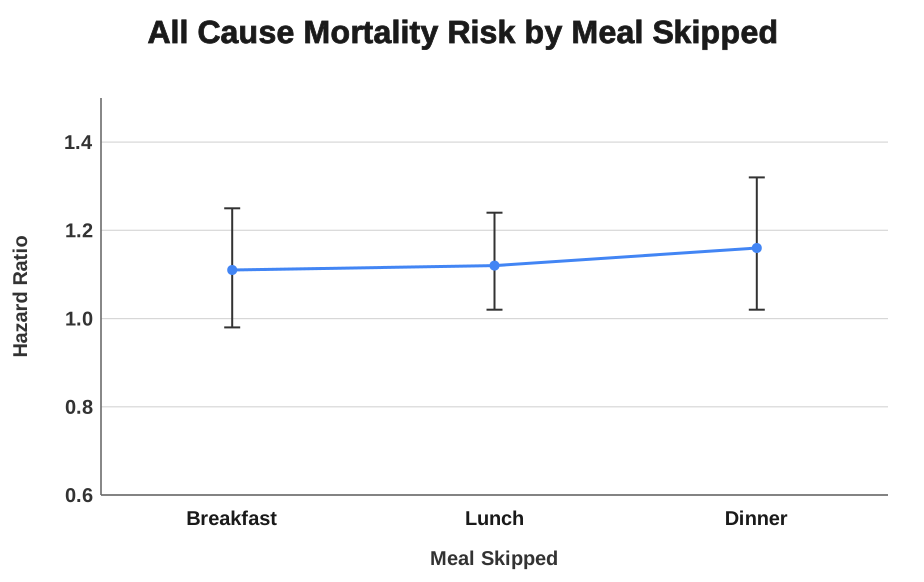 Increased premature death is about the same for skipping any meal
The Risks of Skipping Meals
Contrary to popular belief, skipping meals is associated with increased premature death, which is quantified as the hazard ratio for all-cause mortality (ACM):
- Skipping dinner: 16% increase ACM
- Skipping lunch: 12% increase in ACM
- Skipping breakfast: 11% increase in ACM (not statistically significant)
These findings suggest that our bodies may benefit from regular, consistent meal timing rather than extended periods without food.
More Meals, More Better
While skipping one meal daily showed a trend toward increased ACM, eating only One Meal a Day (OMAD) showed a significant 30% increase in all-cause mortality. This substantial rise in death risk suggests that extremely restrictive eating patterns, even when total calorie intake is controlled, may have detrimental effects on overall health.
The trend in reducing premature death extends to four meals or more daily, although this did not reach statistical significance.
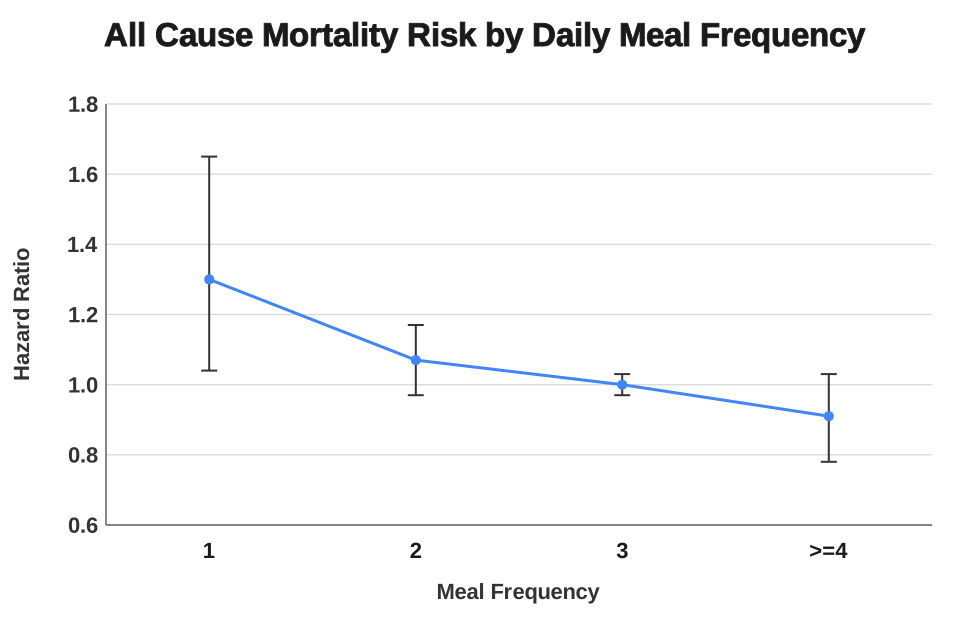 Premature death hazard ratio steadily declines as the number of daily meals increases
Compressed Eating Windows: Not as Beneficial as Thought
Even without skipping meals, simply compressing the time between meals negatively impacts health. Eating meals with less than 4.5 hours between them increases all-cause mortality by 17%. This challenges the popular notion that narrowing your eating window is universally beneficial.
Mechanisms Behind the Risks
The adverse effects of meal skipping and compressed eating windows appear to be related to two primary factors:
- Overeating: If you reduce your daily meals or eat them too close together, you’ll likely consume more food per sitting than someone eating three meals spaced throughout the day. This leads to:
- Increased calorie intake per meal, resulting in higher blood sugar spikes.
- More dramatic insulin level fluctuations, potentially leading to insulin resistance over time.
- Inefficient nutrient absorption and utilization: The body has limits on how much it can absorb and process in a single sitting:
- There’s growing evidence that many nutrients have absorption limits per meal, though the specifics are still being studied.
- Studies on Alternate Day Fasting (ADF) support this idea: even when participants consume 200% of their usual calories on eating days, they still lose weight. This suggests the body is less effective at processing and utilizing nutrients from larger, less frequent meals.4
- Skipping meals may therefore result in less overall nutrient absorption and utilization, potentially impacting various aspects of health.
These nutritional challenges may contribute to increased health risks and potential damage to our bodily systems over time. They underscore the potential benefits of regular, balanced meal patterns for optimal nutrient absorption and metabolic health.
Reality Check: Fasting vs. Calorie Restriction
Early research on fasting in rodents showed promising results, suggesting that fasting could provide the same benefits as calorie restriction without reducing overall calorie intake. This sparked decades of research attempting to demonstrate similar benefits in humans.
However, a randomized controlled trial with 107 overweight or obese women, conducted over six months, found no significant advantages of intermittent fasting over traditional calorie restriction.5
Key findings:
- Both intermittent fasting and continuous calorie restriction led to similar weight loss.
- No significant differences were observed in blood pressure, LDL cholesterol, or inflammatory markers between the two groups.
This study suggests that fasting’s primary benefits are calorie reduction and the resulting weight control—effects that can be achieved through other dietary approaches.
How Intermittent Fasting Differs
Despite the lack of superiority over calorie restriction mentioned above, some studies have suggested potential benefits of intermittent fasting:
- Autophagy: Intermittent Fasting may promote cellular “recycling,” potentially benefiting longevity and cellular health.
- Insulin Sensitivity: Fasting for longer than 18 hours improves insulin sensitivity.65
While increased insulin sensitivity can be very beneficial to diabetic or pre-diabetic people, it’s not clear how autophagy benefits people overall. It sounds excellent for cellular recycling, but additional studies are necessary to confirm it extends lifespan in people.
Does Intermittent Fasting Cause Muscle Loss?
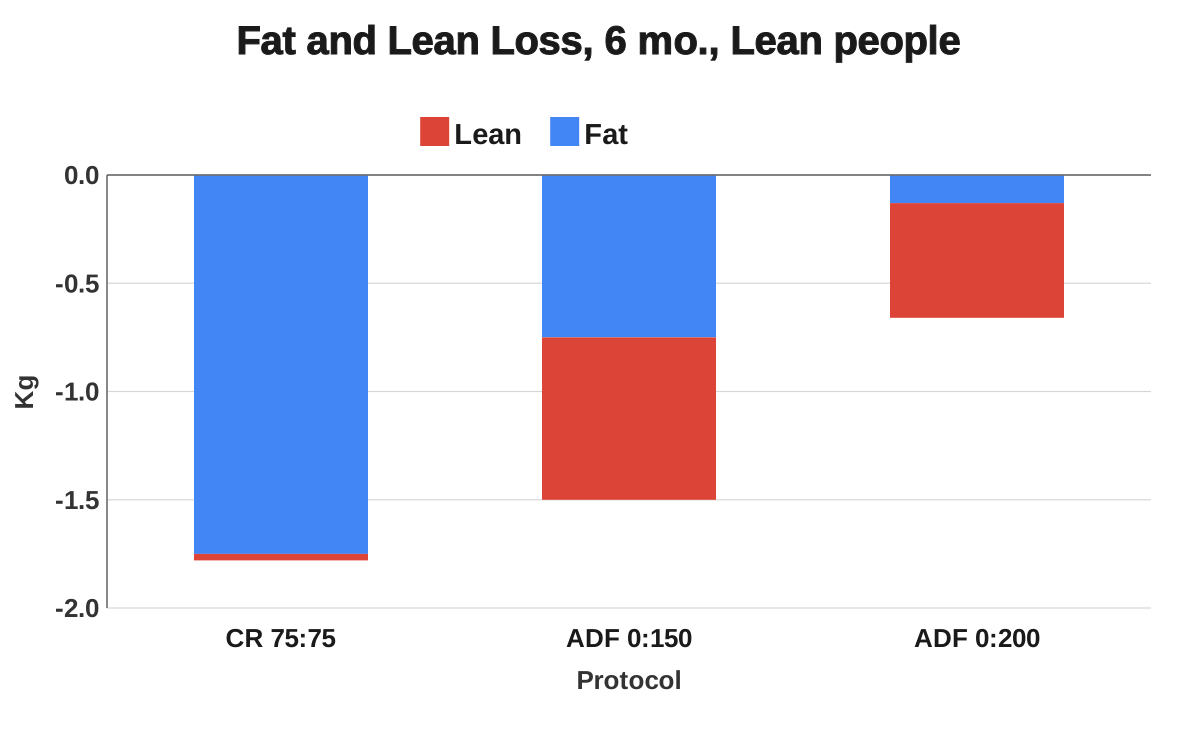 Going to zero calories on fasting days causes lean muscle loss
Some longevity experts have recently moved away from fasting, not due to longevity risks, but because of potential muscle loss. This concern is particularly relevant to strict, zero-calorie fasting protocols extending beyond 24 hours.
During extended fasts, the body switches to fat-burning for energy. However, red blood cells lack mitochondria and can only use sugar for fuel. As liver sugar stores deplete, the body resorts to converting muscle protein into sugar through gluconeogenesis. This process can result in significant lean muscle loss during fasting periods. To mitigate this risk, consume 300-500 calories daily for fasts longer than 24 hours. This minimal intake provides enough sugar for red blood cells, reducing the need for muscle breakdown.
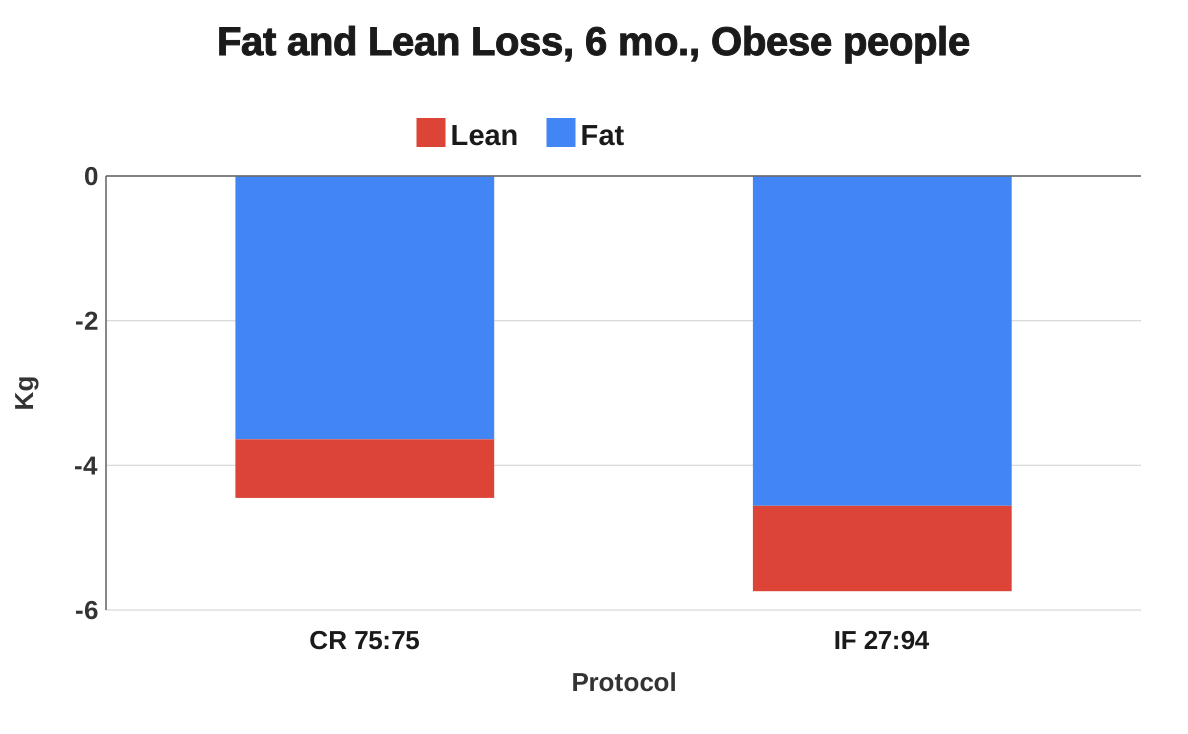 25% calorie intake protects lean muscle mass
Balancing Weight Loss Benefits and Fasting Risks
The ACM increases are calculated after controlling for the Body Mass Index (BMI). If fasting helps lose weight, the hazard ratio for ACM does not reflect this benefit, which may reduce ACM.
My Fasting Journey: A Personal Perspective
I’ve been practicing 5:2 Intermittent Fasting for over a decade, so researching this article was a real eye-opener. When I started over ten years ago, I thought my IF would give me the benefits of continuous calorie restriction without having to restrict calories every day. I felt great on my fasting days, experiencing mental clarity and a sense of accomplishment.
However, seeing the latest research shows no benefit of IF over calorie restriction, combined with likely unhealthy effects from overeating at meals on the days I’m not fasting, I’ve decided to stop 5:2 fasting. It’s not an easy decision after so long, but it’s the right one for my long-term health.
I’m now working on adjusting my food intake to a more consistent, lower amount daily. Breaking the habit of larger meals on non-fasting days is challenging, but I’m committed to making this change. I’m focusing on nutrient-dense foods and spreading my meals throughout the day to avoid the pitfalls of compressed eating windows.

Key Takeaways
Based on the current evidence, consider the following recommendations:
- Aim for regular, consistent meal times rather than extended fasting periods.
- Spread your calorie intake across 3-4 meals daily, with at least 4.5 hours between meals.
- If dieting to lose weight, early TRF (with breakfast) or Intermittent Fasting are valid alternatives to regular dieting.
- Avoid extreme TRF approaches like OMAD, given the associated mortality risks.
Conclusion
While fasting can be an effective tool for calorie control and weight management for some individuals, it’s not the universal health panacea it’s often made out to be. The scientific evidence, particularly regarding time-restricted feeding and meal skipping, suggests that balanced, consistent eating habits may be more beneficial for long-term health than fasting protocols.
The key to long-term health is finding an approach you can consistently maintain without adverse health consequences. As research in this field continues to evolve, it’s crucial to stay informed and be willing to adjust our dietary habits based on emerging evidence. The ideal eating pattern may involve more frequent, smaller meals rather than extended fasting periods or highly compressed eating windows.
Where does your routine leave you? Take the biological age calculator and see the years on offer.








2 comments
Wow, this is really revolutionary information. It actually makes me a little sad, haha. Compressing food into less meals is what made me sore satiated and the belief that the ACM risk was reduced, then the choice was easy. Now I’ll have to reconsider and I am not sure if reduced satiety is worth the lower ACM risk, but prpbably I’ll change my regimen. Good to hear you are open to new information and changing your opinion based on this and besides that that you are living up to it!
Thanks, Vedran. I’d been squinting at the fasting studies for a few years, thinking that there was benefit there, but once I saw the data that skipping meals or shortening the time between them suddenly made sense: the body works better with lower, steady nutrient intake. It will be an adjustment to move back into eating every day of the week, but fasting is often out of sync with other people, so I’m looking forward to having more normal meal timings.