Last updated: October 8, 2026

 September 25, 2025
In This Article
After pushing through high-intensity intervals and grinding through strength progressions, our Unaging Challenge participants discovered something surprising: the simple act of walking delivered some of the most profound health improvements yet.
The 12,000-Step Revelation
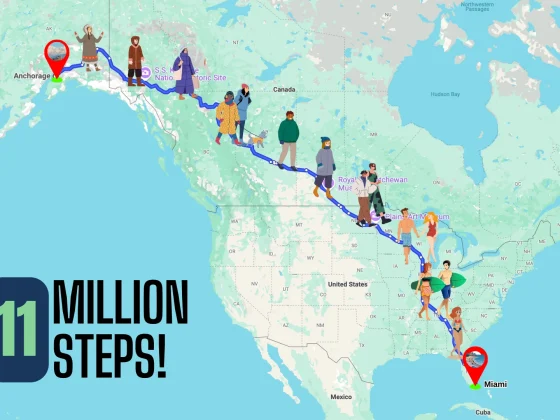
Twenty-two participants tracked 10.6 million steps over 12 weeks—a 10x increase from our previous cohort. But the real story isn’t in the total distance covered (roughly equivalent to walking from New York to Los Angeles and back). It’s in what happened to their biomarkers along the way.
By week 7, something remarkable emerged in the data. VO₂max climbed to 47 ml/kg/min while resting heart rate dropped to 48 bpm—improvements that typically require months of dedicated cardio training. One participant noted: “RHR is at some of my lowest-ever values (48-51 bpm) over the last two weeks, and HRV at highest-ever… It’s surprising to me how I’m seeing much bigger effects from walking than from the Cardio Kickstart HIIT (High-intensity Interval Training) phase!”
This aligns with what the research predicts but rarely demonstrates so clearly: consistent daily movement at 12,000 steps reduces all-cause mortality by up to 65%.1 For a 50-year-old, that translates to nearly 10 additional years of life expectancy—matching or exceeding most pharmaceutical interventions.
Why Walking Beat HIIT (For Some Metrics)
The factorial framework I’ve discussed previously explains this perfectly. Walking hits all three longevity systems simultaneously:
Vascular: Average blood pressure improvements exceeded those from dedicated exercise sessions
Immune: Consistent moderate activity optimized inflammation markers without the stress spikes of intense training
Metabolic: The sheer volume of low-intensity work improved insulin sensitivity throughout the day
Unlike HIIT’s focused bursts or strength training’s targeted stress, walking provides continuous, sustainable stimulus across multiple systems for hours daily. It’s the difference between taking a powerful supplement once versus maintaining optimal nutrient levels around the clock.

The Compliance Secret
Here’s what separated success from struggle: participants who integrated walking into necessary activities maintained the habit effortlessly. Those who viewed it as additional exercise time struggled after week 8.
The winners’ strategies were brilliantly simple:
- Choosing restaurants 20 minutes away on foot
- Walking meetings instead of sitting
- Post-meal walks that doubled as digestion aids
- Parking in the furthest spots deliberately
- Walking treadmills while watching TV (several participants caught up on entire series this way!)
One participant reported: “Walking for a purpose (e.g., to get to work) is the best.” This wasn’t exercise—it was life redesign. The walking treadmill discovery was particularly clever—turning passive screen time into 5,000+ productive steps.
The Sleep Surprise
An unexpected finding emerged repeatedly in participant feedback. Those who increased from 10,000 to 12,000+ steps reported something no one anticipated: uninterrupted sleep.
This makes physiological sense. The additional 2,000 steps (roughly 20 minutes of walking) likely pushes participants past a threshold where accumulated physical fatigue overrides the modern tendency toward fragmented sleep. Combined with the circadian benefits of increased daylight exposure during walking, it creates ideal conditions for deep, restorative rest.

Heart Rate Variability: The Hidden Winner
While VO₂max improvements grabbed attention, the HRV data tells an equally important story. Average HRV increased from 41ms to a peak of 64ms by week 7—a 56% improvement that indicates enhanced autonomic nervous system balance.
This matters because HRV independently predicts cardiovascular risk. A 20ms increase in HRV from a baseline of 41ms corresponds to about a 50% lower risk of a first cardiovascular event.2 Our participants averaged a 23ms improvement—potentially cutting their cardiovascular risk by more than half.
The Weather Reality Check
Not everything was smooth stepping. Participation dipped predictably during weeks 10-11 when summer heat peaked. But this revealed an important insight: those with backup plans (treadmills, indoor malls, early morning walks) maintained their streaks while outdoor-only walkers saw 30% step reductions.
The lesson? S-tier interventions need B-tier backups. A treadmill might seem like a poor substitute for nature walking, but it’s infinitely better than the couch.
Strength Maintenance During Volume
Participants maintained one weekly strength session throughout the challenge—a deliberate choice based on research showing single weekly sessions preserve muscle mass and strength.3
The result? No strength losses despite the high step volume, and several participants reported feeling stronger due to improved recovery. The low-intensity movement between strength sessions appeared to enhance rather than impair adaptation.
Beyond the Numbers
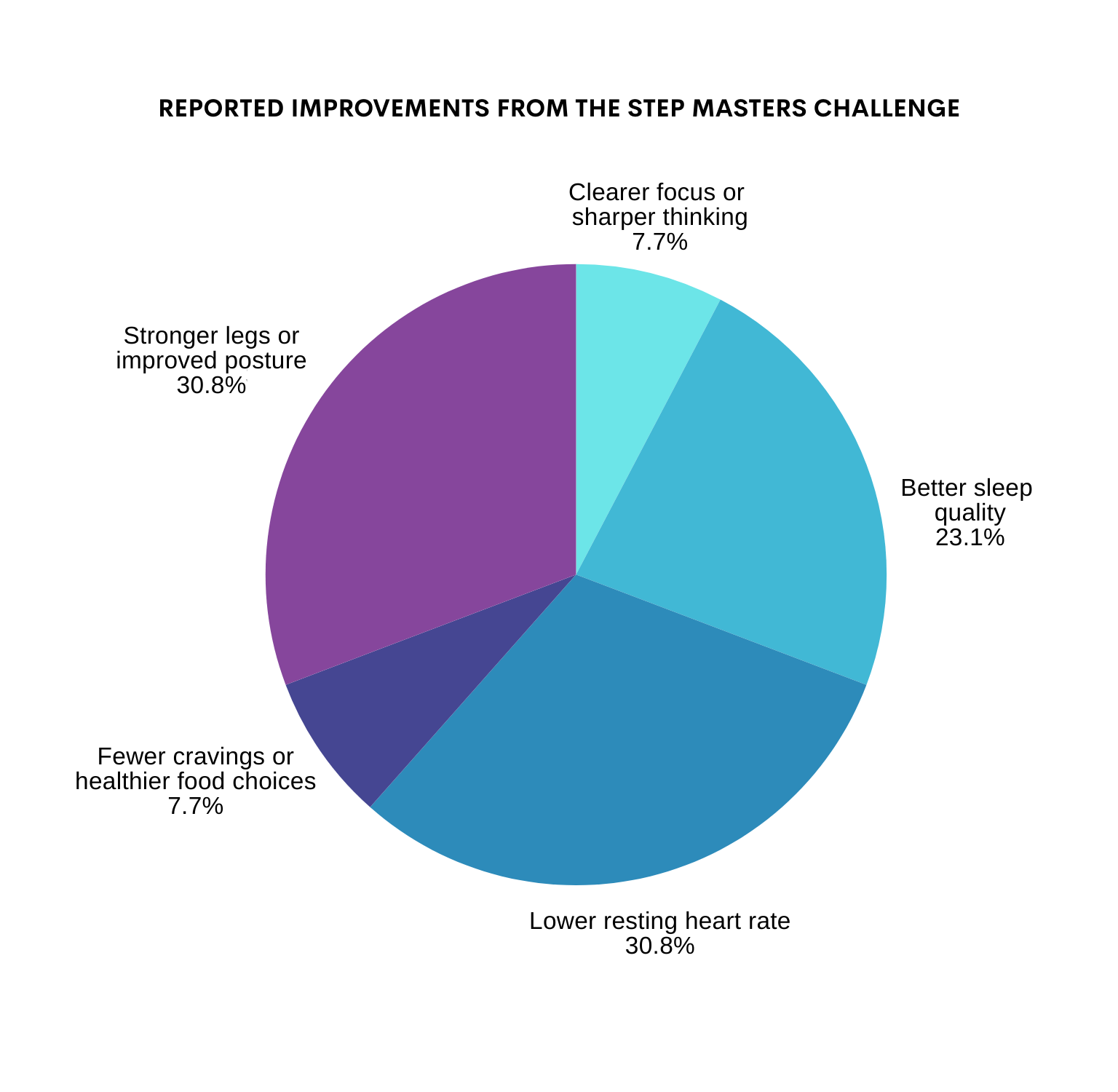 Four participants rated the challenge 5/5 stars, with the average at 4.0—our highest-rated challenge yet. But the qualitative feedback revealed something more important than satisfaction scores:
“Got me walking outdoors and inspired my family to walk too!”
This cascading effect—where individual behavior change influences family and social circles—amplifies the public health impact beyond our tracked participants. If each of our 22 participants influenced just two family members to increase daily movement, we’ve effectively tripled our impact.
The Practical Protocol
For those ready to implement this approach:
Daily Target: 12,000 steps (excluding running/sports)
Weekly Strength: One full-body session (maintenance mode)
HIIT: Continue existing protocol if established
Implementation hierarchy:
- Track baseline for one week
- Increase by 2,000 steps weekly until target reached
- Identify three “walking opportunities” in daily routine
- Establish weather-independent backup plan
- Monitor sleep quality as compliance indicator
What This Means for Longevity
The Step Masters data confirms what population studies suggest but rarely prove at the individual level: walking might be the single most underrated longevity intervention available. It requires no special equipment, costs nothing, and provides benefits that exceed many medical interventions.
At 12,000 daily steps, participants achieved:
- Cardiovascular improvements matching dedicated training
- Sleep quality rivaling pharmaceutical sleep aids
- Autonomic balance suggesting reduced stress response
- Metabolic benefits throughout waking hours
Most importantly, 95% of participants who reached week 12 reported they would continue the practice—a sustainability rate that no extreme protocol can match.
Next Steps
The 2026 Unaging Challenge will build on these insights. Based on participant feedback and biomarker outcomes, we’re developing a periodized approach that cycles between different movement intensities while maintaining the 12,000-step foundation.
For now, the message is clear: before optimizing supplements, perfecting macros, or chasing the latest biohacking trend, establish the foundation. Walk 12,000 steps daily. Do it consistently. The biomarkers—and your future self—will thank you.
The 2026 challenge is now open for registration. Register for the 2026 Challenge here!