Last updated: October 8, 2026
 April 9, 2026
Timestamps:
00:00 The Journey to Longevity: A Personal Exploration
02:25 Understanding Exercise and Longevity
05:25 Evaluating Health Interventions: Mortality vs. Morbidity
08:31 The Role of Sleep in Longevity
11:14 AI’s Impact on Health Research
11:22 Cholesterol and Peptides: Unraveling Complexities
11:47 Understanding Key Biomarkers for Longevity
13:36 The Role of Inflammation in Health
15:23 The Complexity of Cholesterol and HDL Levels
17:06 Peptides and Their Potential in Longevity
20:34 Motor Neuron Loss and Aging
22:40 The Longevity World Cup and Its Implications
29:07 The Importance of Walking for Longevity
33:25 Resolving the Exercise Paradox
38:15 Components of an Ideal Longevity Training Protocol
48:19 The Unaging Challenge: A Path to Longevity
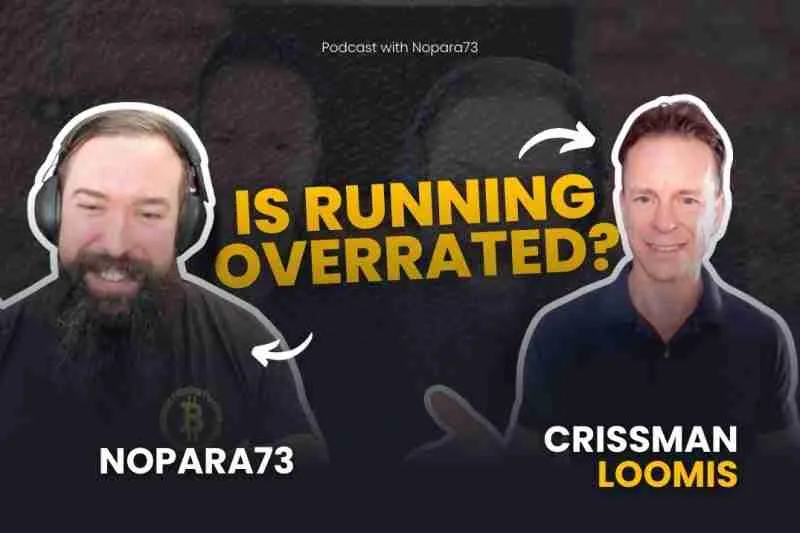
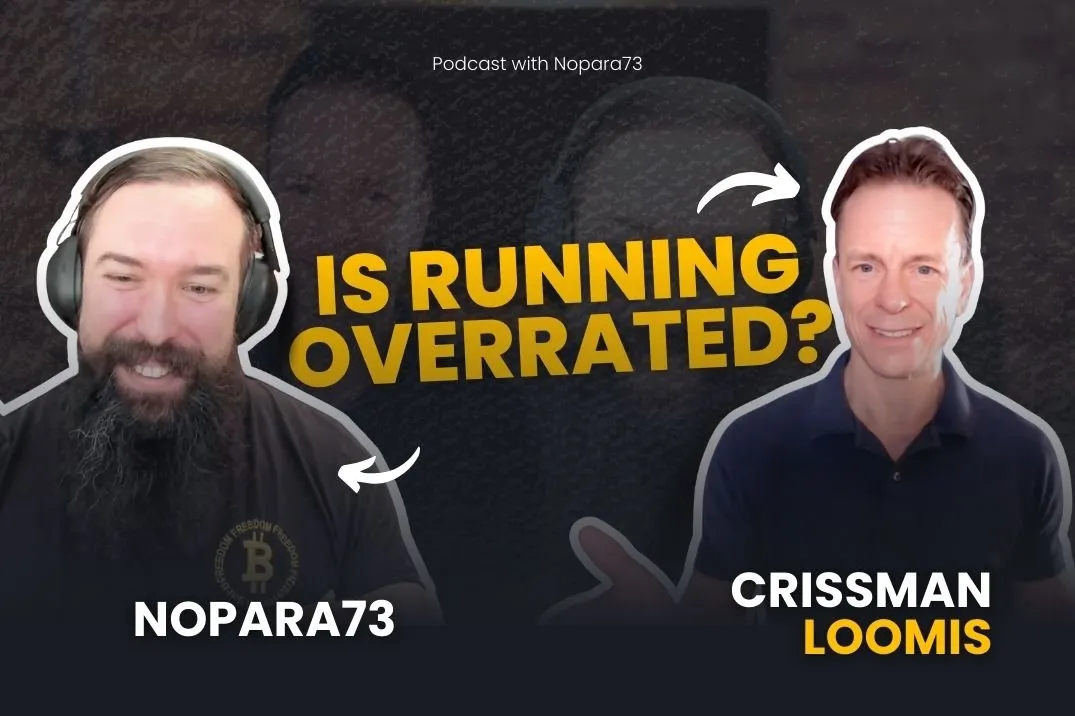
Crissman: Walking is one great example of a habit that’s the S-tier. It’s one of the most effective habits you can have, and it’s neglected by a lot of the top longevity influencers. If you say, I ran 10,000 steps, that doesn’t get you any of the longevity of walking to 10,000 steps. So it’s very clear on this. I tried back again to some of the research on running, and they find that there’s kind of an optimal dose of it. Honestly, if you run about half an hour a week, you get all the longevity benefits of running. So if you run for 10,000 steps a day, you’d get nowhere near the 75% reduction in all-cause mortality you’d get from walking 12,000 steps. If you’re in it for the long game, trying to live for longevity, then all you need to do is put in regular effort, even at a low rate, and it’s going to just steadily build until you’re going to be at about the best you could be anyway. So the whole point of it is that steady wins the race in this case.
Crissman’s Journey to Longevity
Nopara: Crissman Loomis, welcome to the show. You are one of those people who like to put the results out there, and I’m interested in your journey here. Can you tell me a little bit about your journey? Why are you even in this space?
Crissman: Well, it started really with a book that’s called The China Study.
My father read it. It’s quite a famous book. It talks about the correlations between diet and health within China, which has a very large data set.
But the author has a bit of an ax to grind, in my opinion. He’s very strong against saying that everyone should be 100 percent vegan and live that way. So my father actually read it, and then he said, OK, I’m going vegan, I’m going vegetarian. I was like, OK, I read it once, and I actually went vegan for a full year.
And after that, aside from almost getting cavities, getting warned by my dentist that there was getting way too much sugar in my diet, so my teeth were rotting from too much fruit, I questioned, like, is it really the thing? Like, do vegetarians just live longer than people who are not vegetarians? So I started to go into Google Scholar and just go through all the studies that I could find on veganism or vegetarianism versus people who eat meat or people who eat fish or other things.
And that really started the journey where I started to say, well, these things we kind of hear, you say that this is better for you, that is better for you. I just really started to go into the research and look at the observational studies to see, OK, well, the people who do these habits, do they actually live longer or not? Vegetarians maybe have a slight advantage, but it’s going to be equaled by, example, pescatarians who eat fish, which have a life extending benefit to it. And vegans actually seem to have anything to perform a little less well than vegetarians. The lack of protein, they have some respiratory issues that seem to show up as they’re too strict in things, and the lack of protein overall.
Turning Longevity Research Into Practical Insights
Crissman: Once I had started from there, I just started to go into it. Okay, well, I’m doing exercise. I go running a certain amount of things. But how much do I really need to do? I mean, given I’m doing it for the purpose, I want to live long and healthy. But as much of that life as I can get, I want to spend doing things other than running.
It very quickly turned into a kind of question of, like, well, how much should I be running? How much should I be lifting weights? Do I need to go and spend an hour every day? Or is it just that 45 minutes a week is enough? And the data for observational studies is quite good. There are many data sets that have large amounts of samples of this that you can go into to see, okay, well, what are the actual results of this? Which people actually live longest? And then once I started there, I just kept on pulling things and started publishing on my blog to say, okay, look, well, this is useful information. I’ve kind of boiled it down to what I feel are the prime components. And then put it on my blog and started sharing it with people.
And that was exciting and interesting. And by training, I’m a mathematician. So…
The other thing I want to say, OK, well, OK, this reduces all cause by mortality, let’s say, by 30%, which is like the reduction from drinking coffee. If you drink two cups of coffee a day, it’ll reduce your all-cause mortality by about 30%. OK, but that doesn’t mean you’re going to live 30%longer.
That means your chance of dying in any given year is 30% less, which increases as you get older and older. So I started looking at that to say, okay, well, I need to be able to convert these numbers to reduce all-cause mortality by 30% to say how much life is that actually worth? And then I can do the comparisons of other things. So I started doing some actuarial tables and saying, okay, reducing all-cause mortality by 30% every year will give me how many actual extra years of expected life?
Ranking Longevity Habits by Impact
Crissman: So then I made a calculator out of that so that anyone could go on to that. And one of my pet peeves in life is sort of if you go into longevity and you read about things that are healthy for you, oftentimes you’ll get what I call just a laundry list, right? An unordered, unsequenced, unquantified list of like 10 or 20 things.
And I’m always like, okay, yeah, maybe they’re all good, but which one is the best and how much? Like, is it worth it to worry about this at all?
So that became one of my main missions, just going through. And every time I see, like, these are the things that are good for longevity, and exercise is going through, and then trying to quantify exactly how much benefit you get from each of them. And at what point should you just stop reading the list? Because of these things, yes, it might be slightly better for you, but you won’t even notice the difference. You won’t be able to see it.
So that was sort of how I got into it. And then I’ve just been kind of continuing to expand from there.
Nopara: Regarding that, let me ask you a question, because how would you evaluate this? So this is a dilemma that I have in the longevity specific training is that you see, OK, on the one hand, you want to improve your biomarkers, right? And let’s say you do specific workouts like strength training and running, cardio, high intensity, whatever. This improves your biomarkers so much better than something like learning how to fall.
It improves your biomarkers, but if you’re only looking at it from the optimization of biomarkers point of view, learning how to fall doesn’t matter if you’re doing the other things. Right. But on the other hand, most people die from falling. Okay. They have other problems, but eventually not most, but a huge percentage. A fall leads to their eventual death.
So how would you… Where would you put it? I don’t know what you meant by you’re categorizing them. Do you have an actual numeric system here?
Crissman: Yes, exactly. So I started with basically quantifying each of them based off of what the reduction in all-cause mortality is. And then from there, I went in to build that into the tiers of longevity and to say, okay, this is tier S, A, B, C, and can quantify each of them against each other.
Something like how to fall, honestly, is one that I haven’t looked at directly. So I don’t have any numbers ready to go on that. But that’s going to be a combination of things, including the frailty you get as you get older. And a lot of the issue with falling is not that they don’t know how to fall, but rather that they don’t have the power to do the response to catch themselves.
My father is getting older as well and is also struggling sort of getting around the house. He’s over 90 now and is sort of beginning to kind of counter-surf, if you will, right? Just so he doesn’t fall on something. Because it is a very big thing as you get into that age.
Basically, I’ve focused only on the things where if we can get enough observational data, we can say, look, this is going to reduce your all-cause mortality by this percent. And that’s the basic, the ground truth for me, of which intervention I’m going to focus on is the one that’s going to give you the greatest reduction all-cause mortality.
Nopara: But how about morbidity? Because there is another tension in the biological aging clock space, should we include morbidity or just mortality?
Crissman: Right, so there was an excellent study done by Harvard Medical School where they looked at the five greatest interventions for living as long as you can. And they end up being kind of what you would think they are. They are: don’t smoke. Okay, we have some findings on that at this point. Other ones are do muscle training, do exercise, eat a healthy diet, and maintain a healthy weight.
And of those five things, he also then took a look at the morbidity versus the mortality of each of them. And he found basically that each of them give you, after the age of 50 or so, a certain amount of lifespan out of it, an additional lifespan. And of that lifespan, of that additional lifespan, 80% of it will be a healthy life, not with any major diseases, not a morbid life.
So I try to simplify that by saying, look, I’m going to look for the greatest life extension because that will also, 80% of that will also be a healthy life.
The one exception to that, unfortunately, that had a negative effect was BMI. So, carrying excess weight on your body. And this doesn’t kick in as quickly as you think. You don’t need to be like it has a deep base to it. But once you get to around a 30 BMI, and by the way, this isn’t like it, whether you’re getting that from muscle, the way you’re getting from fat, basically, you’re carrying the extra weight either way, it seems to kick in morbidity significantly faster. So you don’t, it’s going to cause you to have more unhealthy years of general life.
So in terms of that, that’s the only exception I really found. Otherwise, generally, things that are good for extending your life also extend your healthy life.
So aside from being particularly careful about your overall body weight, I think that generally you can simplify it just down to looking for what extends your life.

Why Sleep May Be Overrated for Longevity
Nopara: It occurred to me that sleep was not in there. Is there a reason or not?
Crissman: Yeah. Sleep is so oversold, and it just doesn’t, I mean, I get it. Like, it seems like it’s super important, especially if you have a bad history of it. But, I mean, there’s a bunch of contradictions here.
First of all, the optimal amount of sleep for all-cause mortality is seven hours. That’s considered to be the time you want to sleep. Seven thirty? Just seven hours, total hours of sleep.
They should be the same hours, right? You shouldn’t be going, you know, sleeping early one night and sleeping one late night the other.
But in terms of all-cause mortality, it would be like a D tier or something. And also, it’s more important that you sleep less hours than that you sleep more hours i mean there’s a kind of a feeling that oh i should be sleeping half of my day and then i’ll live forever the other half but actually it’s less healthy to sleep eight hours than it is to sleep six hours.
So the correlation actually goes the opposite way, like people who are worried about their sleep because they’re they’re think they should be sleeping too much. Actually, you should be sleeping seven hours, and if you have a choice, sleep less, not more
So it’s a bit counterintuitive that way, that basically the benefit runs the opposite way. And the effect size just isn’t that great to put it on the edge of you’d live longer drinking coffee, even if it messed up your sleep, than you would from the lost sleep time you get from having caffeine in your system, for an example.

Are Peptides the Future of Longevity?
Nopara: Yeah, let’s, okay, let’s talk about cholesterol and then peptides because I’ve been a bit, well, I think I’m not conflicted on cholesterol anymore, but there are still open questions for me. My understanding is that there are all these metabolic markers, right, like glucose and insulin and triglycerides and cholesterol and what not. Okay. There is no scientific debate about anything except one thing. Glucose has to go low. HbA1c has to go low.
Not too low, but low generally. Insulin has to go low. Triglycerides has to go low. Okay, so what’s HDL? Probably have to go up, you know, LDL. Okay. Now we have a problem with LDL here. With LDL, it doesn’t really matter. Probably VLDL matters more. Everyone wants to say that VLDL has to go low and APOB is the one that really matters, which has to go low.
I have a problem because in the longevity World Cup, I don’t know if you heard about that. It’s a competition I launched.
Crissman: Yeah, I saw a bit about it.
Nopara: Yeah. Last year, we were using PhenoAge. This year, we are using BortzAge.
And an interesting thing about the Bortz Age is that it considers total cholesterol. And the higher your total cholesterol is, the better your Bortz Age is.
And, you know, it’s not right. Right. Exactly. OK, so because this is not, it wasn’t a choice, a design choice by the author. This is the result he found based on the data set that he was examining. Right.
Now that gets me conflicted. Right. It got you conflicted as well. Okay, so what’s your take on… Do you have any speculation here?
Crissman: Let me look back and talk about limitations of PhenoAge first. Because, I mean, that’s quite an interesting one. It’s been around for a while. But here’s one that’s kind of funny, I find, from that one to start with. I think it has triglycerides or something in PhenoAge. Or no, it has glucose. It has a glucose level or insulin.
And that’s like an artifact. Like, basically, glucose is not as good of a biomarker, if you’re looking at longevity, as HA1BC. Like, that one is going to give you a much better reading about sort of the long-term glycation of the bloodstream. I’m making up terms. I’m actually, as I mentioned, a mathematician, not a doctor.
Nopara: Bortz have both. HbA1c and borts. The bortz, i.e. croc, has both in it.
Crissman: Yeah. Right. So you get a better indication from that. But another fascinating one is that PhenoAge doesn’t have LDL at all or cholesterol. And the reason that is, is that of all those, here’s one that you might not have thought about because I haven’t written the blog post yet. It’s at work. I believe actually, that the most important biomarker for a cardiovascular disease is not cholesterol, LDL, HDL, APO1, LPA, or homocysteine. It’s actually HSCRP. So HSCRP is a monitor of how much inflammation you have, systemic inflammation in your body.
And it’s much more accessible. You can reduce it much easier than you can reduce your cholesterol. I’m sure that you’ve heard that people trying to lower their cholesterol through their diet. It’s a hard slog, and you’ve got to change a lot of the foods that you’d like to eat.
Which, I mean, even for foods that people like to eat is a hard thing to make change for. And actually, if you look at it in terms of the all-cause mortality… Ground truth: Did people die? Lowering your CRP will have a greater reduction in cardiovascular disease than lowering your cholesterol.
So I hadn’t heard of measuring cholesterol as a positive thing all in one way, but it has the, like as a mathematician, it has the feeling of they were looking for things that had a simple linear relationship as opposed to like a V-shaped or a hockey stick shape, right? Right. Because I would think, you mentioned HDL. My HDL is ridiculously high. That’s not a brag. It’s supposed to be bad for me, actually. Like a couple of things say it’s not good. I try to enter it into those little online calculators of how long you’re going to live. So I punch in my HDL of 110, and it blocks back, invalid answer, please enter a valid value for HDL.
I’m like, come on, man.
So, like, it’s one of those things that HDL also has a U-shape to it. They believe that probably it’s low. But then you look at, okay, what causes high HDL?
And there are basically three things that can do that. One of them is alcohol consumption. Check. I am a moderate consumer of alcohol and sometimes immoderate. Don’t tell my longevity followers.
Another one is walking. And I have a walking desk, so I walk 20,000 to 30,000 steps a day. And it’s like the chart is linear. Basically, the more you walk, the higher your HDL will be. And then the third one is weightlifting.
Nopara: That’s unreal.
Crissman: Well, I tell you, if you were walking all the time you were programming, you would get in a lot of steps, too.
Nopara: Yeah, you know, I just got the standing desk, and it’s a game-changer already. So I’m now starting to feel like maybe I could do the walking stuff as well. Well, where were we? Wait, you also said the lack of U-shaped curves, which is very important because when I… first implemented the PhenoAge algorithm right yeah i’m like what the fuck is going on the higher your albumin goes the better it is is like you’re dead at one point why and you go into negative right it’s right like no no this this doesn’t work like this this is bullshit.
So I had to, I just patched it, you know, I’m a programmer, I patch it. I introduced some caps, right? Yeah. So there are a few things like CRP. CRP can go as low as it can go. That’s okay. There is no U-shaped curve, but almost everyone, everything else has a U-shaped curve.
So, yeah, there are a lot of things about PhenoAge. And when I realized, okay, so Mike Laskartan did research about where these limits should be in the PhenoAge algorithms. And when I realized it, I was like, okay, so let’s look at other biological aging clocks. And turns out all the fucking biological aging clocks have this exact same problem. And this is such a design flaw, right? Like, what the fuck, man? Like, come on. It’s bad.
Crissman: Right, they’re just doing like a linear fit, basically. They’re trying to say, okay, we’re just going to use these things as a bunch of linear things and do a linear model on it. And most of the biology stuff has a sweet spot, not the more the better.
Nopara: Yeah, but the argument is that it works at the population level. Mm-hmm, right. Yeah.
What else do we have here? You talked about peptides, right? I really don’t get what the difference is between a peptide and a regular supplement. Like, what’s going on there?
Crissman: Right. I mean, the peptides are going to be sort of, and I’m not entirely sure on this yet either. I tend to be a slow adopter because when you’re using the baseline of all-cause mortality, you have to have a lot of people doing it before you can get the data to see whether they died faster or not.
And at this point in the research, I think that basically from healthy life habits, healthy diet, healthy habits, healthy exercise, you can get to probably over 90 years old. And then after that point, now we’re on a different, it’s a different game. So you talk about the kind of, well, I was mathematically modeling it, and this part didn’t work out. So I just added in a fix, right? I did that for the longevity tables as well. I noticed that like, okay, so if I stack together all of these reductions in all-cause mortality, eventually all-cause mortality would be like half, like 5% or something. And then I would get predictions that you’re going to live to 140, which nobody’s going to do. So I have around the age of 100, it’s just a flattening thing. Like whatever your interventions are that got you to 100, they’re not going to get you past that. And now it’s about a 50% chance every year of dying, right? So…
The peptides are still, I think that they will be the future, but I’m not actually sure. I mean, we had, you know, it’s kind of like a long person who’s been trying to live longevity stuff for a long time. When the microbiome came out, it was really exciting. And people thought, oh, my gosh, we’re going to figure out how to decode the microbiome, your gut biome, so that you eat the right foods. We’ll turn this around. And aside from being able to, like, fix celiac disease through a transpusion of bacteria, really nothing has come useful out of it, aside from eat fiber. Right.
So, I mean, I’ve done my American biome, American gut, and other things to have my biome sequenced. And I mean, sometimes it’s like you have a great biome. Yeah, I’m a good person. Your biome is bad here. Oh, I’m bad. And like basically the probiotics and the prebiotics seem to be questionable in their effect at all. It doesn’t seem to work and is sometimes even counterproductive. Like they found things where if you take probiotics too aggressively, then you actually damage your native fauna, and maybe too much variety is also not good.
So I’m hopeful that the peptides will actually have a benefit to that. And at this point, they seem like to do like with Ozempic and some of the other things.
But in general, at this point, I’m like, okay, well, if I do these habits, I can get another, I’m 55 now, so I could get another 45 or so, maybe years out of it. And hopefully, they’ll have figured out something more stable by that time. Because I don’t think, at this time, I don’t have any particular peptides that I recommend, aside from the ones that are already being done, like Ozempic and semaglutide for losing weight, which is very healthy.
Nopara: Yeah, actually, I tried liraglutide, right? One of the earliest daily dose stuff. Mm-hmm. But it completely messed up my sleep and heart rate. Not just heart rate and heart rate variability, but also I actually wake up at night because it messes up my sleep so much.
The reason why the side effect didn’t appear yet at that point is that people have shitty sleep, so they just don’t notice if it gets prettier, you know? But my sleep is really good already.
Crissman: I mean, the response they usually give from the people who are pro-Ozempic and other things is like, okay, titrate the dose, right? Like, okay, so drop it down so it’s not messing with your sleep, but it’s still suppressing your appetite. I don’t know.
Nopara: Anyway, the point is that I really tried to hack it around. And perhaps there is some hope if I would try semaglutide or Reta-Trizapatide. I don’t know what it is. There might be hope. But based on the mechanistic stuff that I’ve read, I’m not very hopeful about those. So we’ll see. Yeah.
Anyhow, you said something very interesting there because you talked about the motor unit loss being the bottleneck for 120.
And I am wondering if you’re coming from the same direction as I do, or if you’re coming from a completely different direction, and you have some new information to share here.
So I did follow Tony Regia. There is a YouTuber guy. Tony Regia, yeah. He wrote a paper, which is like, you know, it’s not a proper scientific paper. It’s kind of like an essay or something. A more technical essay, but let’s call it a paper.
And there he said some interesting stuff about this motor unit loss. And then Mike Lustgarten started to look into this as well. And he brought up a couple of more things. There might be something about it, and it’s very underappreciated.
For example, the 119, 16-year-old woman who just died. Perhaps she died from her lungs not being strong enough anymore to breathe, right? Died of old age. So it seems you are familiar with this story.
The question is, is there anything else you cannot hear, or is this the reason you believe that’s the bottleneck?
Crissman: Well, I mean, it comes from exactly what was said, I mean, Tony Regia did a fantastic job. Like I, you can ask chat TPT, and it won’t give you the answer that he found, which is to say that no motor neuron loss and the loss of strength are fundamental. You can make it through to a hundred years old, but after a hundred years old, virtually no one can even walk without assistance. Now we’re not talking about lifting anything, just walking without having to use a stroller or some kind of thing.
So that I don’t take anyone’s word for anything. I go to the studies. So then I went into the studies and started to go through them.
And there’s the study. It’s not new. That’s one of the other things that’s funny about it. One of the studies I was redoing is a 1977 study that talked about, look, the maximum your body then tries to cover for the loss of the motor neurons by having one neuron control more muscle fibers.
Right. Oh, this muscle fiber doesn’t have a neuron. We’ll sprout and then cover that muscle neuron. So you don’t notice the loss of the motor neurons because they’re starting to cover more weight. But that only works until you get a load of about five times what they started with. And then instead of like covering for the sixth one, the whole motor neuron then becomes overloaded, and you lose all five in an instant.
So they have beneficial sprouting that they talk about, but then once you’re getting to an average motor neuron density of around five times what it started with, now it’s unproductive negative sprouting, and it’s basically accelerating the loss.
So that’s why the process kind of is invisible, and people are like, well, maybe you just go to the gym, and you’ll be fine. But the gym does nothing for your motor neurons. The cases are very clear. They will make you stronger. So the muscles that still remain can still be fired. But once you lose all the wiring, it doesn’t matter how strong the muscle fibers are. You don’t have the wiring for it, and you can’t move anymore.
Tony Regia and I have some disagreements on this kind of thing, but he absolutely is the source of this. And this is the biggest challenge that we have, trying to find a way around this. And this is something that, when you look at Aubrey de Grey and his seven hallmarks of aging or 11, whatever, completely misses this particular mechanism that takes everybody out and is not cured by, say, improving mitochondria.
Nopara: I’m just going to interview him. So if you have any questions regarding this, then throw it.
Crissman: Please challenge him on how we are going to live without motor neurons?
See, that’s the thing. We need much more attention on this because no matter how good your mitochondria are. So, Maria Branyas Morera, the woman you mentioned who died at 116 last year. Her mitochondria were excellent. The function of her mitochondria was comparable to that of some teenagers or something.
She had great biomarkers, but it didn’t save her from… I hope that’s even possible. She didn’t exercise and stuff. Yeah. I mean, she was in a wheelchair from, I think, her 80s or so.
So the doctors are saying, we can’t imagine why she died. Meanwhile, she is old and has been in a wheelchair for the last 40 years of her life.
Yeah, she had really good genes, though, and other things. She had some definite benefits and some very strong things. I read the whole paper that Tony linked to as well on her cause of death and kind of how well she was doing. She did really great on the PhenoAge results as well.
I don’t know if she’d have won your contest. I guess if they die, they’re no longer eligible competitors, right?
Nopara: Well, you know, the PhenoAge is historical, so…
Crissman: Yeah, it could work.
Nopara: Actually, that’s a pretty good point. I might just alter as, you know, an honorary athlete.
Crissman: Right. Yeah, and I’m very interested in where she would rank in the Longevity World Cup, you know?
Nopara: Let’s see. So I was trying to think about… Maybe Mike. Maybe she’s taking over Mike.
Crissman: I mean, yeah. So Mike is Mike. He won your the PhenoAge contest. Deservedly so. He’s Mike also has his one ground truth. And for him, it’s PhenoAge, right? Like he’s trying to minimize, you know, reduce his PhenoAge, and he’s laser focused on all those markers.
But for me, I don’t think the markers matter as much. I think that this can kind of become like a fetishism, right? Where it’s like, okay, my triglycerides are 70, but I want them to be 50 kind of a thing, right? And I don’t think that gets you a material increase in longevity.
Although I very much enjoyed having the throwdown with Siim Land and Brian Johnson and was proud to be better than Brian Johnson on 27 out of 50 biomarkers, despite being six years older.
But I don’t, I mean, I don’t think that stuff is going to give you that good of an indication for how long you’re going to actually live versus some of the habits.
Walking vs Running for Longevity
Crissman: Walking is one great example of a habit that’s the S tier. It’s one of the most effective habits you can have. And it’s neglected by a lot of the top longevity influencers. Brian Johnson, as far as I can tell, does no effective walking. And you cannot speed run the walking. Like, if you say I ran 10,000 steps, that doesn’t get you any of the longevity benefits of walking 10,000 steps.
So it’s very clear that this was tried back again to some of the research on running, and they find that there’s kind of an optimal dose of it. Honestly, if you run about half an hour a week, you get all the longevity benefits of running.
So if you run for 10,000 steps a day, you’d get nowhere near the 75% reduction in all-cause mortality you’d get from walking 12,000 steps. You get around the 30% or so reduction you get for aerobic benefits. Oh, but neither of those really are going to show like it’s really hard to look at someone’s biomarkers and say, does this person run? Does this person walk?
Right. Like these kind of things just don’t show up in that level of granularity. And so it’s I think it’s more important to focus on the habit level also because they’re just more accessible. Right. Like if someone says you really should have a lower LDL, it’s kind of like, OK, where do I get that from? Right. Like, how do you do that in your life?
And know that it’ll have an effect. But if somebody says, ” You really should walk 12,000 steps a day”, then that’s something that you can make a planner on and actually do.
Like one of the fun things is they used to say, I think actually some people probably still do, that sitting is bad for you. You shouldn’t sit. OK, so now you have this guilt feeling like every time you sit down in a meeting as opposed to standing, or you sit down to eat a meal, you’re like, I’m killing myself by sitting here, or watch a TV show. And I looked at the numbers on it, and the trends were kind of weird, right? Like lots of people have desk jobs and live just fine. But it turned out that there was definitely a negative correlation with longevity once you got after 12 hours of sitting.
But the thing is, when you talk about someone who’s sitting for 15 hours a day, it’s not that they’re sitting for 15 hours a day. It means they’re literally doing nothing else. There’s no other time left in the day once you’re sitting for like 15 hours, other than getting up and going to the bathroom, maybe cooking food.
So it’s not about the sitting. It’s about once it gets to that level, you’re not walking or doing any kind of activity. So reversing the frame of it to say, look, I’m not going to tell you that you shouldn’t be sitting. You don’t have to set a little timer to distract yourself and jump up and do a bunch of jumping jacks and get back to your work, which also is going to destroy your concentration during your work. Just right.
Nopara: I mean, yeah, yeah. It’s like, fuck, I’m so annoyed by these. Yeah. Microblakes, the best thing in the world, except that you want to get shit done.
Crissman: Exactly. Like that was like just as you’re starting to focus in on something like the next thing I need to do. And then you have a little alarm go off and now you’ve got to do that. So instead of say, don’t worry about that at all. Just make sure that you get in the walking and you can do that on the way to work on the way back while you’re working, whatever. So the positive framing for that, I think, makes a huge benefit in how actionable it is and accessible it is for people to get the benefit out of it, as opposed to kind of looking at the negative side.
Nopara: Although now that we have AI programming, now we can do, we can just tell the AI to do something. And you always have like some time, like I’m just waiting for the AI to finish the thing that I want. So now I’m doing like micro brain.
Crissman: No, we’re back. We’re back into the age of compiling, aren’t we? Right. Like, oh, I gotta wait for it to compile. So I’m going to go and…
Let’s talk about the exercises here. I just watched a TEDx talk from you, and there was a dilemma on how to, well, first of all, one study was that you don’t have to run a shitload of time.
The other study was that you have to run a shitload of time. So what’s going on there?
Crissman: Right. So the thing is, is that oftentimes they’re sort of like you should run a lot, and then they’re looking at sort of the biomarkers you get out of it. Right.
So actually, the specific thing is they often talks about how VO2 max, which is your lung capacity, is correlated with long life. And basically, the higher your lung capacity, the longer you’re going to live. But then the other side of it is the study that I mentioned before, which says that if you run, let’s say, about half an hour or so a week, every week, then you’re going to that’s all the benefits you’re going to get out of it for longevity. So I was looking at this conflict saying, like, look, I should be as super fit as I can with the maximum amount of VO2 max that I can achieve. But you’re telling me I only have to run once a week.
And that one puzzled me for a long time until I found a study by a pair of Australian gents who looked to see how basically your VO2 max improves over time. And basically VO2 max is as long as you’re running every week, it’s just a straight line for how much total time you run.
Whether if you run three times a week versus once a week, the only difference is that you’re going to progress three times as fast. But if you’re running for a year or two, you’re also hitting the max either way. You just hit it three times faster if you ran three times a week. So that was how I resolved the paradox of realizing that, yes, you should be as your lungs should be as healthy as they can. But if you’re in it for the long game, trying to live for longevity, then you’re not got a race coming up or something. Then all you need to do is put in regular effort, even at a low rate. And it’s going to just steadily build until you’re going to be at about the best you could be anyway.
I shouldn’t say the best, but you’ll be close to where you could be. So the whole point of it is that steady wins the race in this case. If you’re just steadily building and you don’t ever take a break, so you fall down again, like your body will then drift off all of the genetic, you know, the biological enhancements you made. As long as you’re keeping consistent, over the period of a year or so, you will be fit.
So that was the resolution to the paradox is it doesn’t have to be eight hours, like most of the studies on exercise, are like one or three-month studies. So they don’t get to that point. So then they try to cram it in as hard as they can. They run every day for like an hour or two hours or something.
But for longevity, you’re much better served just by doing sort of a minimum amount in your body, which just continues to improve over that time until you reach pretty close to where you would be anyway.
Nopara: What’s your ideal training protocol for longevity? No, no, no. I mean, the types of training.
The Four Pillars of Unaging Challenge
Crissman: So there are four components. So I’ve put together the Unaging Challenge, which then goes through and teaches the ideal longevity training outfit. So there’s basically four different components that all seem to be accumulative with each other.
So one of them is we’ve talked about is just aerobic exercise. And this is running kind of any speed that is fast enough so that you’re able to be a little bit out of breath. You would have trouble having a normal conversation.
The second part of it, then, is the high-intensity interval training and the response that the body has to high intensity. This is at 90% of your maximum heart rate. This is the point where not only can you not talk, but you’re lucky to get out a few words. This is maximum effort. And this has a huge benefit on top of just doing the aerobic stuff. So it’s a separate component, orthogonal.
The next component after that is what I consider to be the weightlifting, the strength training. And this one, we talked about having like lots of exercise and having a U kind of benefit where there’s a sweet spot to it. Strength training actually is not a U. I think of it as like a V.
Like many people are shortening their lives because they do too much strength training. The optimal amount of time for strength training for longevity is an hour or less a week, total time in the gym. Right. So you look at people like Brian Johnson, there are other people who are doing half an hour, an hour a day.
After two and a half hours, the longevity studies are very clear from observational. You would have lived longer if you had stayed on the couch. Like it’s that it’s that bad. And after two and a half hours, now you will die faster.
Nopara: Right. So stop. Don’t tell me the fourth one. I want to speculate on that, what that might be. That’s the most interesting. But let’s talk a little bit on the strength training part. So I told you I put a lot of thought into that.
A lot of thought into how to construct an ideal program for longevity. And I didn’t even come this far to have the categories down. But then again, I have a feeling that I would have went something like aerobic, high intensity and strength training, and weight lifting, resistance training, right? I probably would have ended up somewhere here.
But then again, on the strength training stuff, you said one and a half hours a week. Here is something interesting that I’ve been thinking about that science might not be capturing. Hmm.
Okay, so what does science capture? Science captures stuff that can be well parameterized up and down. Two seconds, three seconds. These parameters this is what science can parameterize.
Now, what does, let’s say, a gymnast do for these animal flow exercises, walking and walking on all fours, and tumbling around on the ground, street workouts stuff like that you know these are very messy exercises you’re not even exercising you’re just a monkey on a playground right doing all kinds of hard stuff, and you end up having muscles.
This is one that I’ve been thinking about because a gymnast, because these people can, when I was doing these kinds of things, I could train so much more than right now, I’m doing weightlifting, Olympic weightlifting actually, because that’s what I have access to. Yeah. And I’ve never done it. So that’s something interesting.
OK, but when I was doing this gymnastic street workout, playground workout kind of stuff, I could work out so much more and so much longer because there are so many different kinds of muscles moving. You can move in so many different ways that ultimately, you can recover from them much better.
If you’re doing more interesting exercises, then perhaps you can push out the workout, optimal workout windows for longevity, much longer than what scientists measured about lifting weights in the gym. You see?
Crissman: So my routine is sort of the opposite of that. So literally three exercises, a workout, four reps or so, four sets of each exercise. And it’s optimized to do the maximum amount of muscle possible. So like a bench, incline, or flat, and then lat pulldown of some kind or pulldown or bent over row, and then squats or deadlifts. Right.
And so the whole thing for me is optimized to get the most amount of muscle moving and make sure we’ve got full body movement, and yet minimize the amount of time. So that’s like a 48-minute workout.
But I say that. And yet my current challenge is that I’m working on doing a muscle-up. Yeah. Which is back. Yeah. It’s back to the gym, this kind of thing. And it’s been great. Like, I’ve been having so much fun with it because, despite doing this kind of exercise, I’m odd. I can do maybe 12 chin-ups. No problem. I’m getting from getting this kind of exercise is the lat muscles that I’ve never used. I had never exercised. So I’m starting from like zero, and I’m probably about four months into it now. And now with bands, I can do a muscle-up and am trying to make smaller and smaller bands to improve it.
But that’s focusing on the power aspect of it, because the muscle-up requires the explosive power to get yourself momentum to get past the hard part. These things, I’m still trying to do some additional kind of gymnastic kind of things. Like one of the guys who was giving advice on it was able to do it back when he was a gymnast.
But yeah, it’s interesting. I don’t know. Like, if you’re doing kind of a greater variety of things, would it be okay? A lot of the people who are doing more of it are just doing kind of split body, but they’re doing basically the same thing these days. Maybe.
Crissman: How about one thing that I’m a little bit conflicted on, not a lot, but there are these static exercises, right? Like gymnasts do a lot of holds and planches, and these are the best exercises for lowering blood pressure. Interestingly, if you do a static hold exercise, then you lower your blood pressure. We know that gymnasts are doing a lot of these things, and we know that gymnasts are one of the people who live the longest among all gymnasts, and what’s the other thing? When you have to jump, jump around, pole jump, and something like that. Yeah, pole vaulter. Yeah, okay. But gymnasts, static exercises.
Have you ever looked into static exercises for longevity, or are you just out of scope? Yeah. Yeah. Yeah. So I did an article where I was looking at blood pressure and that one comes up. Right. So, in the isometric exercise, we were doing a wall squat. Right. Basically, you get down, and you lean against the wall.
I tried it. I already do squats, as I mentioned, quite significantly, and I found no benefit at all over what I was already doing for the squats, which kind of makes sense. But for people who are not doing an exercise, then the isometric is going to give them the biggest bang for improving their blood pressure. So I’ve kind of looked at it in that sense, especially for the blood pressure thing that you mentioned. But I found that since it didn’t give me any benefit over the squats that I was already doing, I kind of thought, okay, it doesn’t seem like it really is giving a specific benefit to it. So I do find that I’m able to do whatever I want. The squats and deadlifts will also give you flexibility, which surprised me. I thought I needed to do stretching. I haven’t stretched in years, but I can touch my toes, which I couldn’t do before I was doing the exercise and the weightlifting in the gym.
So the fundamental exercise, I think, gives you the most benefit out of it.
And I don’t know, it’s sort of difficult then, as I said, since I’m always looking at the all-cause mortality, it’s hard to say, okay, this person was doing this kind of exercise. All you’ve got really is the time in the gym. And it seems that more than about an hour is not a good thing.
Nopara: You just dropped the clue there about the fourth pillar, that it’s not going to be stretching. Okay.
Crissman: No, it’s not.
Nopara: Let me guess. Is it balance?
Crissman: Nope.
Nopara: Okay, okay, okay. Now this is getting interesting. What could it be? So we are talking about an exercise, right? An exercise type. We talked about motor units. So perhaps something about explosion?
Crissman: Nope.
Nopara: No, no, no. Okay, okay. How about movement culture? Like movement culture, like dancing or martial arts? No?
Crissman: Nope.
Nopara: Okay, wow. Wow.
Crissman: You’re going to say that was obvious when I tell you. We’ve talked about it several times already.
Nopara: Strength? Yeah?
Crissman: Nope.
Nopara: Okay. Okay. I don’t know. Tell me.
Crissman: Walking.
Nopara: Oh, yeah. Oh, yeah. Okay. Okay. I know what you mean. Yes, of course. The non-exercise activity aspect, right?
Crissman: Yep.
Nopara: Well, I didn’t look into the studies, but that’s my understanding as well. So it has an additional benefit even if you do all the exercises, right?
Crissman: No, I mean, all of these, I have kind of studied in various ways, but all of them stack with each other or are cumulative. So the benefit, each of them, I find it to be fascinating because basically, I mean, you could do sort of a pyramid of this because the high intensity interval, the high intensity, you can only do it for about a total of half an hour total time per week, right? Because it’s high intensity. We’re going at maximum effort. And then for the running, you can do around 30 minutes of that.
And then for the weightlifting, it’s about an hour.
And then, walking is the easiest and the hardest of all of them because all you’re doing is walking. And most people can do it. But at the same time, to get the right dosage, you need to do it for about an hour and a half to two hours a day.
And for many people, if you haven’t built that into your life, or you have kind of things you do where you’re walking or have gotten yourself a walking desk, it’s very difficult to get that amount. It’s one of the Unaging Challenges; it has four different stages. And that’s the one where I kind of get more negotiation, if you will. Like, what if I how about I only walk eight thousand steps a day? Right.
What about 10,000? You know, 10,000, I’m like, it’s a challenge. 12,000 steps, do what you can. I mean, this is always, of course, always your own ability and time and life intervenes, and that kind of thing.
But at the same time, I’ve had several people who’ve come back of like, ” No, that was the most significant of the four challenges. Like walking 12,000 steps a day, I sleep better. My VO2 max got better from the walking than the aerobic challenge.” Right. So I’ve actually had several people, like, no, that’s when I lost weight, who have said, actually, that was the one that moved the needle the most.
Because it’s such low-intensity, you can do much more of it. And it just has sort of a steady. It reduces your CRP, the inflammation marker I talked about the most, because you can just do it for the most clock time of any of the exercises.
Nopara: Really? OK. What’s the unaging challenge?
Crissman: So the Unaging Challenge is a program that I do. It’s a year-long challenge. The idea behind it is that we’re going to teach you all of the habits that will give you the longest life. So the quick pitch is one and a half hours of exercise a week, an extra 20 years of life.
Right. And we’re not counting the walking in that hour and a half.
That’s not really exercise. It’s just walking.
So there’s a bit of a sleight of hand there. But the other ones, like the high intensity, the running, and the weightlifting, all can be completed in a total time of an hour, 90 minutes a week. So we go through four different challenges in the year. And each challenge then, is just getting used to the new habit that we build.
Starts out with a high intensity in the aerobic. The next challenge is the strength challenge. After that, it’s walking. And then we go into tuning of the diet.
And with some very basic things on that, sort of like just counting kind of servings of sort of things as opposed to getting into calories or grams or anything. It’s been fantastic. I found it to be hugely rewarding. Of course, the first people who’ve been willing to do it have been my friends and family. And it’s been noticeable, the impact. So I haven’t. I want to have my birthday party and my friends come over, sort of the year after we did the unaging challenge with my friends. My friends were noticeably healthier. I mean, we’re 50-year-old guys or women.
And they were noticeably stronger and sort of more fit after the Unaging Challenge, which was really gratifying and makes me very happy. So the challenge, we’re doing it on an ongoing. People can join when they want to. It’s free.
You track your things on a spreadsheet with other people. We’re looking at maybe improving that with a vibe-coded AI, something so that it’s easier than a Google spreadsheet.
But we put people into groups and teams so you can see other people. They can see what you’re doing. It just sort of makes it feel less like a thing you’re doing by yourself and more of an effort, then and have some joint collective statistics for it. We’re going into the after we had the fast starters.
This is our second year of it. And I hope to grow it to very large numbers. But honestly, it’s still quite small.
Nopara: I don’t know how effective this kind of challenge is, but for me, this was the one that made the largest difference. I did Siim Land’s two-week-long longevity challenge at one point. You know, I was…
For many years, I was trying to eat healthy. For many years, I was trying to stop smoking. And on the LGBT challenge, I just, okay, now it’s cold turkey time. So I stopped for two weeks, no smoking at all. And after that, for I don’t know, as five months passed, then I still didn’t smoke a single cigarette. So this was the one that made the difference for me, this social challenge that I never tried before. Right, good luck with that. It’s not bad, it’s not a bad idea.
Okay, well, thank you very much for coming. This was excellent
Crissman: Yeah, thank you. It’s great to talk to you.
If you have more questions, please take a look at my site, unaging.com. You can register for the Unaging Challenge there. You can try the calculator to see what are the things may give you the most longevity.
It’s great to talk to you. And thank you for being one of the referees for many people to try to better themselves.
Nopara: unaging.com. It was a pleasure.