
Last updated: October 8, 2026

 August 26, 2025
In This Article
With over 55 million people worldwide living with dementia, the question of how to prevent dementia has never been more urgent. While genetics play a role, research shows that up to 45% of dementia cases could be prevented through lifestyle modifications1. The challenge? Separating evidence-based strategies from well-meaning but ineffective advice.
After reviewing dozens of studies spanning decades of research, clear patterns emerge about what truly protects cognitive function throughout life. The timing matters enormously—what works in your 20s differs from what’s crucial in your 70s. Here’s what the science reveals about how to prevent Alzheimer’s disease and dementia at every stage of life.
The Education and Brain Training Myth
For decades, researchers observed that people with higher education had lower dementia rates. This led to widespread recommendations about the protective effects of learning and mental stimulation. The logic seemed sound: exercise your brain like a muscle, and it will stay stronger longer. This spawned an entire industry of “brain training” activities—crossword puzzles, sudoku, memory games, and specialized apps promising cognitive protection.
A Norwegian study tracked cognitive function and dementia risk across different education levels, controlling for IQ scores2. The results debunked the conventional wisdom: IQ was the primary driver of dementia protection, not education level itself. People with high IQ but low education had a similar dementia risk to those with high IQ and high education. Conversely, highly educated individuals with lower IQ showed no additional protection from their years of schooling.
This finding demonstrates that cognitive reserve—your brain’s inherent processing capacity—matters more than accumulated knowledge, educational credentials, or mental exercises. While education correlates with lower dementia risk, it’s because people with higher IQ tend to pursue more education, not because education itself provides protection.
The same logic applies to brain training activities. If you enjoy crosswords or Sudoku, continue doing them for pleasure. But don’t adopt puzzle-solving as your primary dementia prevention strategy. The evidence for cognitive protection from these activities is weak at best3, and you’ll get far more benefit from the interventions outlined below.
Midlife Prevention: The Longevity Approach (Ages 40-65)
The most powerful dementia prevention strategies align remarkably with longevity interventions. This makes biological sense: dementia often results from the same vascular and metabolic problems that drive other age-related diseases. Looking at the Longevity Tiers, virtually all A-tier, B-tier, and C-tier interventions show similar magnitude dementia protection—typically 15-35% risk reductions.
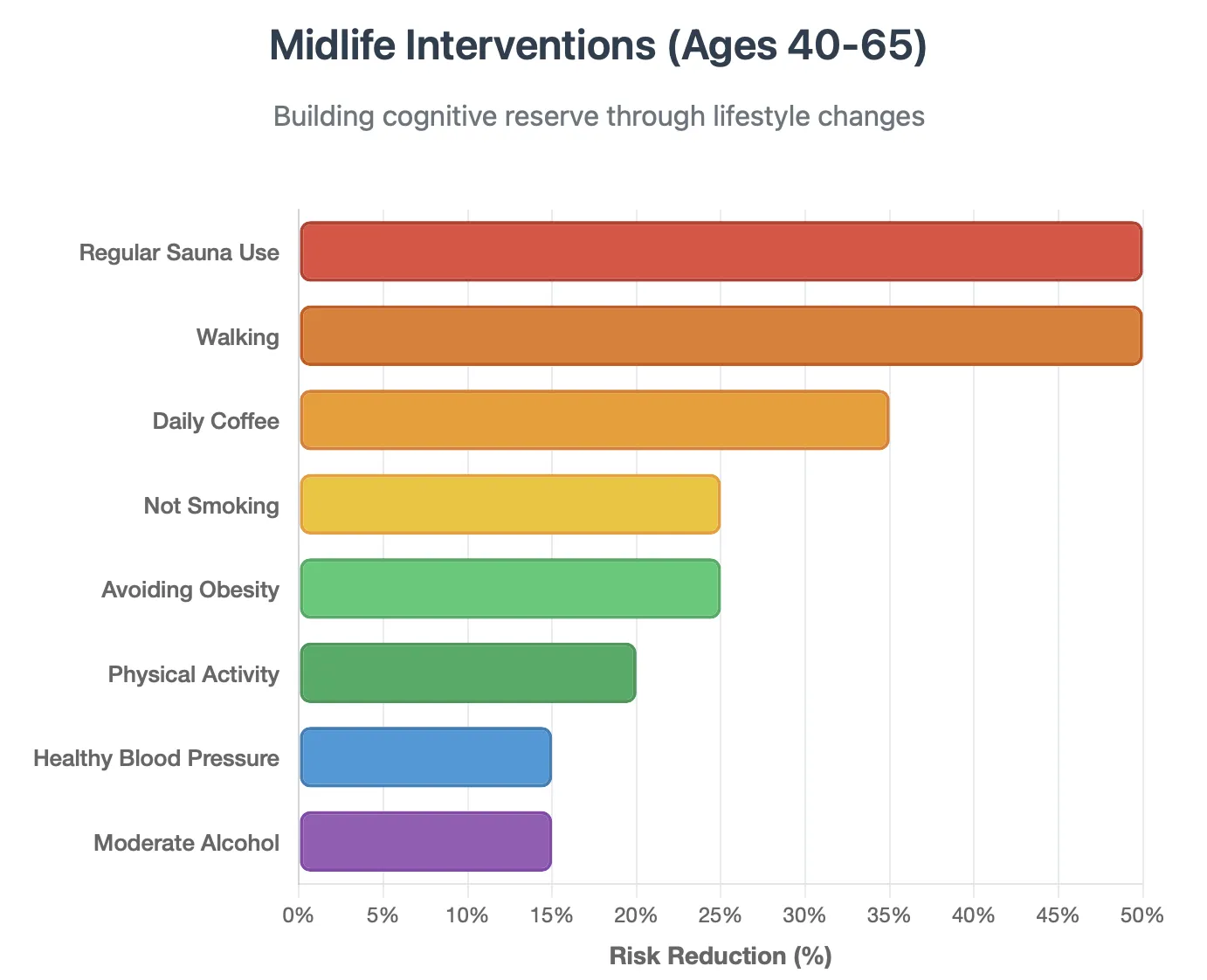
The window for these interventions to work is crucial: They must be implemented consistently during midlife to provide meaningful protection. Trials attempting to introduce these healthy habits to seniors as late-life interventions have largely shown no effect—the protective window appears to close by later life. While starting later still provides some benefits, the compounding effects of midlife interventions offer the strongest protection.
Sauna Use: 50% Risk Reduction
Regular sauna bathing shows the strongest protective effect against dementia4. Finnish research following participants for over 20 years found that men who used saunas 4-7 times weekly had approximately 50% lower dementia risk compared to those using saunas once weekly or less. The mechanism likely involves improved cardiovascular function, reduced inflammation, and enhanced stress protein production that protects brain cells.
Walking: 50% Risk Reduction
Walking shows approximately 50% dementia risk reduction, but with an important caveat: the optimal benefit occurs at just under 10,000 daily steps5. This differs from general longevity advice where more walking continues providing benefits. For dementia prevention specifically, the sweet spot appears lower, likely due to increased pollution exposure during extended outdoor time, particularly relevant for older adults.

Coffee: 35% Risk Reduction
Daily coffee consumption provides substantial cognitive protection, reducing dementia risk by approximately 35%6. Higher consumption doesn’t show additional benefits in many studies, likely due to smoking confounding—heavy coffee drinkers in older cohorts were more likely to smoke. Based on longevity data, decaffeinated coffee provides roughly half the benefit of caffeinated versions, suggesting caffeine contributes significantly to the protective effects alongside coffee’s antioxidants and anti-inflammatory compounds. Similarly, tea demonstrates strong dementia protection, with a 2024 meta-analysis of over 400,000 participants showing a 29% reduction in dementia risk. 7

Traditional Risk Factors
The Lancet Commission1 identified five major modifiable risk factors in midlife:
- Not smoking: 25% reduction
- Avoiding obesity: 25% reduction
- Staying physically active: 20% reduction
- Maintaining healthy blood pressure: 15% reduction
- Moderate alcohol consumption: 15% reduction
Light to moderate alcohol consumption (1-2 drinks daily) reduces dementia risk, but this benefit must be weighed against alcohol’s other health risks, particularly for women and those with family histories of addiction or breast cancer.
These factors often cluster together, and addressing multiple simultaneously can provide compounding benefits.
Later Life: The Pollution Surprise
Here’s a remarkable fact: dementia incidence has declined by 13% per decade over the past 30 years across developed countries8. The Framingham Heart Study documented similar declines over an even longer timeframe, with dementia incidence dropping by 44% from the late 1970s to the early 2010s9.
You might expect this to coincide with similar improvements in overall mortality, but it doesn’t—there’s been no equivalent 13% per decade decrease in premature death rates during this period. So what’s driving this specific cognitive protection?
Air Quality: The Environmental Factor
The answer appears to be improved air quality. As countries implemented cleaner air standards and reduced industrial emissions, PM2.5 pollution dropped significantly. The protective effect is substantial: a comprehensive meta-analysis found that every 2 μg/m³ decrease in PM2.5 reduces dementia risk by 30%10. This environmental improvement has provided an unexpected cognitive dividend, protecting millions of brains from pollution-related damage.
For older adults with already vulnerable cognitive systems, avoiding pollution becomes critical—it may be the difference between maintaining independence and crossing into clinical dementia.
Personal Protection Strategies
While air quality improvements are ongoing, you can take practical steps to reduce personal PM2.5 exposure. Studies consistently show that indoor air contains significantly less PM2.5 than outdoor air—typically 20-46% lower concentrations11. This means limiting time outdoors during high pollution days provides meaningful protection.
Winter poses particular challenges, as cold weather conditions can dramatically increase PM2.5 levels. For older adults especially vulnerable to cognitive effects, consider these evidence-based strategies:
Monitor air quality: Check daily PM2.5 levels and limit outdoor activities when concentrations are elevated relative to your local baseline.
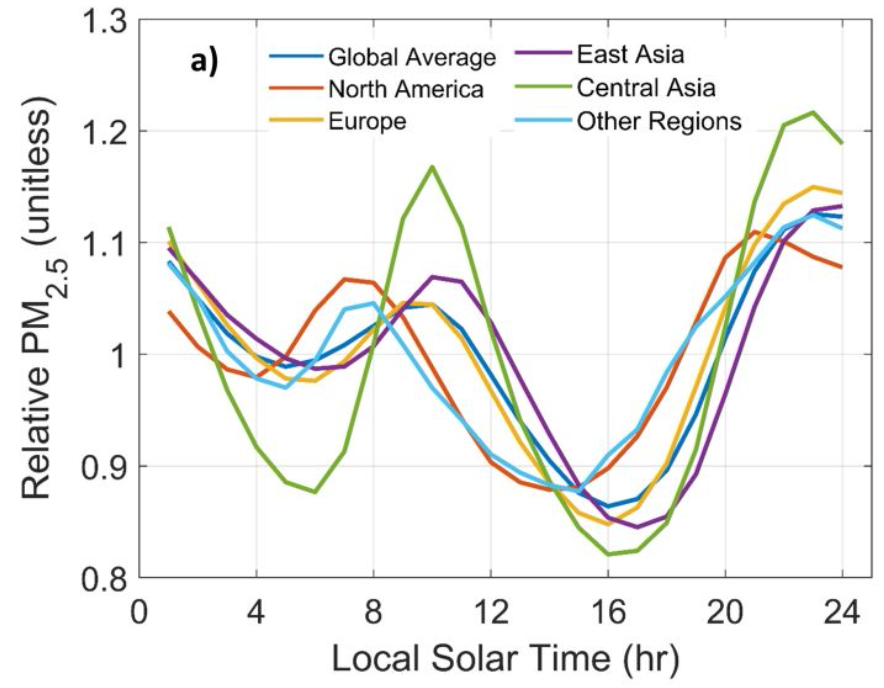
Strategic timing: Outdoor exercise requires careful timing since physical activity can increase air intake by 5-10 times normal breathing rates. PM2.5 follows predictable daily patterns with morning peaks (7-10 AM) and evening peaks (8-11 PM), while afternoon hours (3-5 PM) typically show the lowest concentrations. In some regions, afternoon levels can be 50% lower than morning peaks, making late afternoon the optimal window for outdoor exercise.
Protective equipment: Well-fitted N95 or KN95 masks can reduce PM2.5 exposure by 80-95% during necessary outdoor activities.
Indoor air quality: Use HEPA air purifiers and keep windows closed during high pollution episodes. Avoid sonic air humidifiers, which increase PM2.5.12
During winter or high-pollution days, limit outdoor exposure to 1-2 hours rather than the usual recommendation of 2+ hours. The cognitive benefits of outdoor time diminish when pollution exposure becomes significant.
Social Connection and Hearing Health
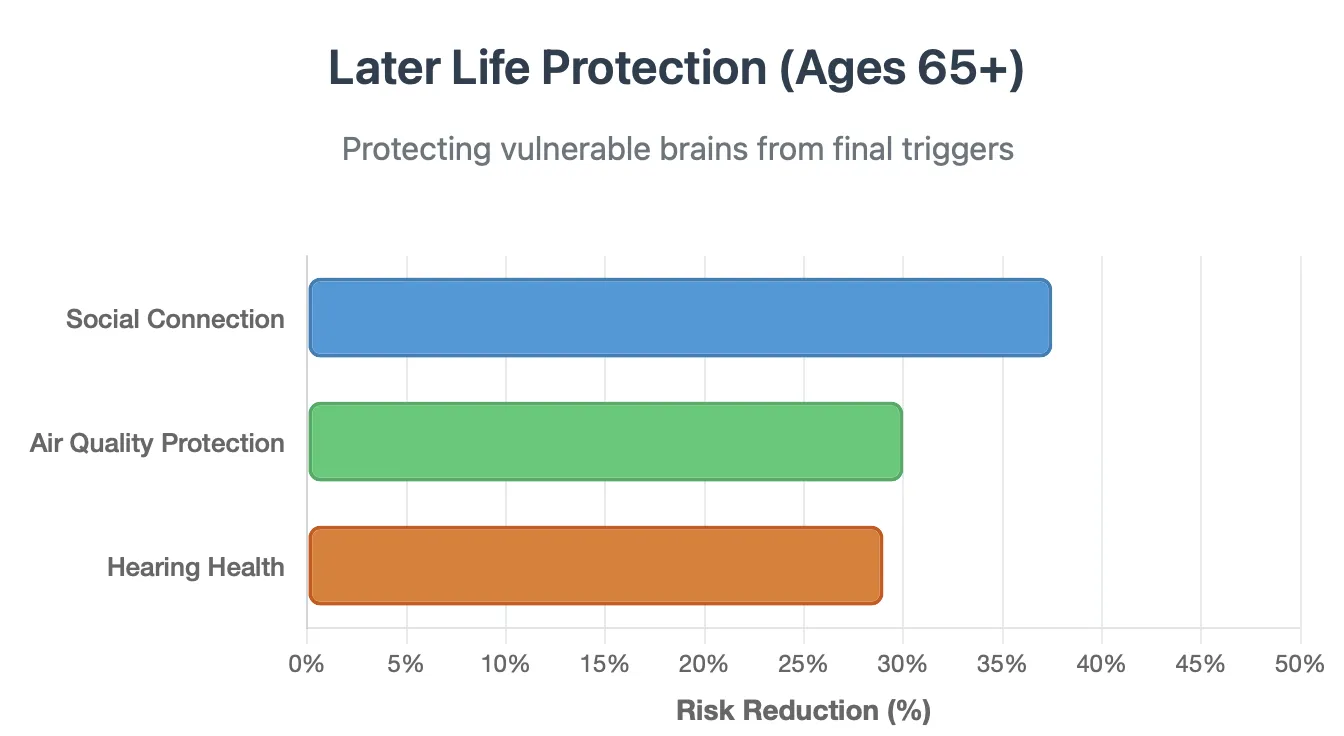
Social connection reduces dementia risk by 37.5%, making human relationships crucial for cognitive health. However, proper hearing care reduces dementia risk by 29%. Hearing aids effectively provide this protection, making them essential tools for dementia prevention beyond their obvious communication benefits.
For older adults, these interventions work differently from midlife prevention. Rather than building long-term resilience, they help maintain cognitive function in brains that may already have underlying pathology. The key is maintaining social engagement while addressing sensory impairments that could lead to isolation.
The Encouraging Reality
Despite the focus on prevention, cognitive decline isn’t inevitable. Even among people diagnosed with mild cognitive impairment (MCI)—often considered a precursor to dementia—most will not progress to full dementia even after 10 years of follow-up13. The brain demonstrates remarkable resilience and ability to compensate for age-related changes.
How to Prevent Dementia: Your Action Plan
In Your 20s-40s: Focus on establishing cardiovascular health habits that will provide protection decades later. Intellectually challenging work and hobbies may be personally rewarding, but they won’t build dementia protection. The foundation you build now determines your cognitive reserve for later life.
In Your 50s-60s (The Critical Window): This is when dementia prevention interventions have their greatest impact. Prioritize the big four: regular sauna use, consistent exercise, cardiovascular health optimization, and daily coffee consumption. This is your last opportunity to build meaningful protection against cognitive decline.
In Your 70s+ (Protection Mode): The window for building new cognitive reserve has largely closed. Focus on protecting what you have: balance outdoor time with pollution exposure, address hearing loss promptly, maintain social connections, and continue established health habits. These interventions won’t reverse existing damage but can prevent the final push into clinical dementia.
The most powerful insight from dementia research is timing. Prevention strategies work best when implemented consistently during midlife. The compounding effects of decades of healthy habits offer protection that cannot be achieved by starting interventions in later life, no matter how diligently they’re followed.
Your cognitive future isn’t predetermined by your genes. The choices you make today—particularly around cardiovascular health and lifestyle factors—significantly influence your risk of developing dementia. Start with the interventions showing the largest effects: regular sauna use if accessible, consistent exercise, and cardiovascular health optimization. These strategies don’t just add years to your life; they help ensure those years remain cognitively vibrant.

Frequently Asked Questions About Dementia Prevention
Is Alzheimer’s genetic?
While genetics plays a role in Alzheimer’s disease, they don’t determine your fate. Only about 1% of Alzheimer’s cases are caused by rare genetic mutations that guarantee the disease will develop. For the vast majority of cases, genetics influences risk but doesn’t guarantee you’ll develop dementia. The APOE ε4 gene variant increases risk, but many people with this variant never develop Alzheimer’s, while others without it do. This is why lifestyle interventions are so powerful—they can significantly reduce risk even in those with a genetic predisposition.
Can you avoid dementia completely?
While there’s no guarantee you can completely avoid dementia, research shows that up to 45% of cases could be prevented through lifestyle modifications. The interventions outlined above—particularly exercise, sauna use, cardiovascular health, and avoiding pollution—provide substantial protection. Even people with mild cognitive impairment don’t automatically progress to dementia; most remain stable even after 10 years of follow-up.
What are early dementia signs to watch for?
Early warning signs include persistent memory problems that interfere with daily activities, difficulty with familiar tasks, confusion about time or place, trouble with words in speaking or writing, poor judgment, and personality changes. However, occasional forgetfulness is normal with aging. The key difference is whether cognitive changes significantly impact your ability to function independently.
Can young people get dementia?
While dementia primarily affects older adults, early-onset dementia can occur in people in their 40s, 50s, and early 60s. This accounts for about 5-10% of all dementia cases. Early-onset dementia often has stronger genetic components, but the same lifestyle interventions that prevent late-onset dementia may still provide protection.
Does sugar cause dementia?
No, sugar doesn’t directly cause dementia. However, there’s a strong connection between diabetes and dementia risk—so much so that Alzheimer’s disease has been called “type 3 diabetes.” The link isn’t about sugar itself, but about insulin resistance and chronically elevated blood sugar levels. While sugar alone doesn’t cause diabetes (that’s primarily driven by genetics, weight, and overall lifestyle), sugary beverages may increase diabetes risk. The key is maintaining healthy blood sugar levels through overall diet quality, regular exercise, and weight management—all of which also protect against dementia.
What causes plaque in the brain?
Brain plaques in Alzheimer’s disease are made of amyloid beta protein that clumps together outside brain cells. While the exact cause isn’t fully understood, factors that increase plaque formation include poor cardiovascular health, inflammation, sleep problems, and possibly infections. The lifestyle interventions that prevent dementia likely work partly by reducing plaque formation and helping the brain clear existing plaques.

Can dementia be reversed if caught early?
Currently, dementia cannot be reversed, but its progression can potentially be slowed. Early detection allows for implementing lifestyle interventions that may slow cognitive decline. Some conditions that mimic dementia—like vitamin deficiencies, depression, or medication side effects—are reversible, which is why proper medical evaluation is essential.
At what age can dementia begin?
While dementia risk increases significantly after age 65, it can begin earlier. Early-onset dementia can start in the 40s or 50s. However, the most common form, late-onset Alzheimer’s, typically begins after age 65, with risk doubling approximately every five years after that age.
Do vitamins prevent dementia?
Most vitamin supplements have not shown strong evidence for dementia prevention in healthy adults. B vitamins (especially B12, B6, and folate) may help those with deficiencies, but supplementation in people with normal levels doesn’t provide additional protection. The focus should be on getting nutrients from whole foods and following the evidence-based interventions outlined above.
Does creatine help prevent dementia?
Creatine supplementation shows modest cognitive benefits in some studies, particularly for vegetarians and older adults. However, the effects appear superficial rather than disease-modifying—providing temporary cognitive enhancement without addressing underlying disease processes. While not harmful, creatine shouldn’t be viewed as a primary prevention strategy.
What are the best foods that fight dementia?
Coffee, nuts, fish, and whole grains are among the foods with the strongest evidence for dementia protection. The Mediterranean diet pattern, which emphasizes these foods along with fruits and vegetables, has shown protective effects. However, individual foods matter less than overall dietary patterns and other lifestyle interventions like exercise and sauna use.
Know your baseline. Take the biological age test to see the lifespan your current habits point to.