Last updated: September 23, 2026

 June 12, 2021
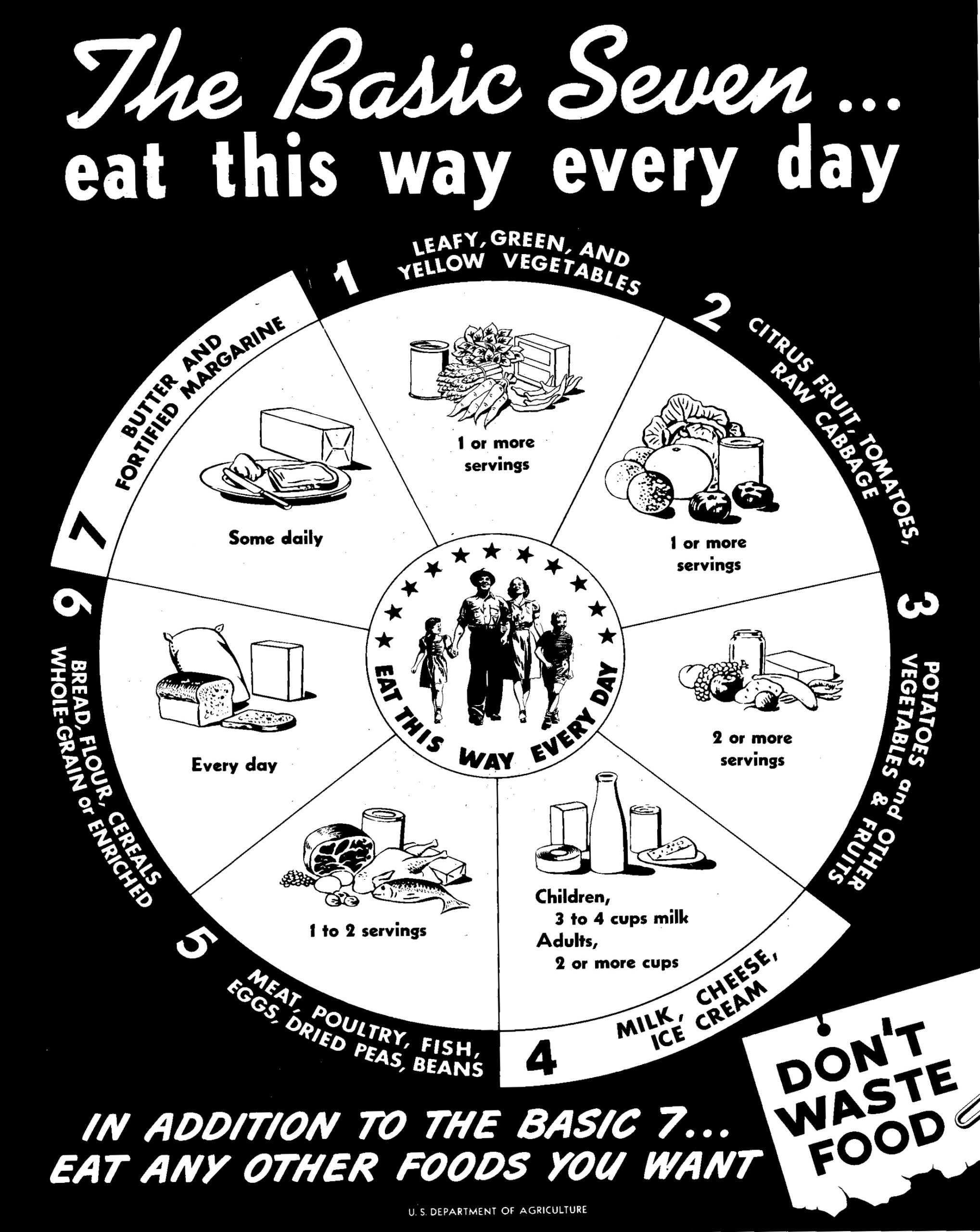
One of the first government graphics on recommended food groups was published by the Swedish government in 1972. It featured a seven slice pizza-shape, with three separate groups for vegetables (leafy/green/yellow, citrus fruit/tomatoes/raw cabbage, and potatoes/other fruit), a milk/cheese/ice cream group, and a group just for butter/fortified margarine!
The Swedes found this confusing, and two years later, the Kooperativa Förbundet (a retail chain) released the first food pyramid to better represent how much of each food group should be eaten, like not eating butter in equal portions to whole grains. The Swedish government never accepted the commercial version Wikipedia’s Food Pyramid nutrition 1
What kinds of foods to fill your plate is critical for determining how healthy your diet is.
Unfortunately, in the plans presented by governments and companies, science often comes second to the preferences of their sponsors and stakeholders.
This is why the US Department of Agriculture recommendations feature milk as its own category, despite questionable health impacts and other easy protein substitutes.
In 2017, the American Journal of Clinical Nutrition (AJCN) Food Groups and Risk of All-cause Mortality: A Systematic Review and Meta-analysis of prospective studies 2 released a systematic review and meta-analysis of the studies that have been published on different food groups (they didn’t provide butter/margarine as its own food group, though) and how each affects all-cause mortality. I consider all-cause mortality the gold standard for whether something is healthy. The body is complex, and it can be easy when working with food components to show whether a particular ingredient is good or bad for you.
These studies about this chemical being good or bad are often disproven later when they extract the chemical and do a randomized, controlled trial. In comparison, death as an endpoint is pretty unambiguously bad. I’m pretty sure that later studies will not find it is good for you. 😉

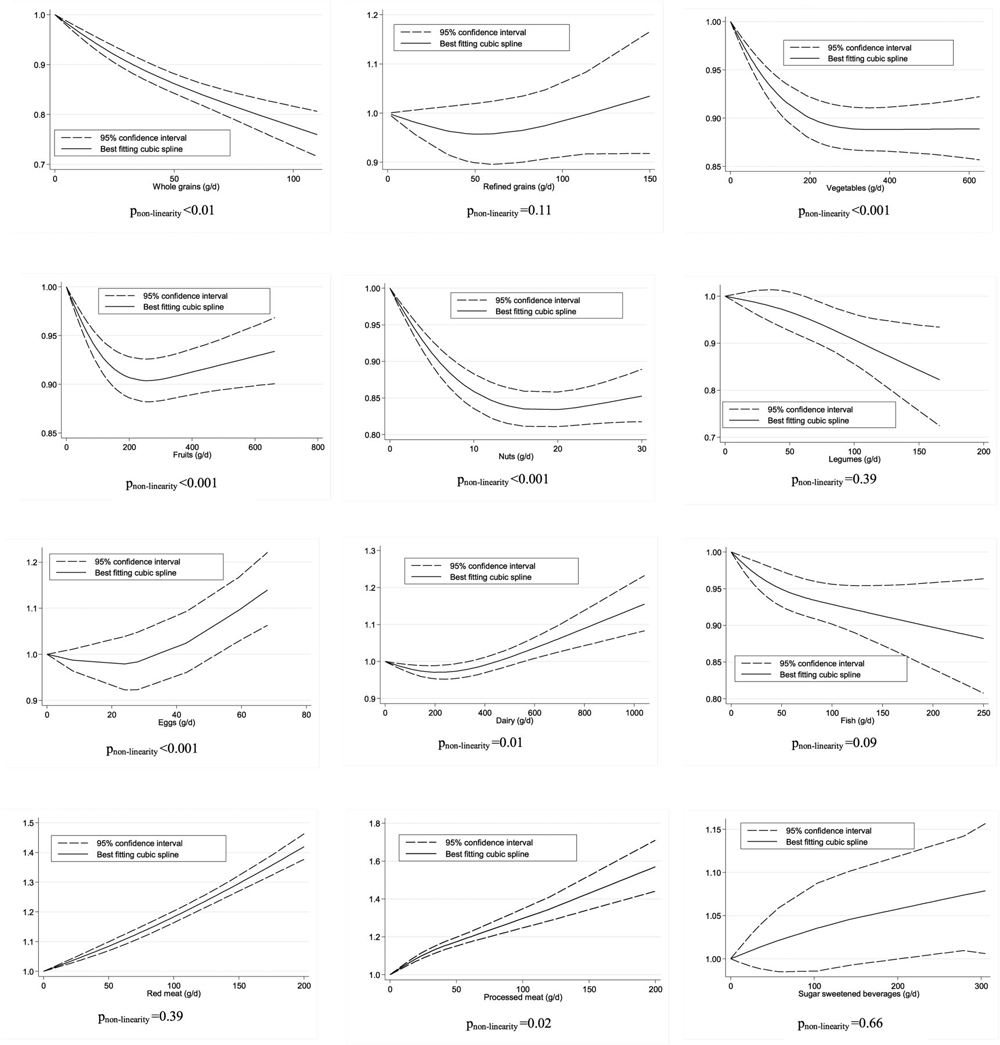 The AJCN study provides a solid baseline of how each food group affects your health. I talked about how nuts are good for you in my previous post, but only up to 20 grams. Many other healthy foods also show limits to their benefits. Vegetables provide longevity benefits up to 300 g per day. After this, no additional help. Fruits improve health up to 250 g per day, with no extra credit for eating more.
Several foods show benefits that keep growing through the testing range, so we don’t know the “maximum beneficial dose” because not enough people eat enough to show statistical results for them. Beans (150+ g/day), whole grains(150+ g/day), and fish (100+ g/day) all show this pattern.
Other foods increase all-cause mortality and have no upper limit to how much harm they can do from this study. Red meat (bad), processed meat (even worse), eggs, and sugar-sweetened beverages show this pattern.
Milk and dairy have their own category. No harm (or benefit) up to 750 ml/day, but continued increased mortality after that point.
Refined grains and poultry are base-neutral. No increase or decrease in all-cause mortality was shown at any amount.
I haven’t made any pyramids yet or plate diagrams to show how to get this amount of food, but I have made a calculator based on US actuarial tables to calculate how your diet affects your effective true age. Give it a try!
Food Pyramid History – Frequently Asked Questions
What is the story behind the food pyramid?
The idea of the food pyramid started in Sweden in 1972 when the government introduced a graphic showing recommended food groups in a seven-slice pizza shape. It was confusing, so two years later, a retail chain (Kooperativa Förbundet) created the first food pyramid to better represent how much of each food group should be consumed.
How has the food pyramid changed over time?
Over time, food pyramids have shifted from emphasizing broad categories (like milk and meat as staples) to focusing more on balanced proportions and whole foods. Science now plays a larger role, though industry influence is still a factor.
When did the USDA stop using the food pyramid?
The USDA officially stopped using the food pyramid in 2011 when it introduced a new model called “MyPlate.”
What was the original food pyramid in 1974?
The original food pyramid came from Sweden in 1974, developed by a retail chain, and focused on illustrating which food groups should make up the largest and smallest portions of a daily diet.
Why is the food pyramid not used anymore?
The food pyramid was phased out because it was considered too confusing and didn’t always reflect the best nutritional science, sometimes influenced by food industry lobbying.
What replaced the food pyramid in 2011?
In 2011, the USDA introduced “MyPlate,” a simpler visual guide showing a plate divided into fruits, vegetables, grains, protein, and dairy, aiming to make dietary advice easier to understand.
Does the US still use the food pyramid?
No, the U.S. uses “MyPlate” instead of the traditional food pyramid to guide healthy eating habits.
What is the food pyramid called now?
Today, the food pyramid has been replaced by “MyPlate,” a more modern and accessible representation of healthy eating.
What was the significance of the Swedish government’s early food graphics in 1972?
The Swedish government’s graphic depicted a seven-slice pizza-shaped illustration representing recommended food groups. Unfortunately, its complexity led to confusion. Two years later, a retail chain introduced the first food pyramid, offering a clearer representation of portion sizes for each food group.
Why did the Swedish government not adopt the commercial food pyramid?
Considering the effects of different food groups on mortality, although the commercial food pyramid aimed to provide a better representation of balanced eating, the Swedish government opted not to adopt it officially
How do governments and companies sometimes prioritize preferences over science in nutritional plans?
In various instances, nutritional plans may prioritize stakeholders’ preferences over scientific evidence. This can lead to the inclusion of certain foods or categories that aren’t necessarily backed by solid health science.

Why does the US Department of Agriculture include milk as a separate category despite concerns?
The US Department of Agriculture’s recommendations, like other plans, can be influenced by various factors, including lobbying and industry interests. This is why milk retains its own category, despite ongoing debates about its health impacts and alternative protein sources.
What is the significance of the AJCN’s systematic review and meta-analysis?
The American Journal of Clinical Nutrition’s 3 comprehensive analysis reviewed the effects of different food groups on mortality, providing a solid foundation for understanding the health impacts of various foods.
Why is all-cause mortality considered the gold standard for determining health impacts?
All-cause mortality serves as a clear and unambiguous endpoint in health studies. While individual components of food can be portrayed as good or bad, the effects of different food groups on mortality provide a definitive measure of overall health impact.
How do nuts’ benefits have a limit despite being healthy?
Nuts have notable health benefits, but research indicates that consuming up to 20 grams a day is optimal for reaping their advantages. Beyond this amount, the additional benefits plateau.
What are the optimal consumption limits for vegetables and fruits?
Vegetables offer longevity benefits up to 300 grams per day. For fruits, health improvements are seen up to 250 grams per day, with no added benefits beyond this quantity. Check out our other blog on the health benefits of fruits and vegetables.
Which foods show a negative correlation with all-cause mortality?
Several foods, such as red meat, processed meat, eggs, and sugar-sweetened beverages, show a pattern of increasing all-cause mortality with higher consumption. These items should be consumed in moderation.
What’s the impact of milk and dairy on mortality rates?
Milk and dairy consumption up to 750 ml/day appears to have no significant harm or benefit. However, mortality rates increase beyond this point, suggesting a potential threshold effect.
How do refined grains and poultry impact all-cause mortality?
Refined grains 4 and poultry exhibit a neutral impact on all-cause mortality, with no observed increase or decrease at any consumption level.

How can I calculate the effects of different food groups on mortality?
You can use a calculator to determine your biological age based on US actuarial tables to determine how your dietary choices influence your effective true age. This tool provides insights into the potential impact of your diet on your overall health.