Unaging
  • Unaging Challenge
  • Blog
    • Podcasts
    • Diet
    • Exercise
    • Healthy Habits
    • Science
    • Aging
    • Unaging Challenge
    • Reviews
    • Videos
  • Determine Your True Age
  • About Me
  • Contact
Unaging
  • Unaging Challenge
  • Blog
    • Podcasts
    • Diet
    • Exercise
    • Healthy Habits
    • Science
    • Aging
    • Unaging Challenge
    • Reviews
    • Videos
  • Determine Your True Age
  • About Me
  • Contact
The sun over the wing as seen from inside the airplane, reminder of the jet lag that often follows such flights.

Healthy Habits, Science
Jet Lag Hacked

Utilizing Circadian Rhythms and Blue Light for Seamless Time Zone Transitions


Last updated: April 9, 2026

In This Article

  1. Understanding Circadian Rhythms
  2. The Blue Light Effect
  3. Strategies for Shifting Your Circadian Rhythm
  4. The Red-Eye Flight Conundrum
  5. Practical Tips for Managing Blue Light
  6. Sleep Approach
  7. A Handy Tool
  8. Conclusion
Crissman LoomisCrissman LoomisJuly 24, 2024
The sun over the wing as seen from inside the airplane, reminder of the jet lag that often follows such flights.

We’ve talked about how much sleep is best for you, but what about when your sleep schedule is off? As global travel rebounds in the post-COVID era, many of us are again facing jet lag challenges. But what if we told you there’s a scientific way to manage it? Let’s learn about circadian rhythms and how understanding them can help you conquer jet lag.

Understanding Circadian Rhythms

Our bodies operate on a natural 24-hour cycle known as the circadian rhythm (CR). This internal clock regulates physiological processes, including sleep-wake cycles, hormone production, and digestion. When we’re off our circadian rhythm, we often feel tired, and our bodies don’t function optimally – even our digestion can be affected.


Jet Lage Hacked: Phase response curve to light

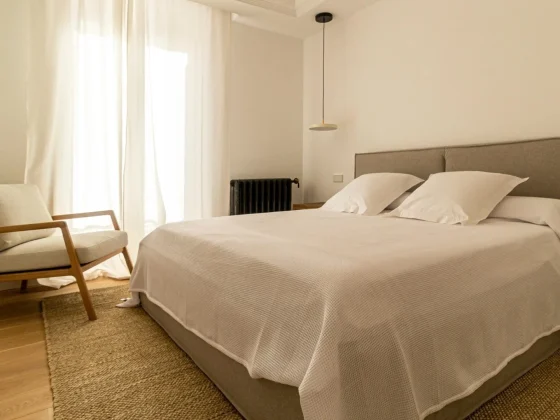
cozy bedroom for deep sleep
How to Sleep Better for Longevity and Health
Studies suggest 7 hours is the sweet spot for longevity. Read more to learn the science of sleep, your ideal rest duration, and tips for better sleep—stress-free.

The Blue Light Effect

The key to manipulating our circadian rhythm lies in our exposure to blue light. Our bodies are particularly sensitive to blue light during two crucial three-hour windows each day:

1. The first three-hour window occurs from the first to the fourth hour after your usual bedtime. Exposure to blue light during this time will shift your CR later.
2. The second three-hour window is the fourth to seventh hour after your usual bedtime. Blue light exposure during this period will shift your CR earlier.

The closer you are to the “inflection point” (about four hours after bedtime), the stronger the effect of blue light exposure.

Strategies for Shifting Your Circadian Rhythm

I used to try to adjust my sleep schedule before traveling, but staying up four hours past my bedtime and sleeping in four hours put me badly out of sync with the rest of the world, and getting blue light sources in the middle of the night was a challenge. Using the sunlight available at the right time at your destination is easier.

For Westward Travel:

You can shift your CR up to two hours later each day. Expose yourself to blue light from one hour after your normal bedtime to four hours later. Each day, move this exposure period two hours later until you’re aligned with the local time.

For Eastward Travel:

You can shift your CR about one hour earlier per day. Get blue light exposure from four to seven hours after your usual bedtime. Move this exposure period one hour earlier each day until you’re in sync with the local time.

The Red-Eye Flight Conundrum

Red-eye flights, typically eastbound overnight flights, are notoriously disruptive to our circadian rhythms. They often involve late-night exposure to blue light from airport lighting and electronic devices, pushing our CR later when we need to shift it earlier. Upon arrival, morning sunlight can further complicate the adjustment, resulting in a slow, daily drag of our sleep cycle across the middle of the day.

So, let’s see how you could manage your jet lag on a winter flight from New York to London. In winter, London is five time zones ahead of New York. Since that’s eastward travel, you’d want morning light exposure to shift your CR earlier. Of course, the first step is NOT to get light exposure if leaving on a late-night plane, which would move your CR in the wrong direction. Wear orange glasses or shades (like a rock star) until you can get on the plane to sleep.

jet lag sleep schedule
Don’t get light when you board that 23:00 flight, or you’ll need another day to adjust!

Once you’ve arrived in London, you’ll want to avoid blue light from 7 AM until 10 AM to avoid delaying your CR. Then, from 10 AM to 1 PM, go outside, even if cloudy, and get daylight or find blue light inside. Since you’re moving your CR earlier, you can only adjust it an hour daily, so move those windows an hour earlier each day until your CR is close enough to local time.

Practical Tips for Managing Blue Light

To Get Blue Light:

  • Natural sunlight is best
  • SAD (Seasonal Affective Disorder) or blue spectrum lights also work
  • Computer screens without night mode activated

To Avoid Blue Light:

  • Wear orange-tinted blue-blocking glasses or sunglasses
  • Stay indoors
  • Use night mode on electronic devices
a woman having a sun bath to empower her health
Health Benefits of Sunlight: Cardiovascular, Skin, and Mental Health
The UK study’s finding was puzzling: people who exercised at midday showed 10% lower mortality...


Sleep Approach

Try to sleep at your normal bedtime in the new time zone. Don’t worry too much about naps or variations in sleep times, as sleep itself doesn’t shift the CR. Melatonin supplements (5mg is plenty) can help induce sleep when your body clock is off. These are available over the counter in the US and many European countries or by prescription elsewhere.

A Handy Tool

For those who want a precise guide, I’ve made a simple calculator that shows when you should seek or avoid blue light based on your bedtime and the time zone shift. You can find and duplicate this sheet to personalize it for your travel needs.

The Unaging Jet Lag Planner

Conclusion

By understanding and manipulating your circadian rhythm through strategic blue light exposure, you can significantly reduce the impact of jet lag. Remember, the key is having a plan for your arrival and being mindful of your light exposure when you arrive. With these tools, you’re well-equipped to make your next cross-time zone journey a smoother, more enjoyable experience.

Safe travels, and may your circadian rhythm always be in sync!

Subscribe to our newsletter

Get evidence-based health and longevity tips delivered to your inbox.

Unaging

Crissman Loomis

Research first! I’m a mathematician by training and a long-term body hacker who enjoys studying new topics and then testing them on myself. From a year of veganism to an intensive two-month muscle-building stint in which I gained 9 kg (20 lbs.) of muscle, I like reading and applying the latest studies. Google Scholar is my most frequented bookmark. I'm continually reviewing the latest research on health and longevity. I’ve found many valuable and several surprising things. Subscribe to join me on the journey!

Previous Article
cozy bedroom for deep sleep
  • Healthy Habits

How to Sleep Better for Longevity and Health

  • July 17, 2024
  • Crissman Loomis
View Post
Next Article
pills supplements
  • Diet
  • Healthy Habits

Longevity Supplements: Do They Really Work for a Longer Life?

  • August 14, 2024
  • Crissman Loomis
View Post

You May Also Like

ranking the most effective longevity habit
View Post
  • Videos
  • Healthy Habits
  • Podcasts

Is Running Overrated?

  • Crissman Loomis
  • April 9, 2026
A sparkler
View Post
  • Healthy Habits

The Strongest Predictor of Heart Attack Isn’t a Cholesterol Test

  • Crissman Loomis
  • March 9, 2026
View Post
  • Aging
  • Science

The Hard Limit on Human Lifespan

  • Crissman Loomis
  • January 23, 2026
nerd nite tokyo the longevity systems
View Post
  • Healthy Habits
  • Science
  • Unaging Challenge
  • Videos

The 3 Longevity Systems That Determine Your Healthspan and How to Protect Them

  • Crissman Loomis
  • January 15, 2026
Three kittens
View Post
  • Aging
  • Science

The Real Pathways to Longevity

  • Crissman Loomis
  • September 9, 2025
biomarkers showdown
View Post
  • Aging
  • Science

Who’s Really Winning at Longevity?

  • Crissman Loomis
  • September 4, 2025
Senior man playing chess
View Post
  • Healthy Habits

How to Prevent Dementia

  • Crissman Loomis
  • August 26, 2025
what is longevity
View Post
  • Aging
  • Healthy Habits

What Is Longevity? Live Longer and Healthier with Proven Daily Habits

  • Crissman Loomis
  • July 23, 2025

Leave a Reply Cancel reply

Your email address will not be published. Required fields are marked *

ranking the most effective longevity habit
Is Running Overrated?
A sparkler
The Strongest Predictor of Heart Attack Isn’t a Cholesterol Test
The Hard Limit on Human Lifespan
nerd nite tokyo the longevity systems
The 3 Longevity Systems That Determine Your Healthspan and How to Protect Them
Girls running
Seven People Just Finished a Year-Long Health Transformation

Categories

  • Aging (6)
  • Diet (22)
  • Exercise (25)
  • Healthy Habits (21)
  • Podcasts (8)
  • Reviews (4)
  • Science (11)
  • Unaging Challenge (14)
  • Videos (11)

Live Longer, Live Better

Join the Unaging Challenge and get evidence-based longevity tips delivered to your inbox.

    Unaging Logo

    The latest research quantified into health and longevity

    Navigation

    • Unaging Challenge
    • Blog
      • Podcasts
      • Diet
      • Exercise
      • Healthy Habits
      • Science
      • Aging
      • Unaging Challenge
      • Reviews
      • Videos
    • Determine Your True Age
    • About Me
    • Contact

    Navigation

    • Home
    • Biological Age Calculator
    • Blog
    • About me
    • Contact us
    • Sitemap

    Categories

    • Aging
    • Diet
    • Exercise
    • Healthy Habits
    • Podcasts
    • Reviews
    • Science
    • Unaging Challenge
    • Videos

    Categories

    • Aging
    • Diet
    • Exercise
    • Healthy Habits
    • Podcasts
    • Reviews
    • Science
    • Unaging Challenge
    • Videos

    Input your search keywords and press Enter.

    Get longevity research in your inbox